

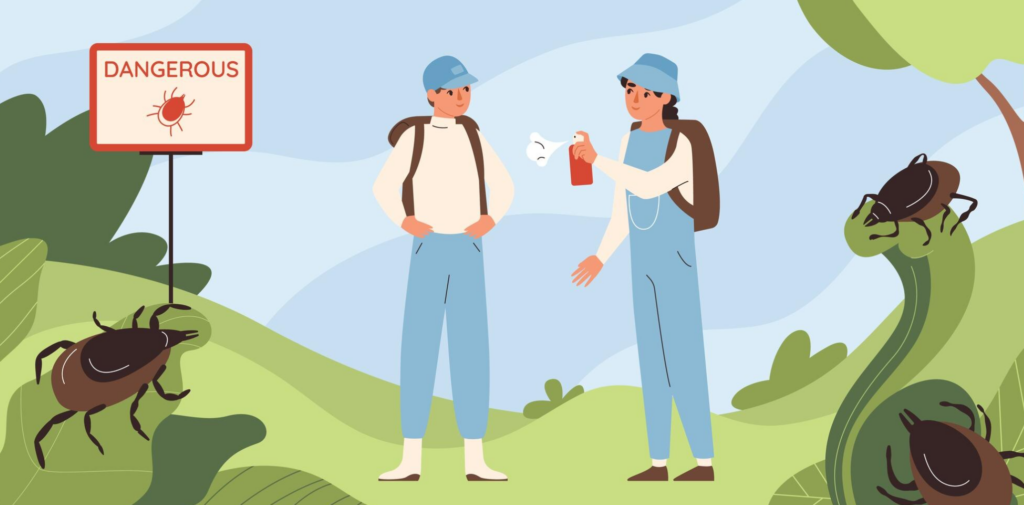
Most beetles are not dangerous to people. They do not sting, most do not bite in any meaningful way, and many are harmless outdoor insects that accidentally wander into homes. Some beetles are even helpful because they eat plant pests, recycle decaying material, or support the wider food web.
That said, a few beetles can cause problems. Some can irritate skin, some may give a small defensive bite, some damage fabrics or stored food, and others can harm garden plants, turf, crops, or wooden materials. The right answer depends on the beetle, where you found it, and what it was doing.
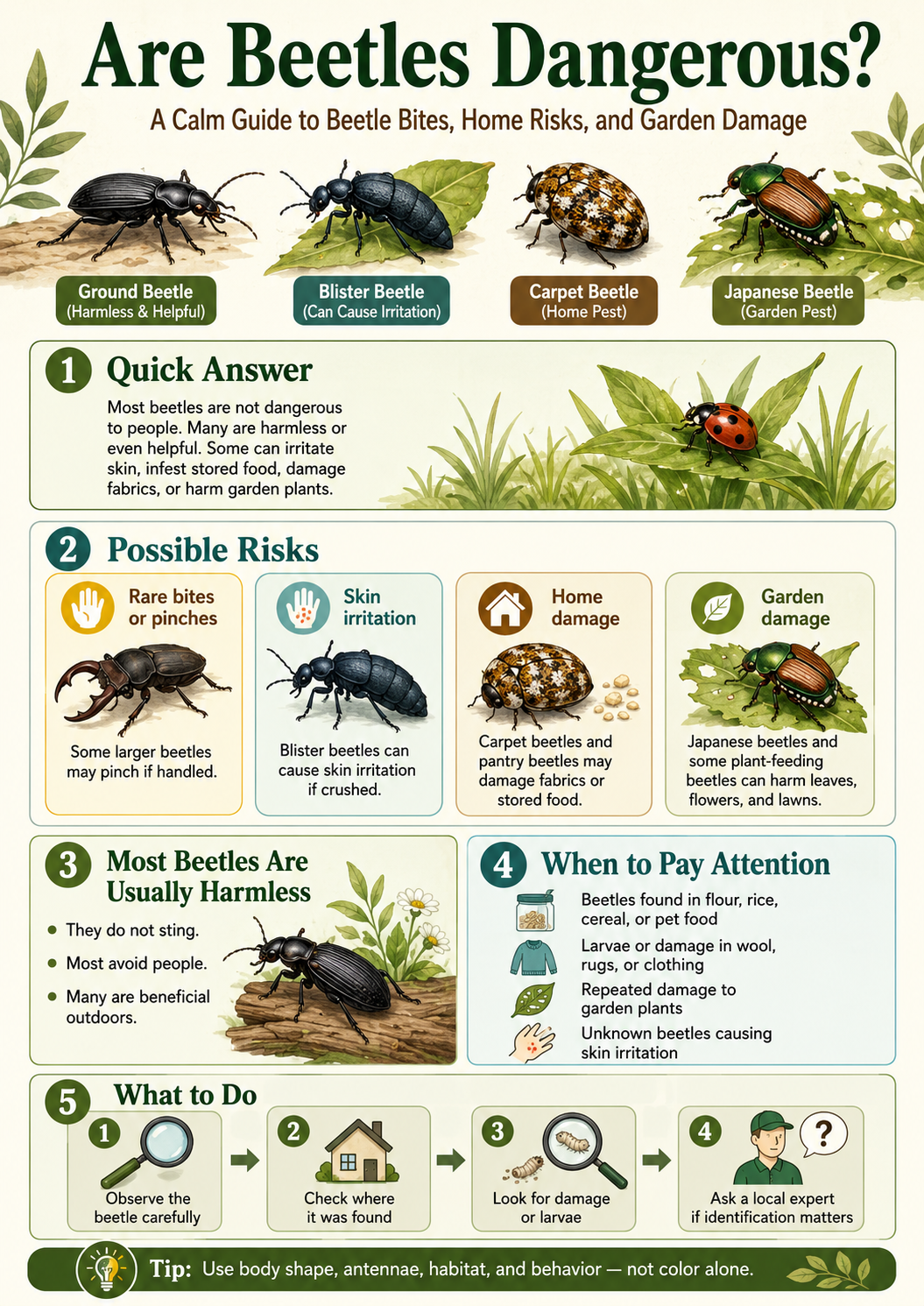
If you found a beetle indoors and are unsure what it is, start with careful observation before assuming it is dangerous. A good beetle identification process looks at body shape, size, color, antennae, wing covers, habitat, behavior, and whether larvae are present.
About This Guide
This guide explains when beetles are harmless, when they deserve caution, and when you may need help from a local expert. Beetle identification can vary by region, season, life stage, sex, size, color, body shape, antennae, wing covers, markings, habitat, behavior, and photo quality.
Many beetles look similar, especially in blurry photos or when the insect is immature. Color alone is not enough for reliable identification. A small black beetle in a kitchen, a shiny green beetle on a rose, and a long dark beetle in the yard may belong to very different groups with very different risks.
Use this guide as an educational starting point. If identification matters for human health, pets, livestock, crop damage, stored food, structural damage, or scientific accuracy, consult a local extension office, museum, pest professional, or qualified entomology resource.
Table of Contents
- Are beetles dangerous?
- Why most beetles are not dangerous
- Beetles that can bite or irritate skin
- Beetles around the home
- Beetles in food storage areas
- Beetles in gardens and lawns
- How to tell whether a beetle is a concern
- Common mistakes
- What to do if you find beetles
- When to seek professional help
- FAQ
- References and further reading
Are Beetles Dangerous?
In general, beetles are not dangerous to humans. Most beetles are small, avoid people, and only use their mouthparts for feeding on plants, fungi, insects, wood, stored products, or decaying organic matter.
The word “dangerous” can mean several different things:
- Dangerous to people
- Dangerous to pets
- Dangerous to livestock
- Dangerous to clothing, carpets, or stored food
- Dangerous to garden plants or lawns
- Dangerous to crops or trees
- Dangerous to wooden structures
A beetle that is harmless to people may still be a pest in a pantry. A beetle that damages roses may not be a medical concern. A beetle that irritates skin may not infest homes. This is why identification matters.
For a broader overview of beetle diversity, compare this topic with common types of beetles before deciding whether the insect you found is a true risk.
Why Most Beetles Are Not Dangerous
Beetles belong to the insect order Coleoptera. A typical beetle has hardened wing covers, called elytra, that protect the delicate wings underneath. These wing covers are one reason beetles often look hard-shelled or armored.
Most beetles are not interested in people. They usually focus on food sources such as:
- Leaves
- Flowers
- Pollen
- Fungi
- Other insects
- Dead insects or animal material
- Stored grains or dry foods
- Wood or plant roots
- Decaying organic matter
Many beetles are part of healthy ecosystems. Ground beetles may eat other small insects. Lady beetles often feed on aphids. Dung beetles recycle waste. Some beetles pollinate flowers. Others help break down dead plants or animals.
A beetle walking across a wall, window, sidewalk, porch light, or garden bed is not automatically a problem.
When Beetles Can Be a Problem
Beetles can become a concern when they interact with people, homes, plants, food, or animals in specific ways.
A beetle may be a concern if it:
- Releases a skin-irritating chemical
- Bites when handled or pressed against skin
- Appears in large numbers indoors
- Is found in flour, rice, cereal, spices, pet food, or stored grains
- Leaves holes in wool, fur, silk, leather, feathers, or natural fibers
- Damages garden leaves, flowers, fruit, or turfgrass
- Attacks trees, wood, or wooden materials
- Is mixed into hay or feed for livestock
- Cannot be identified from appearance alone
The level of concern depends on the situation. One beetle near a window is usually less serious than larvae feeding in a closet, beetles in pantry food, or repeated plant damage in the garden.
Beetles That May Bite or Irritate Skin
Most beetles do not bite people. Some larger beetles can pinch if handled roughly because they have chewing mouthparts. A few beetles are known for skin irritation rather than true biting.
Blister beetles
Blister beetles deserve special caution. They can release cantharidin, a chemical that may cause skin blistering if the beetle is crushed, rubbed, or pressed against skin.
Blister beetles are usually soft-bodied and somewhat elongated. Some are gray, black, striped, or brightly colored, depending on the species and region. They may be found on flowers, weeds, vegetable crops, or alfalfa.
Do not crush blister beetles with bare skin. If one lands on you, gently blow it off or brush it away without squeezing it.
Blister beetles are also important around livestock. When crushed beetles become trapped in hay, especially alfalfa hay, cantharidin can be dangerous to horses and other animals. This is not a typical household issue, but it matters for farms, horse owners, and hay producers.
Rove beetles in the Paederus group
Some rove beetles, especially certain Paederus species in warmer regions, can cause dermatitis if crushed against skin. They do not need to bite or sting. The irritation comes from chemicals in the body fluid of the beetle.
These beetles are usually small, narrow, and often have short wing covers that leave much of the abdomen exposed. If you suspect contact with an irritating rove beetle, wash the skin with soap and water and avoid rubbing your eyes.
Large beetles with strong jaws
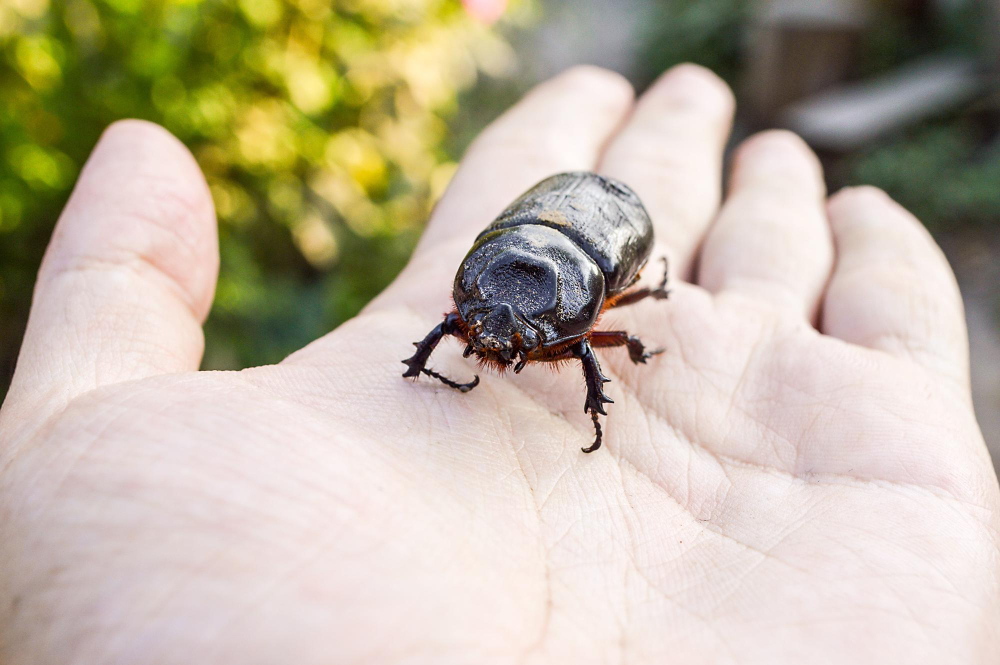
Some larger beetles, such as stag beetles or longhorn beetles, may pinch if picked up. This is usually a defensive reaction, not an attack. The bite may hurt briefly, but most such encounters are not medically serious for healthy adults.
The safest approach is simple: do not handle unknown beetles with bare hands.
Asian lady beetles
Some lady beetles, especially multicolored Asian lady beetles, may nip or bite lightly when they land on skin. They may also release a yellowish defensive fluid when disturbed. This can smell unpleasant and may stain light surfaces.
These beetles are usually more of a seasonal household nuisance than a danger. They often gather on sunny walls in fall and may enter buildings to overwinter.
Beetles Around the Home
Many beetles found indoors are accidental visitors. They may enter through gaps, windows, vents, doors, firewood, cut flowers, groceries, potted plants, or secondhand items.
For more indoor examples, see this guide to beetles around the home.
Carpet beetles
Carpet beetles are not dangerous in the same way as stinging insects, but their larvae can damage household materials. Adult carpet beetles are small, rounded beetles that may appear near windows. The larvae are usually the damaging stage.
Carpet beetle larvae may feed on:
- Wool
- Fur
- Feathers
- Silk
- Leather
- Hair
- Dead insects
- Pet hair
- Natural fiber items
- Taxidermy or preserved specimens
- Some stored products, depending on the species
Signs of carpet beetles can include shed larval skins, tiny fecal pellets, irregular fabric damage, and larvae in dark, undisturbed places.
A few adult carpet beetles near a window do not always mean a serious infestation. Larvae, repeated fabric damage, or beetles appearing in several rooms deserve closer inspection.
Larder beetles and dermestid beetles
Larder beetles and related dermestid beetles feed on animal-based materials. They may be found around dried pet food, dead insects, old nests, hides, feathers, or stored animal products.
They are not usually dangerous to people, but they can be a sign of a hidden food source such as dead insects in a wall void, old rodent bait, pet food spills, or a bird nest near the home.
Weevils indoors
Some weevils wander indoors during certain seasons. Many home-invading weevils do not harm people, pets, buildings, or furniture. They may simply be temporary nuisance insects.
However, pantry weevils are different. Rice weevils, granary weevils, and similar stored-product pests can infest grains or dry foods.
Beetles in Stored Food Areas
Some beetles are pantry pests. They are usually not dangerous in a medical sense, but they can make food unsuitable to eat.
Common stored-food beetles include:
- Flour beetles
- Grain beetles
- Rice weevils
- Granary weevils
- Drugstore beetles
- Cigarette beetles
- Sawtoothed grain beetles
They may infest:
- Flour
- Rice
- Cereal
- Pasta
- Oats
- Cornmeal
- Spices
- Dry pet food
- Birdseed
- Nuts
- Dried fruit
- Stored grains
If beetles are found in food, discard clearly infested products in sealed bags. Inspect nearby packages, vacuum shelves and cracks, and store dry goods in airtight containers. Avoid spraying household insecticides directly in food storage areas unless a labeled product and professional guidance clearly support that use.
A beetle in a pantry does not always mean the home is dirty. Stored-product beetles often enter through already-infested packaged goods.
Beetles in Gardens and Lawns
Many beetles are outdoor insects, and some feed on plants. Plant-feeding beetles are not usually dangerous to people, but they may damage gardens, lawns, shrubs, trees, flowers, or crops.
Japanese beetles
Japanese beetles are a well-known garden pest in many parts of North America. Adults feed on leaves, flowers, and fruit of many plants. They often skeletonize leaves by eating the soft tissue between the veins.
Commonly affected plants include roses, grapes, linden, apple, cherry, plum, birch, raspberry, hollyhock, and others. Grubs feed on grass roots and may contribute to brown, loose turf patches.
Japanese beetles are not usually a direct danger to humans. Their main importance is plant damage.
Cucumber beetles and flea beetles
Cucumber beetles and flea beetles are small plant-feeding beetles. They can damage leaves, seedlings, flowers, and crops. Some cucumber beetles may also spread plant diseases.
These beetles are garden or agricultural concerns, not household safety threats.
Bark beetles and wood-boring beetles
Some beetles develop in trees or wood. Bark beetles can damage stressed or weakened trees. Powderpost beetles and some wood-boring beetles may damage wood products or structural wood under the right conditions.
Wood damage requires proper identification. Not every beetle near wood is a wood-boring pest.
Quick Comparison: Which Beetles Are Dangerous?
| Beetle group | Main concern | Dangerous to people? | Home or garden issue? | Key clue |
|---|---|---|---|---|
| Blister beetles | Skin blistering; livestock risk in hay | Sometimes | Garden, crops, hay | Soft-bodied, often on flowers or crops |
| Carpet beetles | Fabric and stored material damage | Usually no | Home | Larvae, shed skins, wool/fur damage |
| Flour beetles | Stored food infestation | Usually no | Pantry | Small reddish-brown beetles in flour or dry goods |
| Weevils | Pantry or nuisance presence | Usually no | Pantry or indoors | Snout-like head, grains or seasonal entry |
| Japanese beetles | Leaf, flower, fruit, and turf damage | Usually no | Garden/lawn | Metallic green body, copper wing covers |
| Asian lady beetles | Seasonal indoor nuisance; light bite possible | Mildly, for some people | Home | Large groups near sunny walls or windows |
| Ground beetles | Usually beneficial predators | Usually no | Outdoor/occasional indoor | Fast-running, often dark, found at ground level |
| Wood-boring beetles | Wood or tree damage | Usually no | Wood, trees | Exit holes, powdery frass, damaged wood |
How to Tell Whether a Beetle Needs Attention
Do not rely on color alone. Black beetles, brown beetles, green beetles, and spotted beetles can belong to many unrelated groups.
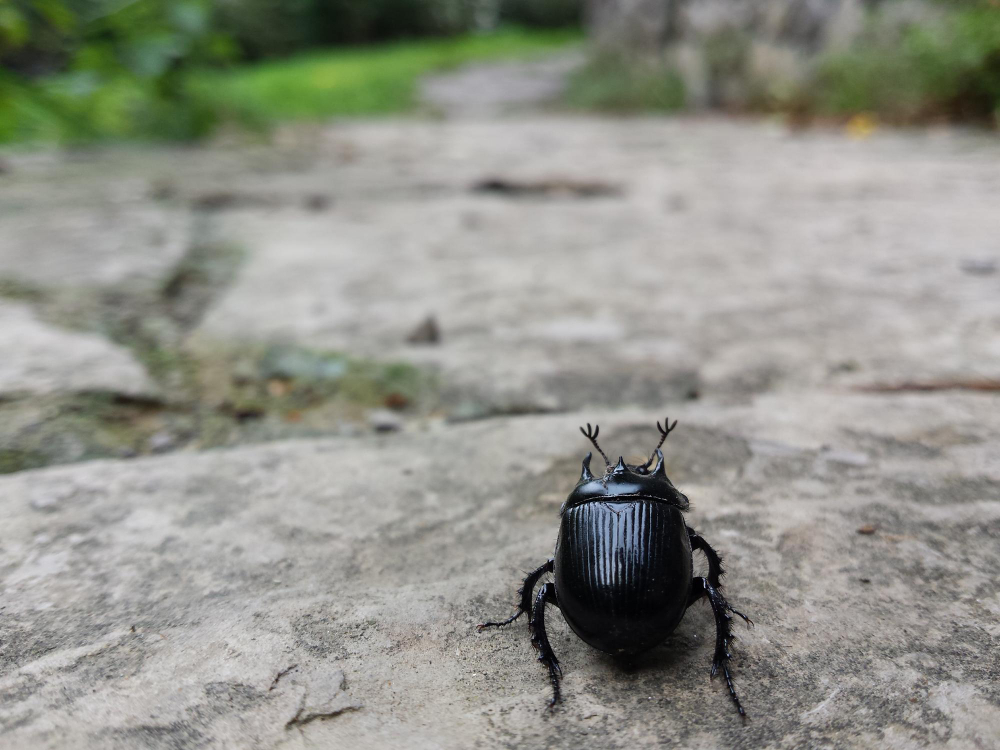
Instead, observe several clues.
1. Where did you find it?
Location matters. A beetle in flour suggests a different issue than a beetle on a rose bloom, in a wool closet, under bark, or near a porch light.
Ask:
- Was it in food?
- Was it on a plant?
- Was it near fabric, fur, wool, or feathers?
- Was it near windows?
- Was it in damp soil?
- Was it around firewood?
- Was it found alone or in large numbers?
2. Was it an adult or larva?
Larvae often cause different problems than adults. Carpet beetle adults feed outdoors on pollen, but larvae damage fabrics. Japanese beetle adults damage leaves and flowers, while grubs damage turf roots.
If you only identify the adult, you may miss the actual source of damage.
3. What is the body shape?
Useful body clues include:
- Round or oval body
- Long and narrow body
- Hard wing covers
- Snout-like head
- Long antennae
- Clubbed antennae
- Bright warning colors
- Hairy larvae
- Strong jaws
For visual comparison, a page such as common types of beetles with pictures can help narrow down possibilities before you make a decision.
4. Is there damage?
Look for evidence:
- Holes in leaves
- Skeletonized leaves
- Damaged flowers
- Brown turf patches
- Holes in wool or silk
- Shed larval skins
- Beetles in dry food
- Powdery sawdust-like material near wood
- Many beetles appearing repeatedly
The beetle itself is only one clue. Damage patterns often matter more.
Common Mistakes When Judging Beetle Risk
Mistake 1: Assuming every beetle in the house is dangerous
Many beetles indoors are accidental visitors. They may have flown toward lights, entered through a crack, or arrived on plants or firewood. One beetle does not automatically mean infestation.
Mistake 2: Identifying beetles by color only
A “small black beetle” could be a carpet beetle, ground beetle, weevil, darkling beetle, flea beetle, or many other insects. Color changes with age, lighting, wear, and species.
Mistake 3: Crushing unknown beetles with bare skin
This is not a good habit. Some beetles release defensive fluids. Blister beetles and certain rove beetles can irritate skin if crushed.
Use a cup and paper, gloves, or a vacuum instead.
Mistake 4: Spraying before identifying the beetle
Spraying first can create unnecessary chemical exposure and may not solve the source of the problem. For many indoor beetles, sanitation, exclusion, vacuuming, removing food sources, or discarding infested products is more useful than random spraying.
Mistake 5: Confusing plant damage with human danger
A beetle that damages roses, grapes, basil, or turf is a garden pest. That does not mean it is dangerous to people.
What to Do If You Find a Beetle
The best response depends on where you found the beetle.
If you find one beetle indoors
Capture it gently, take a clear photo, and release it outdoors if it is not a known pest. Check windows, door gaps, and lights if beetles keep appearing.
If you find beetles in food
Discard infested food in a sealed bag. Inspect nearby dry goods. Vacuum pantry shelves, corners, and cracks. Store flour, rice, cereal, spices, and pet food in tight containers.
If you find beetles in clothing or carpets
Look for larvae, shed skins, and fabric damage. Clean closets, baseboards, rugs, and storage boxes. Wash or dry-clean affected items when possible. Store clean woolens and natural fibers in sealed containers.
If you find beetles on plants
Identify the beetle before treating. Some beetles are beneficial predators. Others feed on leaves, flowers, roots, or fruit. Hand removal may work for small garden infestations. For repeated damage, consult local garden extension guidance.
If you find beetles near wood
Look for exit holes, powdery frass, weakened wood, or repeated beetle emergence. Keep firewood outdoors and away from living areas. If structural wood may be affected, contact a qualified pest or wood-damage professional.
When to Seek Professional Help
Seek professional or local expert help when:
- Someone has a strong skin reaction after contact with a beetle
- Beetles are repeatedly found in stored food
- Carpet beetle larvae are damaging clothing, rugs, or collections
- You suspect wood-boring beetles in structural wood
- Garden or crop damage is severe
- Livestock feed may be contaminated with blister beetles
- You cannot identify the beetle and the risk matters
- Pesticide use is being considered near food, children, pets, pollinators, or sensitive areas
For accurate local identification, a clear photo is helpful. Photograph the beetle from above, from the side, and near a ruler or coin for scale. Include where it was found and what damage, if any, you noticed.
FAQ
Are beetles dangerous to humans?
Most beetles are not dangerous to humans. A few can irritate skin, pinch, or bite lightly if handled, but serious problems are uncommon. The main risks depend on the beetle group and the situation.
Do beetles bite?
Some beetles can bite or pinch, especially larger beetles with strong jaws, but most beetles do not bite people in normal situations. A beetle is more likely to bite if it is trapped, squeezed, or handled.
Are black beetles dangerous?
Not necessarily. Many black beetles are harmless, including some ground beetles and seasonal home invaders. Some black beetles may be pantry pests or carpet beetles, so location and behavior matter more than color.
Are beetles poisonous?
Most beetles are not poisonous to people. Blister beetles are an important exception because they contain cantharidin, which can irritate skin and is toxic if ingested. Do not crush or handle unknown beetles with bare hands.
Are beetles dangerous to dogs or cats?
Most beetles are not a serious danger to pets, but pets should not be encouraged to eat unknown insects. Some beetles may taste bad, irritate the mouth, or cause mild stomach upset. Contact a veterinarian if a pet eats many beetles or shows symptoms.
Are beetles dangerous in the house?
A beetle in the house is not automatically dangerous. Many are accidental visitors. Beetles become a household concern when they infest food, damage fabrics, appear in large numbers, or indicate a hidden source such as pet food, stored goods, old nests, or dead insects.
Are carpet beetles harmful?
Carpet beetles are mainly harmful to fabrics and stored materials, not people. Their larvae can damage wool, fur, feathers, silk, leather, and other animal-based materials. Finding larvae or shed skins is more concerning than seeing one adult near a window.
Are beetles in flour dangerous?
Beetles in flour or grain are usually not dangerous like venomous animals, but infested food should not be eaten. Discard affected products, clean the pantry, and store dry goods in sealed containers.
Are Japanese beetles dangerous?
Japanese beetles are not usually dangerous to people. They are dangerous to many plants because adults feed on leaves, flowers, and fruit, while grubs can damage turf roots.
Can beetles damage wood?
Some beetles can damage wood, trees, or wooden materials. Powderpost beetles, bark beetles, and certain wood-boring beetles are examples. Proper identification is important because many beetles found near wood are not structural pests.
Should I kill beetles I find indoors?
Not always. If it is a harmless accidental visitor, you can capture and release it. If it is a pantry beetle, carpet beetle, or wood-boring beetle, focus on identifying the source and removing the conditions that support it.
How do I know what beetle I found?
Look at size, body shape, antennae, wing covers, color pattern, habitat, behavior, season, and damage. A clear photo with scale helps. For difficult cases, compare it with reliable identification guides or ask a local extension office, museum, or pest professional.
Conclusion
So, are beetles dangerous? Most are not dangerous to people. Many beetles are harmless, temporary, or even beneficial. The beetles that deserve attention are the ones that irritate skin, infest stored food, damage fabrics, harm plants, affect wood, or create risks for livestock.
The safest approach is calm observation. Do not crush unknown beetles with bare skin. Note where the beetle was found, whether larvae are present, and whether there is damage. Use multiple clues instead of relying on color alone.
When the situation involves health, food, livestock, crops, structural wood, or repeated infestation, get a reliable identification before taking action.
1 thought on “Are beetles dangerous”