

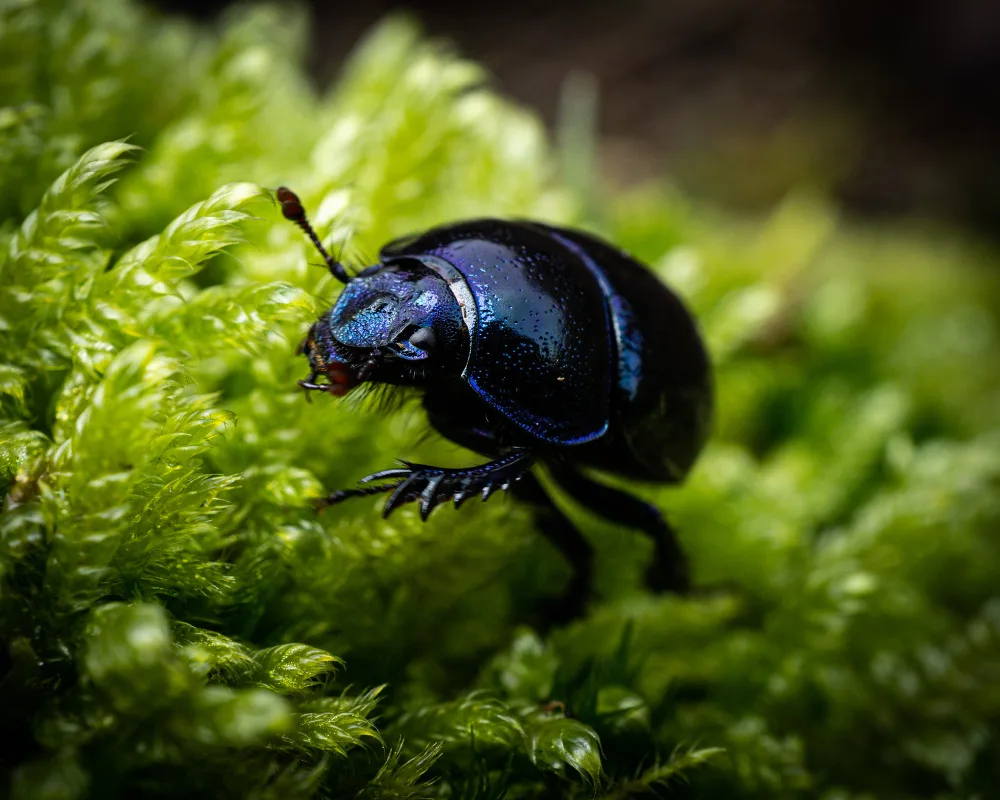
A beetle repeatedly bumping against a ceiling light at night can make it seem as though something inside the room is attracting or breeding beetles. Often, the explanation is simpler.
Many beetles are active after dark, and several common groups respond strongly to artificial light. An outdoor beetle may notice light shining through a window or doorway, enter through a screen gap or open door, and then remain around the brightest part of the room. Ground beetles, click beetles, May and June beetles, and some other nocturnal beetles are regularly recorded around artificial lights.
But light is not the only possibility. A beetle already living or developing somewhere inside a building may also move toward a window or illuminated area after becoming an adult. That distinction matters: a large beetle that flies in through an open window at night tells a very different story from dozens of tiny beetles appearing from the same room every week.
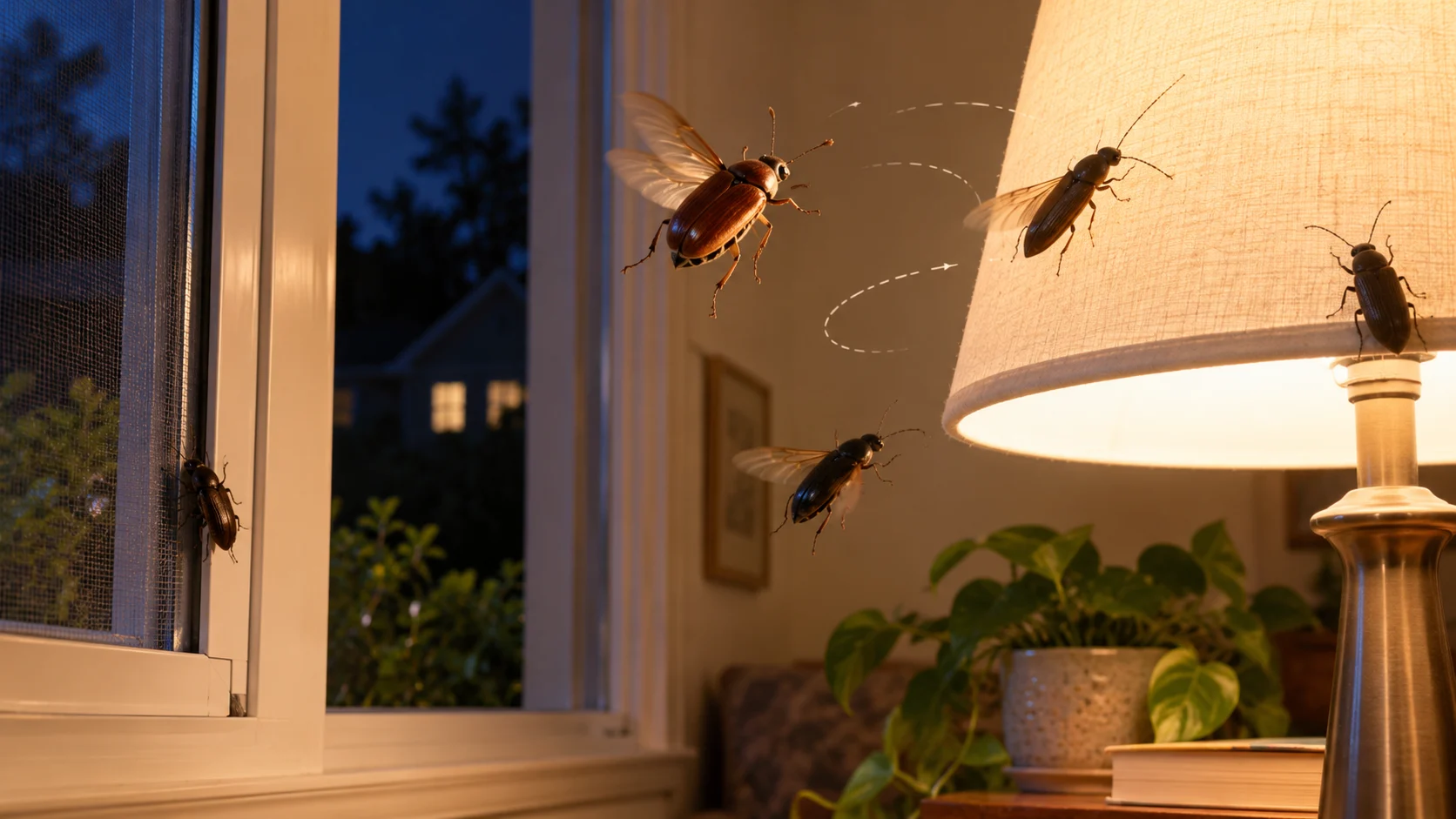
Why Are Beetles Attracted to Indoor Lights?
The familiar explanation is that night-flying insects simply “fly toward light.” The biology appears to be more complicated.
A 2024 study that reconstructed insect flight paths in three dimensions found that many flying insects near artificial lights did not steer straight toward the bulb. Instead, they tended to orient the upper side of their bodies toward the light. Under natural conditions, the brighter sky can help insects maintain their sense of which way is up. A nearby artificial light can interfere with that orientation response, producing circling, climbing, stalling, or repeated flight around the source.
So when a beetle circles a lamp or repeatedly crashes into a light fixture, it may not be deliberately trying to reach the bulb in the way an animal approaches food. The light can disrupt normal flight behavior and keep the insect close to the source.
This also helps explain why beetles sometimes seem unable to leave a brightly illuminated area once they arrive.
Indoor Lights Can Attract Beetles From Outside
An indoor lamp does not need to be outdoors to influence insects outdoors.
Light escaping through an uncovered window, glass door, open garage, or doorway can create a conspicuous bright area after dark. Some light-responsive beetles may approach the building and then enter through an available opening.
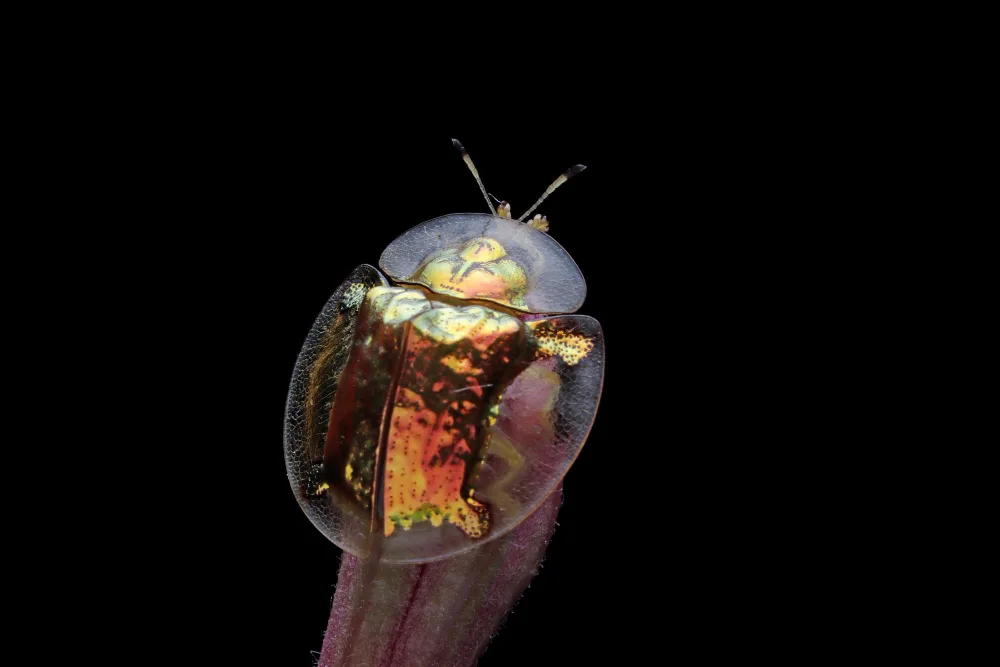
Ground beetles are a good example. They normally live outdoors, often beneath leaves, logs, stones, mulch, or other ground cover. Many are active at night, and some are attracted to lights. When they appear inside buildings, they commonly enter through cracks, doors, windows, or other openings rather than reproducing indoors.
Click beetles behave similarly. Virginia Cooperative Extension notes that adult click beetles are attracted to bright lights at night and may become temporary nuisances around houses during summer. University of Minnesota Extension also notes that outdoor lighting can attract click beetles toward buildings.
Closing curtains or blinds after dark can therefore help in some situations—not because curtains repel beetles, but because they reduce the amount of indoor light visible outside.
Common Beetles You May Find Around Indoor Lights
Light attraction alone cannot identify a beetle. Size, shape, antennae, color, season, location, and behavior should be considered together, as required by the site’s identification approach.
| Beetle group | Typical clue around lights | What it may mean |
|---|---|---|
| Ground beetles (Carabidae) | Usually dark, fairly fast-running beetles near doors, basement windows, or floors | Often accidental outdoor visitors |
| Click beetles (Elateridae) | Elongated beetles that may make a noticeable click or flip themselves upright | Frequently attracted to lights; usually temporary visitors indoors |
| May/June beetles (Phyllophaga spp. and relatives) | Robust brown or dark beetles with loud, somewhat clumsy flight | Nocturnal adults commonly appear around lights during their seasonal flight period |
| Some other scarab beetles | Broad or oval beetles arriving at night | Many species live outdoors and may simply be visiting light |
| Carpet beetles | Very small oval adults, especially around windows | May have flown inside, but repeated adults can also point to larvae developing somewhere indoors |
| Other outdoor beetles | One or a few unfamiliar beetles appearing suddenly during warm weather | Often incidental visitors rather than household pests |
Ground beetles are especially useful examples of why an indoor sighting should not automatically be treated as an infestation. University of Minnesota Extension describes them as beneficial outdoor predators; when they enter homes, they generally do not damage buildings, food, or clothing and do not reproduce there.
May and June beetles provide another familiar pattern. Adults of Phyllophaga species are active during their seasonal emergence and are attracted to lights. A large brown beetle suddenly banging against a window or lamp during late spring or early summer may therefore have come from the surrounding landscape rather than from inside the house.
A Beetle at a Light Does Not Always Mean It Came From Outside
This is where indoor identification becomes more important.
Carpet beetles can also appear around lighted areas and windows. Adult carpet beetles are small, generally around 1/8 inch or less depending on the species, and UC IPM notes that adults commonly appear on windowsills because they are attracted to light or sunlight. Adults may enter through windows and doors, but carpet beetle populations can also develop indoors where larvae have access to suitable food.
The larvae—not the adults—are the stage associated with most damage to susceptible materials such as wool, fur, feathers, hair, and accumulations of dead insects or other animal-derived material. Finding a single adult carpet beetle on a window is therefore weak evidence by itself. Finding adults repeatedly along with hairy larvae, shed larval skins, or damage to susceptible materials is much more meaningful.
That distinction is important whenever beetles gather around an indoor lamp. The light may explain where you notice the adult, but it does not necessarily explain where the beetle originated.
How to Tell an Outdoor Visitor From an Indoor Beetle Problem
Look at the pattern rather than the light fixture itself.
A few medium or large beetles appearing mainly on warm evenings, especially near an open window, patio door, garage, or exterior entrance, usually fit the pattern of outdoor visitors. Ground beetles and click beetles commonly behave this way.
Repeated tiny beetles deserve a different inspection. If small adults keep appearing over several days or weeks, check where they are appearing and whether there is an indoor resource nearby. Beetles associated with fabrics, stored foods, dead insects, animal material, or other household resources may leave their developmental site and later turn up near windows and lights.
The strongest evidence of an indoor problem is therefore not simply “beetles like the light.” It is evidence such as larvae, shed skins, contaminated food, fabric feeding, fresh wood-boring signs, or adults consistently emerging from the same location.
One isolated beetle is not enough to diagnose an infestation. That principle is especially important for home-beetle content.
Does the Type of Light Matter?
Yes, but there is no single bulb color that affects every insect—or every beetle—in exactly the same way.
Research on artificial light at night shows that insect responses depend on taxonomic group, wavelength, and light intensity. Shorter wavelengths, including ultraviolet and blue-rich light, frequently produce strong responses in many nocturnal insects, while higher light intensity generally increases attraction. Recent research also emphasizes that responses differ substantially among insect groups.
That means claims such as “yellow lights never attract beetles” or “red bulbs completely stop insects” are too absolute.
For homeowners, reducing unnecessary brightness is usually more dependable than relying on color alone. Warm or longer-wavelength lighting may reduce attraction for many insects, but individual beetle groups can respond differently. A tropical field study, for example, found that amber lighting reduced insect abundance overall while some click beetles responded differently from the broader insect community.
How to Reduce Beetles Around Indoor Lights
If the beetles appear to be coming from outdoors, the most effective strategy is usually to change how they reach the light rather than trying to kill every beetle after it enters.
- Reduce light spilling outdoors. Close curtains or blinds at night, particularly when bright room lights face windows or glass doors.
- Turn off unnecessary exterior lighting. Outdoor fixtures immediately beside doors and windows can concentrate nocturnal beetles near entry points.
- Use lower-intensity or motion-activated outdoor lights. Virginia Cooperative Extension recommends lower-intensity or motion-activated lighting when exterior lighting is necessary.
- Repair screens and seals. Check window screens, door sweeps, frames, foundation openings, vents, and gaps around utility penetrations. Ground and click beetles commonly exploit ordinary structural openings.
- Remove occasional beetles physically. A vacuum or container is usually enough for isolated outdoor visitors. Large-scale indoor pesticide treatment is generally unnecessary when the beetles are simply wandering inside.
- Investigate repeated tiny beetles rather than blaming the lamp. If the same small beetles keep appearing, inspect stored food, natural-fiber materials, pet hair, lint, dead insects, dried plant material, and other potential developmental sources.
Should You Be Worried About Beetles Flying Around Your Lights?
Usually, no.
Many beetles seen around indoor lighting are temporary visitors from outdoors. Ground beetles can even be beneficial predators in the landscape, and several large beetles attracted to lights are primarily ecological recyclers or seasonal outdoor insects rather than household pests.
What matters is the pattern.
A large beetle flying into the kitchen once on a summer evening is usually a minor encounter. Twenty tiny beetles appearing every week beside the same window deserve closer investigation.
The light tells you something about the beetle’s behavior. It does not, by itself, tell you where the beetle came from or whether there is an infestation.