

Beetles are everywhere once you know how to look. A shiny green beetle chewing rose leaves. A small round beetle drifting across a windowsill. A black beetle sprinting across the garage floor. A firefly rising from the grass on a warm summer evening. All beetles — and each one tells you something, if you know what to notice.
Most people start with a photo. That’s a reasonable instinct. This guide is built for exactly that starting point: you have a picture, or you just saw something interesting, and you’d like to understand what you’re looking at.
It won’t replace an expert, and it won’t give you a guaranteed species name from a single photo. What it will do is help you compare the most common beetle types by shape, color, antennae, wing covers, size, habitat, and behavior — and give you a real foundation for narrowing things down.
Beetle identification is genuinely affected by region, season, life stage, and photo quality. A beetle shot from above can look completely different from the same species photographed from the side. Larvae often bear no resemblance to their adult form. Color can shift as a beetle ages or as light changes. The best identifications come from several clues read together, not from color alone.
About This Guide
This guide focuses on the beetle groups that beginners are most likely to encounter — indoors, in gardens, at lights, in soil, on flowers, and on trees or wood. It’s designed to help you make sense of a photo and ask better questions, not to replace professional identification when the stakes are high.
Use this guide to:
- Compare common beetle families by their most visible features
- Understand which clues matter most when identifying a beetle
- Learn which beetles are typically beneficial, neutral, or worth keeping an eye on
- Avoid mixing up beetles with other insects
- Know when a photo is enough and when it’s worth asking an expert
Educational note: This article is for general nature education and beginner identification. It does not provide species-level identification guarantees. For any situation involving possible invasive species, structural wood damage, crop damage, serious fabric or food contamination, or skin irritation after contact with an unknown beetle, consult a local university extension office, museum entomology department, government agriculture agency, or licensed pest professional.
What Makes a Beetle a Beetle?
Beetles belong to the insect order Coleoptera — a name that means “sheathed wings” in Greek, which is a perfect description. The most reliable beginner clue is the pair of hardened front wings called elytra. These wing covers protect the softer flight wings underneath and typically meet in a straight line down the beetle’s back.
Most adult beetles share a few basic traits:
- Six legs
- A head, thorax, and abdomen
- Chewing mouthparts
- Hardened wing covers (elytra)
- Antennae that vary widely in shape
- A complete life cycle: egg, larva, pupa, adult
Beyond that, the variety is remarkable. A tiny carpet beetle, a longhorn beetle with antennae longer than its body, a flashing firefly, and a massive stag beetle are all members of the same order. Learning what they share helps you recognize the group; learning what differs helps you tell them apart.
How to Identify Beetles From Pictures
A clear photo is a good start, but a single image rarely gives you everything you need. The most useful identifications pull together several observations at once.
1. Size
Size matters more than people expect. A beetle that’s 2 mm long is in a very different set of possibilities from one that’s 25 mm long.
If you’re guessing from a photo:
- Smaller than a sesame seed
- About the size of a rice grain
- About the size of a pea
- About the size of a fingernail
- Larger than a thumb
For future photos, place a ruler, coin, or pencil tip near the beetle — without touching it — before shooting.
2. Body Shape
Shape is often more reliable than color. A few useful questions:
- Is it round and domed, or flat and fast-running?
- Long and narrow, or oval and hard-shelled?
- Does it have a noticeable snout at the front?
- Are the wing covers very short, leaving the abdomen exposed?
- Does the body look soft and flexible, or armored?
Lady beetles are rounded and domed. Ground beetles tend to be flattened and built for speed. Weevils have a distinctive snout. Rove beetles have short wing covers that leave much of the abdomen visible.
3. Color and Pattern
Color helps, but it can mislead — some beetles shift from red to orange to black within the same species, and metallic colors change dramatically with lighting. When you look at color, note:
- Spots, stripes, or bands
- Metallic shine (green, bronze, blue, copper)
- White or pale hair tufts
- Mottled or scaly patterns
- Whether the pattern is on the wing covers, head, thorax, or legs
4. Antennae
Antennae are one of the most useful identification features. Beetles may have:
- Thread-like antennae (ground beetles, many others)
- Clubbed antennae with thickened end segments (scarabs)
- Elbowed antennae (weevils)
- Saw-toothed or comb-like antennae
- Feather-like or branched antennae
- Extremely long antennae (longhorn beetles)
In a good photo, even the general shape of the antennae can narrow things down considerably.
5. Wing Covers
Look closely at the elytra — their texture, length, and surface often carry useful information.
- Hard and shiny, or soft-looking?
- Short, leaving the abdomen exposed?
- Striped, grooved, or pitted?
- Fused together, or separated by a visible line down the middle?
- Metallic?
Short wing covers strongly suggest rove beetles. Metallic wing covers can point toward jewel beetles or some leaf beetles, but body shape helps separate those.
6. Habitat
Where you found the beetle is one of the most useful clues — sometimes more useful than the photo itself.
- On roses or grape leaves: Japanese beetle is possible in many parts of North America
- On aphid-covered plants: lady beetles and their larvae are common nearby
- Under stones, logs, or mulch: ground beetles or rove beetles
- On windowsills: carpet beetles, pantry beetles, or light-attracted visitors
- In stored grain, cereal, or flour: pantry beetles or grain weevils
- In wood showing powdery sawdust and small holes: powderpost beetles or other wood borers
- Over damp grass at dusk in summer: fireflies
7. Behavior
What the beetle is doing can eliminate a lot of possibilities:
- Running quickly when uncovered
- Flying to porch lights at night
- Clicking and flipping when touched
- Glowing in the dark
- Chewing leaf tissue between veins
- Feeding on pollen at flowers
- Appearing indoors only in spring or fall
- Hiding under bark, logs, or stones
8. Location and Season
Always note your location and the date. “Small black beetle in kitchen” is nearly impossible to work with. “Small black beetle, about 3 mm, found in a flour container in Ohio in July” opens up real possibilities.
Beetle activity follows the seasons. Some species appear at lights in May and June. Others slip into homes as fall temperatures drop. Garden beetles are often most visible in summer. Keeping these details attached to your photo makes any future identification — by you or an expert — much easier.
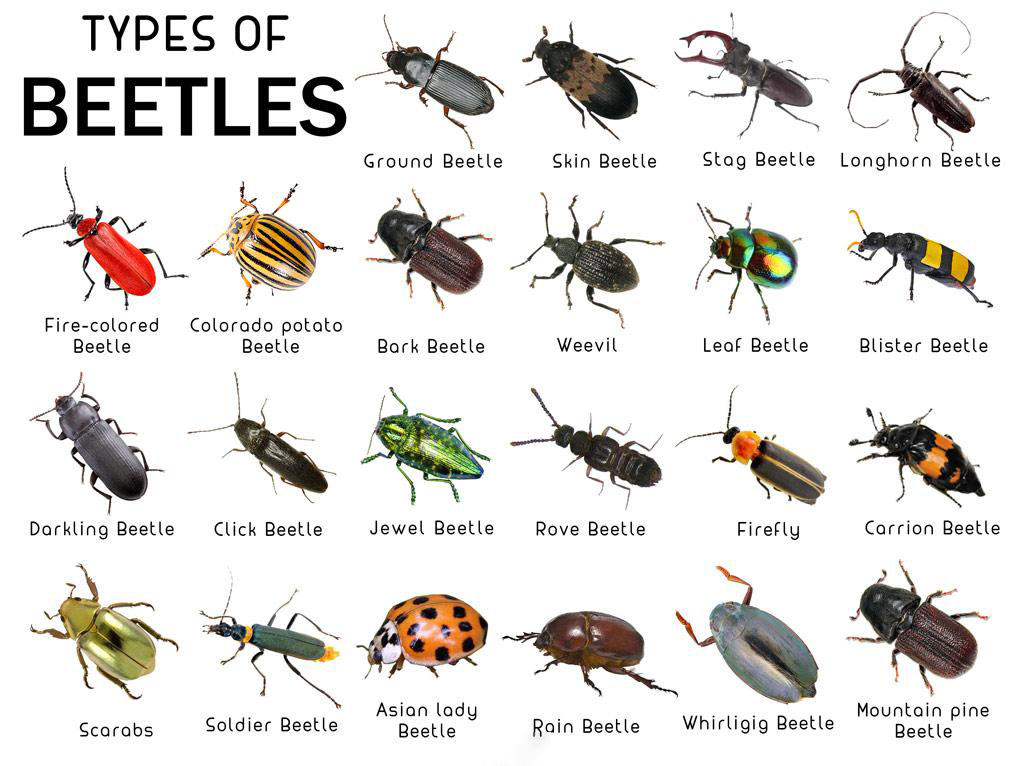
Quick Comparison Table: Common Types of Beetles at a Glance
| Beetle Type | Common Visual Clues | Where You May See Them | Beginner Notes |
|---|---|---|---|
| Lady beetles | Round, domed, often red or orange with black spots | Gardens, flowers, aphid-covered plants | Most are beneficial predators |
| Ground beetles | Dark, flattened, fast-running | Soil, mulch, garages, under stones | Often beneficial |
| Japanese beetles | Metallic green body, copper wing covers, white side tufts | Roses, grapes, fruit trees, lawns | Larvae are white grubs |
| Carpet beetles | Tiny oval adults; hairy larvae | Windowsills, closets, stored textiles | Larvae damage animal-based fibers |
| Longhorn beetles | Very long antennae, often narrow body | Trees, logs, firewood, flowers, lights | Larvae often develop in wood |
| Weevils | Snout at front, elbowed antennae | Stored grains, gardens, plants | Weevils are beetles |
| Leaf beetles | Small to medium, often colorful, found on leaves | Garden and wild plants | Many tied to specific host plants |
| June beetles | Heavy, brown or black, attracted to lights | Lawns, trees, porch lights | Larvae are white grubs |
| Fireflies | Soft body, partly hidden head, light organs | Grass, meadows, damp areas, summer evenings | Fireflies are beetles |
| Click beetles | Long, narrow body; clicks and flips | Lights, homes, fields, gardens | Larvae are called wireworms |
| Rove beetles | Very short wing covers, exposed abdomen | Soil, leaf litter, compost, under debris | Many are predators |
| Darkling beetles | Dark, oval or elongated, hard-bodied | Dry ground, stored products, barns | Some larvae are mealworms |
| Stag beetles | Large jaws in males, brown or black | Woodlands, logs, lights | Larvae develop in decaying wood |
| Soldier beetles | Soft-bodied, orange or yellow markings | Flowers, meadows, gardens | Adults visit flowers; often beneficial |
| Blister beetles | Soft, narrow, gray/black/striped/colorful | Flowers, crops, weedy areas | Avoid handling; can irritate skin |
| Powderpost beetles | Small brown beetles, tiny exit holes, fine powdery frass | Wood products, furniture, flooring | Confirm active infestation before acting |
Common Types of Beetles With Pictures
The beetles below are among the groups beginners are most likely to encounter. For each one, a photo from above and a second from the side will give you the most to work with.
1. Lady Beetles
Lady beetles — often called ladybugs or ladybird beetles — are probably the most recognized beetles in gardens. The classic form is rounded and dome-shaped, red or orange with black spots. But lady beetles can also be yellow, pinkish, black, or nearly spotless, and there are many species. Don’t assume every round spotted beetle is a lady beetle.
What to look for: A rounded, domed body with short legs partly tucked under. Smooth, shiny wing covers. Spots, bands, or sometimes a plain color. The larvae are a surprise to many people — long, dark, somewhat alligator-like creatures that look nothing like the familiar adult.
Where they live: Lady beetles are found wherever there are aphids, scale insects, or other small soft-bodied prey. They also visit flowers for pollen and nectar. In some regions, multicolored Asian lady beetles gather on the sides of buildings in fall and may find their way indoors as the weather cools.
Why they matter: Both adults and larvae are predators of small plant-feeding insects. A lady beetle larva on your plants is usually good news, even if it looks unfamiliar. Beginners sometimes confuse lady beetles with small tortoise beetles or rounded leaf beetles — lady beetles tend to be more consistently domed and smooth-backed.
2. Ground Beetles
Ground beetles are among the most common beetles found around homes, lawns, gardens, and fields. Most are black or dark brown, though some species are metallic green, bronze, blue, or even purple. When you disturb them, they run — fast.
What to look for: A somewhat flattened, oval body with long legs clearly built for speed. Thread-like antennae. A dark, often shiny body. Most of the time, ground beetles are found on the ground rather than on plants.
Where they live: Under stones, logs, mulch, fallen leaves, boards, and garden debris. They may wander into garages, basements, and entryways through gaps or gaps under doors, especially at night near lights. Outdoors, they tend to stay near soil.
Why they matter: Many ground beetles prey on other insects, slugs, and small invertebrates, which makes them a quiet ally in the garden. An occasional ground beetle indoors is almost always just an accidental visitor — it got in, and it would like to get back out.
Ground beetles can be confused with darkling beetles or cockroach nymphs. The beetle-shaped body with hard wing covers and fast ground-level movement is the clearest indicator.
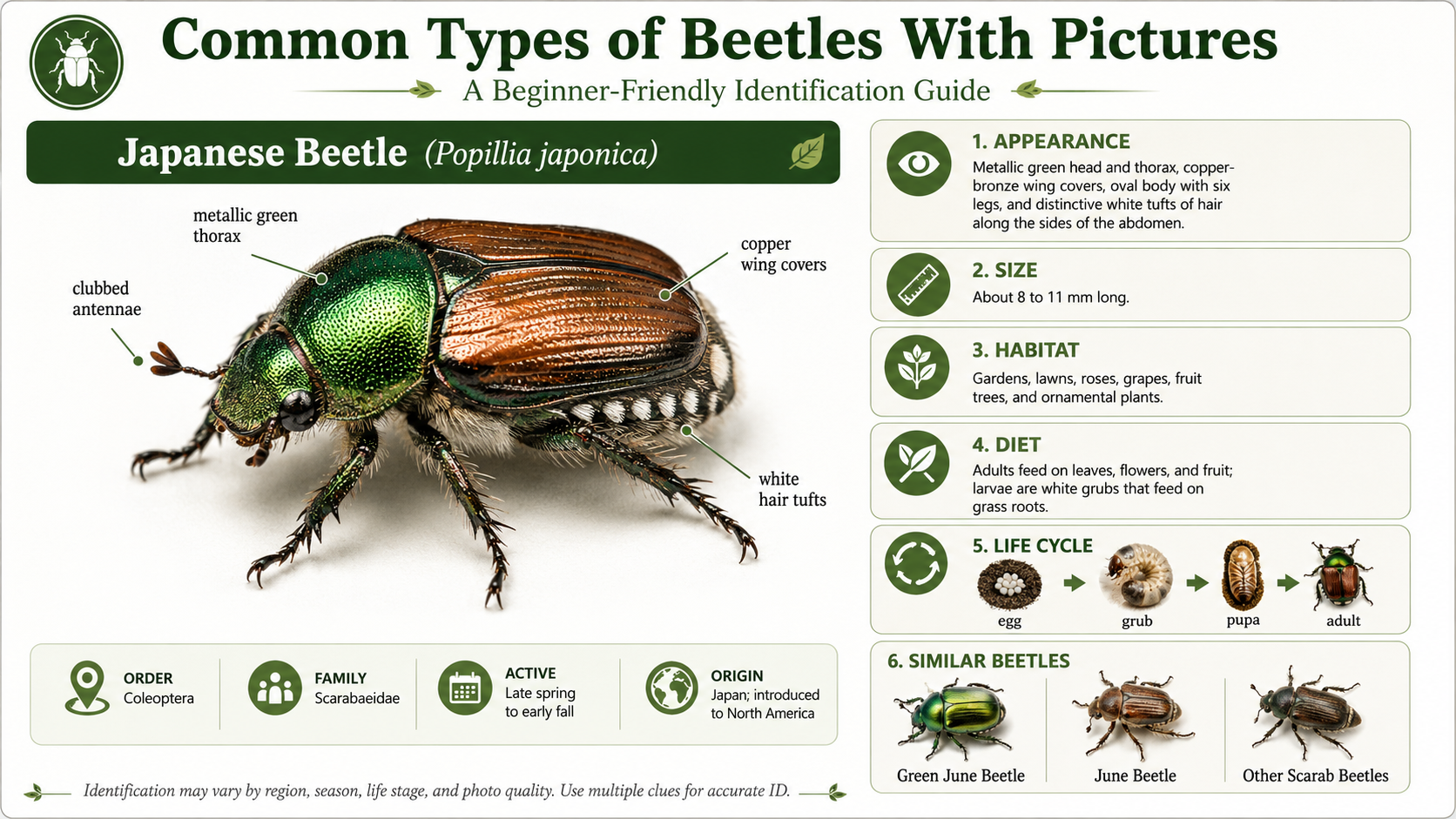
3. Japanese Beetles
In much of eastern and midwestern North America, Japanese beetles are easy to recognize when they’re feeding on roses, grapes, fruit trees, and ornamental plants. They have a distinctive combination of features that makes them more identifiable than many beetles.
What to look for: A metallic green head and thorax, copper or bronze wing covers, and a row of small white hair tufts along the sides of the abdomen. Those tufts are one of the best beginner clues. They tend to feed in groups, and the leaf damage — chewed-out tissue between the leaf veins, leaving a lacy skeleton — is distinctive.
Where they live: Adults appear in summer on roses, grape leaves, linden trees, and many ornamental and fruit plants. Their larvae are white grubs living in soil, where they feed on grass roots.
Why they matter: Leaf damage is often cosmetic on established plants, though heavy feeding can stress younger or weakened specimens. Grub feeding can contribute to turf problems. Japanese beetles can be confused with other metallic scarabs or green June beetles; the white side tufts help separate them.
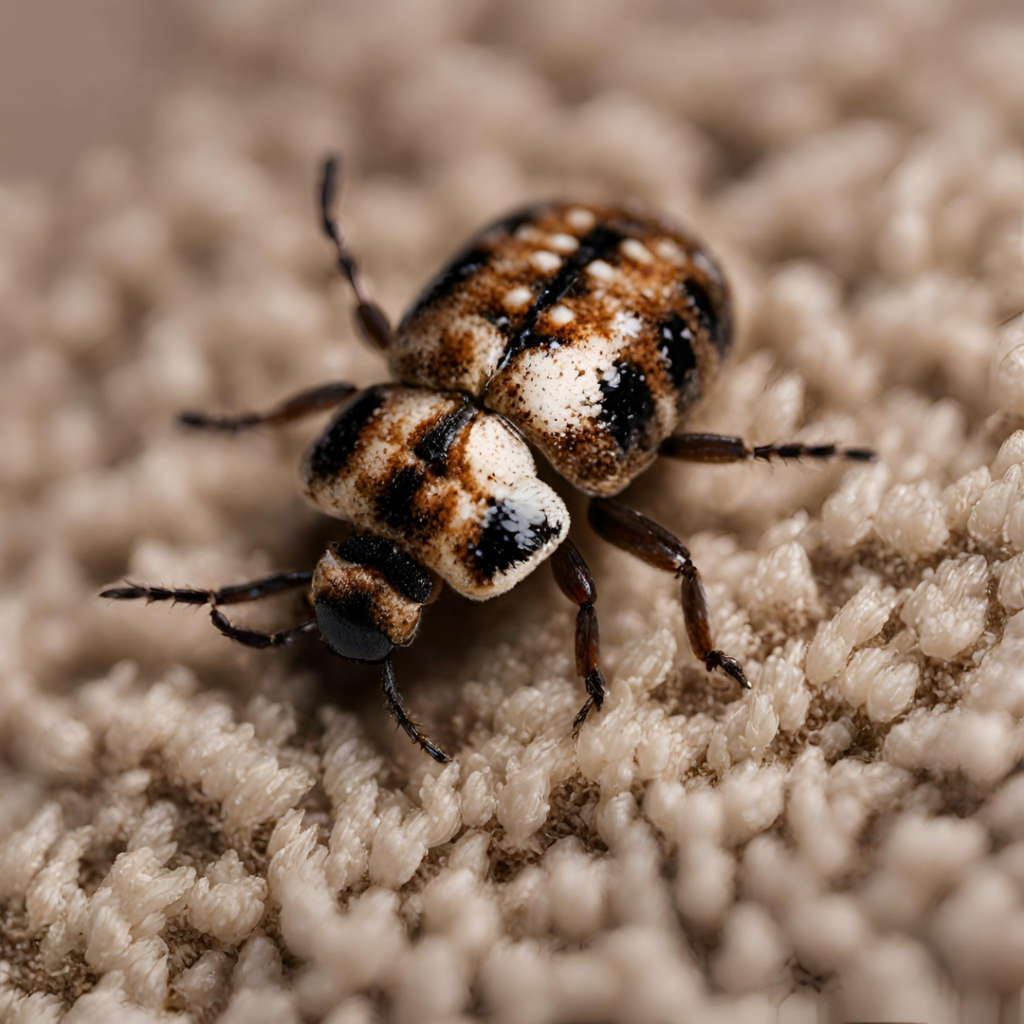
4. Carpet Beetles
Carpet beetles are small and easy to overlook — until you find the damage their larvae leave behind. Adults are often noticed on windowsills, where they’re drawn to light, but the adults themselves are not the problem stage.
What to look for in adults: Tiny oval beetles, usually under 4 mm, with mottled patterns of white, yellow, orange, and black scales in varied carpet beetles, or a plain dark oval body in black carpet beetles.
What to look for in larvae: Small, hairy, brownish caterpillar-like creatures that leave shed skins near baseboards, closets, drawers, or stored fabrics. The larvae are the stage that causes damage.
Where they live: Adults appear near windows and outdoor flowers. Larvae prefer dark, undisturbed areas — under furniture, along baseboards, in storage boxes, anywhere lint, pet hair, dead insects, wool, feathers, or fur accumulate.
Why they matter: Larvae can damage wool, fur, feathers, felt, taxidermy, and other animal-based materials. Finding one adult beetle doesn’t necessarily mean there’s a serious problem, but recurring larvae or unexplained damage to textiles deserves closer attention. Check fabrics and stored items, not just the windowsill.
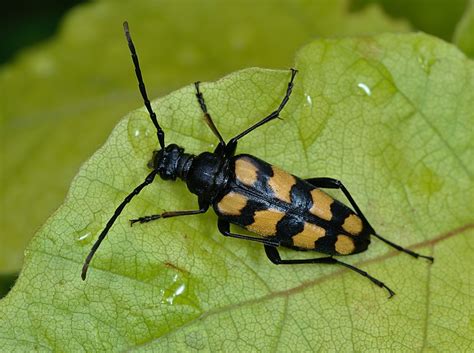
5. Longhorn Beetles
The name gives them away: longhorn beetles have antennae that are often as long as their body, or longer. Many have narrow, elongated bodies, and quite a few carry striking patterns of spots, bands, or mottled colors.
What to look for: Very long, segmented antennae — this is usually the first thing you notice. An elongated body, often narrow. Spots or banding on the wing covers. Adults may be seen on flowers, logs, bark, or around lights at night.
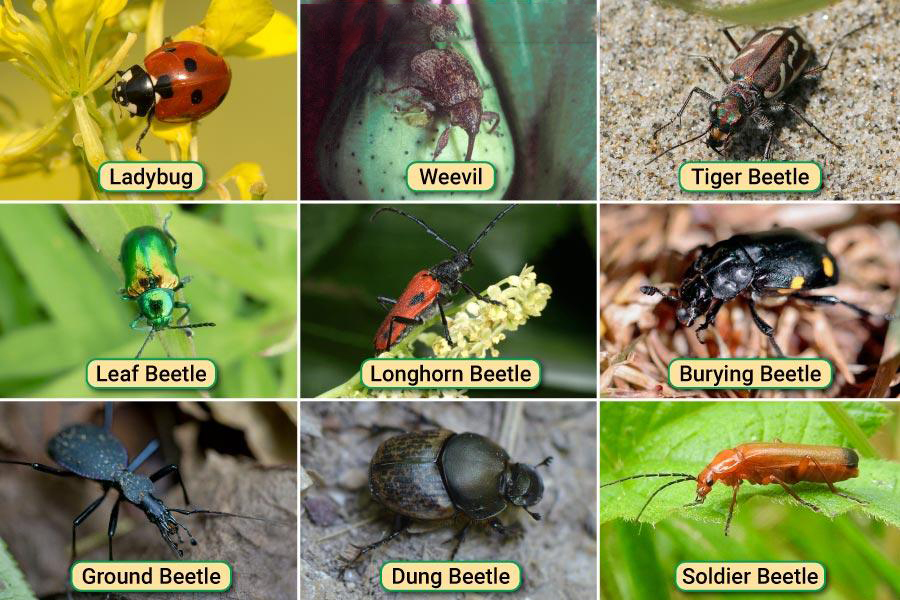
Where they live: Longhorn beetles are associated with trees, shrubs, dead wood, and logs. Adults sometimes visit flowers. Their larvae typically develop in dead, dying, or decaying wood, though habits vary considerably by species. Beetles emerging from firewood brought indoors are a common scenario — they were already developing in the wood before it was cut, and they don’t reinvade seasoned structural wood.
Why they matter: Most longhorn beetles outdoors play a role in natural wood recycling. A few species are important pests of specific trees or wood products. The unusually long antennae make longhorns one of the easier groups to recognize at a family level, though species identification requires more.
6. Weevils
Weevils are beetles, though they don’t always look like the typical picture of one. Most have a noticeable snout — called a rostrum — projecting forward from the head, and antennae that may be elbowed or clubbed. Some are tiny, some larger; some live in stored food, others on plants outdoors.
What to look for: A snout-like projection at the front of the head is the most reliable clue. Elbowed antennae are common. Small oval or pear-shaped body. Hard wing covers. Many weevils move slowly compared to ground beetles.
Where they live: In gardens, fields, forests, stored grains, rice, flour, seeds, and pantry products. Many outdoor weevils are closely tied to particular host plants, so the plant matters for identification.
Why they matter: Some weevils are harmless visitors; others can damage stored grains, seeds, roots, leaves, or fruit. What they were doing and where they were found is often more important for identification than the beetle itself. Not all weevils have a long, dramatic snout — some are quite subtly shaped.
7. Leaf Beetles
Leaf beetles are one of the largest beetle families, and they come in an enormous range of sizes, shapes, and colors. Many are small, rounded, and brightly colored; others are striped, spotted, or metallic. What they share is that you typically find them on plants — sitting on a leaf, feeding, or moving between stems.
What to look for: Small to medium size. Rounded, oval, or slightly elongated body. Bright colors, stripes, or metallic sheen in many species. Chewed leaf tissue or small feeding holes nearby.
Where they live: Directly on plants. Many species are strongly tied to specific host plants, which can be a major clue — a beetle on potato plants, milkweed, willows, or cucurbits points in different directions depending on the species in your region.
Why they matter: Some leaf beetles cause visible plant damage; others leave only minor marks. In a garden, the host plant itself often does more to narrow the identification than the beetle’s appearance alone. Leaf beetles can be confused with lady beetles, flea beetles, or small scarabs; body shape and host plant help separate them.
8. June Beetles and May Beetles
June beetles — also called May beetles or, colloquially, June bugs — are heavy-bodied scarab beetles that appear around lights in late spring and early summer. They’re clumsy in flight and often found bumping into porch lights or lying on their backs on the patio in the morning.
What to look for: A robust, oval body. Brown, reddish-brown, or black coloring. No long snout. Clubbed antennae, sometimes visible in close photos. Blundering, buzzing flight.
Where they live: Near porch lights, windows, lawns, and trees. Their larvae are white grubs that live in soil and feed on roots.
Why they matter: Adults may feed on foliage, but the larvae are often the bigger concern in lawns and turf. White grubs are C-shaped, pale, and soil-dwelling. Several scarab species produce similar-looking grubs, so grub identification for serious lawn problems is worth expert confirmation. June beetles can be confused with Japanese beetles or other scarabs; the absence of white side tufts and the heavy, plain brown body usually points toward June beetles.
9. Fireflies
Fireflies — also called lightning bugs — are beetles. Many people are surprised by this. Most familiar species produce light from organs near the tip of the abdomen, used in courtship displays, though not every firefly species or adult stage produces a strong flash.
What to look for: A soft-looking body with a head that’s partly hidden beneath a shield-like structure called the pronotum — more so than in most beetles. Brown, black, yellow, or orange markings. Light-producing segments visible at the abdomen tip in many species. Activity at dusk and into the night.
Where they live: Meadows, lawns, woodland edges, wetlands, and damp grassy areas during warm months. The larvae are predatory and typically live in or near soil and damp ground.
Why they matter: Fireflies are among the most beloved insects, though their populations are declining in some regions. The larvae feed on snails, slugs, worms, and other small animals. Fireflies can be confused with soldier beetles or net-winged beetles; the partly hidden head and light organs are the most useful clues.
10. Click Beetles
Click beetles get their name from the snapping sound and motion they produce when placed on their backs. A hinge between the thorax and abdomen stores tension, then releases it to flip the beetle upright — often with a visible jump and an audible click.
What to look for: An elongated body, tapered or parallel-sided. Hard wing covers. Pointed rear corners on the segment behind the head in many species. The clicking or flipping behavior when handled or threatened.
Where they live: Around lights, on walls, in gardens, fields, and woodland edges. They appear indoors occasionally. Their larvae — called wireworms — live in soil or decaying material; some species’ wireworms can feed on plant roots or seeds in agricultural settings.
Why they matter: Adults are often harmless and just visiting. The clicking behavior is the most reliable beginner clue and helps separate click beetles from similar-looking narrow darkling beetles or small longhorns.
11. Rove Beetles
Rove beetles often get overlooked or misidentified because many don’t look like typical beetles at first glance. Their wing covers are very short, leaving a long, flexible abdomen exposed — which can make them look like earwigs, small wasps, or unrelated insects.
What to look for: A slender body with very short wing covers. A long, exposed abdomen. Often black or dark brown. Fast movement. Some species raise the tip of the abdomen when disturbed.
Where they live: Leaf litter, compost, soil, decaying organic matter, under stones, and damp places. Some find their way indoors accidentally. They’re common in gardens but easy to miss.
Why they matter: Many rove beetles are predators of small insects and other invertebrates. They’re part of the natural decomposer and predator community in healthy soil. The short wing covers and exposed abdomen distinguish them from nearly every other common beetle — if you see that combination, rove beetle is the most likely answer.
12. Darkling Beetles
Darkling beetles are a large and diverse family. Many are dark brown or black with hard, oval or elongated bodies. Some species are familiar as the adult form of mealworms — the larvae sold as food for pet reptiles and birds.
What to look for: A dark, hard body. Oval or elongated shape. Slow, deliberate movement. Some species produce a noticeable odor when handled or disturbed.
Where they live: Under rocks, in dry soil, barns, dry storage areas, animal feed containers, and sometimes indoors. Their larvae — sometimes called false wireworms — are found in similar dry habitats.
Why they matter: Many darkling beetles feed on decaying plant material, fungi, or dry organic matter, making them decomposers. Others may be found in stored products. Ground beetles are often confused with darkling beetles: ground beetles tend to be faster, more predatory in shape, and often have a faint metallic sheen, while darkling beetles are typically slower and more evenly dark.
13. Stag Beetles
Stag beetles are among the most striking beetles in temperate regions, especially the males of some species, which carry dramatically enlarged mandibles — the “antlers” that give them their name. Not every stag beetle has impressive jaws, but the large-jawed species tend to be memorable.
What to look for: A medium to large body. Brown, reddish-brown, or black coloring. Enlarged jaws in males of many species. An association with woodlands or decaying wood.
Where they live: Forests and woodlands, logs, and stumps. Adults may come to lights at night. Their larvae feed in decaying wood, sometimes spending years underground before emerging as adults.
Why they matter: Larvae help recycle dead trees and stumps, contributing to woodland decomposition. Adults can look imposing, but they are not aggressive toward people when left alone. They can be confused with large scarabs or bess beetles; the jaw size and woodland habitat are the most useful clues.
14. Soldier Beetles
Soldier beetles are soft-bodied beetles commonly found on flowers. Many are orange, yellow, red, or black — color combinations that reminded early naturalists of military uniforms. They’re often slow-moving and easy to approach on flowers.
What to look for: Soft, flexible-looking wing covers. A long, narrow body. Orange, yellow, red, or black markings. Frequent visits to flowers. Active during the day.
Where they live: Flowers, meadows, garden plants, and field edges. Adults may feed on pollen, nectar, or small insects. Their larvae are thought to feed on small insects, slugs, or other soft-bodied prey in soil.
Why they matter: Soldier beetles are generally considered neutral to beneficial in gardens. They can be confused with fireflies, longhorn beetles, or net-winged beetles. Fireflies tend to have the head more completely hidden beneath the pronotum; soldier beetles leave more of the head visible.
15. Blister Beetles
Blister beetles are worth knowing by sight — not because they’re common household pests, but because some contain defensive chemicals that can cause skin irritation on contact. They should be observed and photographed, not handled.
What to look for: A long, somewhat soft-looking body. A narrow neck-like area behind the head. Colors vary widely by species: gray, black, striped, orange, or metallic forms all occur. Wing covers that look somewhat flexible rather than rigidly hard.
Where they live: Flowers, crop plants, weeds, and field edges. Some appear in loose groups. Their larvae, depending on species, may feed on grasshopper eggs or bee nests.
Why they matter: Some blister beetles feed on plants; others are part of predator-prey cycles in natural habitats. Because some can irritate skin, the best approach is to observe without touching, take a photo, and keep a respectful distance. They can be confused with soldier beetles, flower beetles, or narrow darkling beetles; the soft body and narrow neck behind the head are useful distinguishing features.
Note: If you experience skin irritation after contact with an unknown beetle, wash the area with soap and water and consult a medical professional if needed.
16. Dung Beetles and Other Scarabs
Scarabs are a large and varied family that includes dung beetles, flower chafers, rhinoceros beetles, June beetles, and Japanese beetles among many others. The family is united by clubbed antennae with distinctive leaf-like segments.
What to look for: A stout, oval body. Clubbed antennae. Strong digging legs in many species. Metallic colors in some flower chafers. Brown or black body in many dung beetles and June beetles.
Where they live: Scarabs occupy a wide range of habitats: lawns, soil, compost, dung, flowers, tree foliage, lights, and woodland edges.
Why they matter: Dung beetles are among the most ecologically important insects, recycling animal waste and improving soil structure. Some scarab larvae, known as white grubs, feed on roots and may matter in lawns, gardens, or crops. Separating scarab species often requires close examination.
17. Powderpost Beetles and Other Wood-Boring Beetles
Powderpost beetles are small and easy to miss as adults. What draws attention is their exit signs — tiny round holes in wood, fine powdery sawdust (called frass), and sometimes the beetles themselves emerging from flooring, furniture, or lumber.
What to look for: Small brown beetles. Tiny round exit holes in wood. A fine powder around or beneath the holes. Beetles appearing from wood products in the home.
Where they live: Wood products, furniture, flooring, bamboo, trim, and unfinished wood. Some wood-boring beetles emerge from firewood but don’t reinvade seasoned structural wood — so context matters.
Why they matter: Active powderpost beetle infestations can cause real damage to wood over time. But not every beetle found near lumber or firewood signals a structural problem. Correct identification matters before any treatment decision. Small pantry beetles, bark beetles, and other wood borers can look similar; the combination of exit holes and powdery frass is often more telling than the adult beetle photo alone.
18. Pantry Beetles
Pantry beetles are a practical category more than a single beetle family — they’re the various small beetles that infest stored foods. Common examples include sawtoothed grain beetles, flour beetles, drugstore beetles, cigarette beetles, and grain weevils.
What to look for: Tiny brown or reddish-brown beetles, usually 2–4 mm. Beetles inside flour, cereal, rice, pasta, spices, dried fruit, nuts, pet food, or birdseed. Larvae, webbing, or powder in stored food packages.
Where they live: Kitchens, pantries, cupboards, garages, and anywhere dried food is stored. They can infest a sealed container if the infestation began at a packaging facility.
Why they matter: They’re not dangerous in the way people sometimes fear, but they do contaminate food. The first step to solving a pantry beetle problem is finding the infested food source. Pantry beetles are sometimes confused with carpet beetles because both are small and may show up near windows; checking both the pantry and stored textiles usually reveals where the problem actually is.
19. Tiger Beetles
Tiger beetles are fast, sharp-eyed, and often beautiful — built more like predators than the beetles most people imagine. They have long legs, large eyes, and narrow bodies, and they tend to favor open, sunny ground.
What to look for: Large compound eyes. Long legs. Narrow body. Notably fast running — often taking short flights when approached. Metallic green, bronze, brown, or intricately patterned wing covers.
Where they live: Sandy paths, stream banks, beaches, open bare soil, trails, and sunny clearings. They’re not household or garden pests.
Why they matter: Tiger beetles are active predators and can serve as indicators of habitat quality. They’re sometimes confused with ground beetles; tiger beetles usually have noticeably larger eyes, longer legs, and more active daytime behavior in exposed open areas.
20. Jewel Beetles
Jewel beetles — also known as metallic wood-boring beetles — are among the most visually striking insects you might encounter. Many have brilliant metallic colors: green, blue, bronze, copper, or gold, sometimes shifting between shades in different light.
What to look for: A strong metallic shine. A bullet-shaped or wedge-shaped body. Hard wing covers. Shorter antennae than longhorn beetles — this is one of the most useful ways to separate them. Adults may be found on tree trunks, foliage, flowers, or sunny surfaces.
Where they live: Adults are often seen in or around trees; larvae of many species develop in wood or under bark.
Why they matter: Many jewel beetles are part of natural wood-cycling processes. Some species are associated with stressed or vulnerable trees and can become significant pests in those situations. Their bullet shape and metallic coloring are distinctive; longhorn beetles share the metallic quality in some species but have much longer antennae.
Common Beetle Identification Mistakes
A few habits make beetle identification harder than it needs to be.
Relying on color alone. A “black beetle” could be a ground beetle, a darkling beetle, a rove beetle, a carpet beetle, or dozens of other things. Color is one clue, not a conclusion.
Ignoring size. A 2 mm beetle and a 25 mm beetle can look similar in a close-up photo. Estimate size before anything else.
Forgetting the location. A small brown beetle in flour points somewhere very different from a small brown beetle emerging from wood or sitting on a flower. Location often does more work than the beetle’s appearance.
Confusing larvae with adults. Beetle larvae often look like worms, grubs, caterpillars, or small alligators. Lady beetle larvae look nothing like adult lady beetles. Carpet beetle larvae look nothing like adult carpet beetles. If you found a larva, that’s important to know.
Assuming any indoor beetle is a pest. Many beetles wander inside by accident. A ground beetle in a basement or a click beetle on a wall probably doesn’t need anything more than being escorted outside.
Expecting species-level identification from one photo. Many beetles require close examination of small body parts — parts that don’t show in a field photo. A picture may reliably identify the family or genus but not the species. That’s often enough for practical purposes, and it’s worth being honest about.
Beetle Habitats and Behavior
Beetles in Gardens
Garden beetles play many roles. Lady beetles, ground beetles, soldier beetles, and rove beetles are often predators or otherwise beneficial. Japanese beetles, some leaf beetles, and some weevils may feed on plants. Before treating any garden beetle, it’s worth identifying which role it’s playing.
Beetles in Homes
Indoor beetles typically fall into a few categories:
- Accidental visitors: ground beetles, click beetles, and similar wanderers that got in through a door or gap
- Fabric-related: carpet beetles, primarily the larvae, feeding on wool and other animal-based materials
- Stored food beetles: pantry beetles, grain weevils, and related species infesting dry food
- Wood-associated: powderpost beetles or beetles that emerged from firewood
- Seasonal visitors: some lady beetles entering in fall to overwinter
Beetles in Lawns
White grubs are the larvae of several scarab beetles — Japanese beetles, June beetles, chafers, and others. They live in soil and feed on grass roots. Because multiple species produce similar-looking grubs, expert identification may be needed for serious turf problems.
Beetles in Wood
Some beetles develop in dead or decaying wood as part of natural recycling. Others can infest wood products. Exit holes, powdery frass, and the pattern of damage matter as much as the beetle itself. Fresh signs of activity are more important than old, inactive exit holes.
Beetles at Lights
Many beetles are attracted to artificial lights at night. June beetles, click beetles, longhorn beetles, ground beetles, stag beetles, and various others may appear near porch lights. Most are just temporary visitors.
Beetle Diet and Life Cycle
Beetles go through complete metamorphosis — four distinct stages: egg, larva, pupa, adult. Importantly, the larva and adult often live in completely different places and eat completely different things.
A few examples:
- Japanese beetles: adults feed on leaves and flowers; larvae feed on grass roots underground
- Carpet beetles: adults may visit flowers outdoors; larvae develop indoors on animal-based fibers and organic debris
- Fireflies: adults flash above grass in summer; larvae live near soil in damp areas and prey on small animals
- Longhorn beetles: adults may visit flowers or lights; larvae develop inside wood
Beetles eat an extraordinary variety of things. Plants, fungi, other insects, dung, carrion, stored grains, pollen, nectar, roots, wood, and decaying material — all of these are food sources for one group of beetles or another. That dietary flexibility is a big part of why Coleoptera is the largest order of insects.
Beetles Around Homes and Gardens: A Practical Overview
A calm, observational approach is almost always the right starting point. Most beetles are harmless, useful, or simply passing through.
Generally Helpful or Neutral Outdoors
These beetles are often beneficial or not a practical concern:
- Lady beetles (adults and larvae)
- Ground beetles
- Rove beetles
- Soldier beetles
- Fireflies
- Many dung beetles and scarabs
- Many native longhorn beetles in natural wood habitats
Worth Monitoring Depending on Situation
These may matter depending on location, numbers, and what they’re doing:
- Japanese beetles on roses, grapes, and ornamental plants
- Carpet beetle larvae near stored textiles
- Pantry beetles in stored food
- Powderpost beetles in wood products showing active signs
- White grubs in areas with turf problems
- Some leaf beetles on vegetable crops
- Some weevils in stored grains or garden plants
Before Reacting, Observe
- How many beetles are present?
- Are they feeding, or just passing through?
- Are there larvae, shed skins, exit holes, frass, or plant damage?
- Is the beetle indoors, outdoors, in food, in fabric, in soil, or in wood?
- Does the same situation appear over multiple days or weeks?
One beetle on a windowsill is not the same as dozens of larvae in stored wool, or active beetles repeatedly emerging from structural wood.
When to Seek Expert Help
Most beetle sightings don’t require professional identification. But there are situations where expert input is genuinely useful.
Consider consulting an expert when:
- Beetles are emerging from structural wood, flooring, furniture, or beams
- You see fresh powdery sawdust and new exit holes in wood
- Carpet beetle larvae are repeatedly found alongside fabric damage
- A stored food infestation continues after cleaning and removing the source
- Lawn damage is severe and white grubs are confirmed present
- A beetle may be invasive or regulated in your area
- A crop, orchard, greenhouse, or nursery planting is significantly affected
- You need to confirm whether an insect is a beetle, termite, ant, or bed bug
- Someone experiences skin irritation after contact with an unknown beetle
Good places to ask: local university extension offices, natural history museums, government agriculture and invasive species departments, entomology departments, and licensed pest professionals.
Recommended Resources for Further Identification
For difficult or important identifications, go beyond image search results. The most reliable resources include:
- University extension insect identification pages — many offer free ID services
- Natural history museum entomology resources
- Government agriculture and invasive species websites
- Regional field guides from naturalist presses
- Museum specimen databases
- Expert-reviewed insect ID platforms
- Local master gardener or extension programs
When you contact an expert or submit a photo for identification, include:
- Clear photos from above, side, and near the head if possible
- A size estimate
- Country, state or region, and specific habitat
- Date and season
- What the beetle was doing and what it was on
- Number of beetles seen
FAQ: Common Types of Beetles
What is the easiest way to identify a beetle?
Look at body shape, size, antennae, wing covers, color pattern, habitat, and behavior together. Don’t rely on color alone. A clear overhead photo with a size reference helps considerably.
What are the most common beetles found around homes?
Common beetles around homes include carpet beetles, ground beetles, pantry beetles, click beetles, lady beetles, and occasional wood-boring beetles. The exact types depend on region, season, and where in the home you find them.
Are all black beetles the same?
No. “Black beetle” describes many different beetles, including ground beetles, darkling beetles, carpet beetles, rove beetles, click beetles, and others. Size, shape, location, and behavior are needed to go further.
Is a ladybug actually a beetle?
Yes. Ladybugs — more precisely called lady beetles or ladybird beetles — belong to the order Coleoptera. Many species are predators of aphids and other small soft-bodied insects.
Are fireflies beetles?
Yes. Fireflies, or lightning bugs, are beetles. Many species produce light from organs near the tip of the abdomen, primarily during courtship.
Why do beetles come into the house?
Beetles enter homes for various reasons: following lights, slipping through gaps, hitchhiking in firewood, emerging from stored food, or developing in organic debris indoors. Where you find them is the best clue to which situation applies.
Which beetles damage clothes or fabrics?
Carpet beetle larvae are the primary concern. They can damage wool, fur, feathers, felt, and other animal-based materials. Adult carpet beetles themselves are often found near windows but don’t cause the damage — the larvae do.
Which beetles are common in stored food?
Sawtoothed grain beetles, flour beetles, drugstore beetles, cigarette beetles, and grain weevils are among the most frequently encountered stored-food beetles. They may turn up in flour, cereal, rice, pasta, spices, nuts, dried fruit, or pet food.
Which beetles damage lawns?
White grubs — the larvae of scarab beetles such as Japanese beetles, June beetles, and chafers — can damage lawns by feeding on grass roots. Because multiple species produce similar-looking grubs, confirmation from an extension service or professional can be worthwhile before treating.
Are beetles dangerous to people?
Most beetles pose no danger. Some can pinch or bite if handled; some release defensive odors. Blister beetles are worth special caution because some contain compounds that can irritate skin. For general observation, leaving beetles alone and not handling unknown species is a reasonable habit.
How do I take better pictures for beetle identification?
Take one photo from above, one from the side, and one close-up of the head and antennae. Put a ruler, coin, or pencil tip next to the beetle for scale. Record the location, date, habitat, what the beetle was on, and what it was doing.
When should I ask an expert to identify a beetle?
When beetles are causing or suspected of causing damage to wood, food, clothing, lawns, or crops; when a species might be invasive or regulated; or when species-level identification genuinely matters. University extension offices and museum entomology departments are good first contacts.
Conclusion
Learning the common types of beetles is less about memorizing every species and more about building the habit of noticing the right clues. Size, body shape, antennae, wing covers, color pattern, habitat, season, and behavior all work together. No single feature does the job alone.
A small mottled oval beetle on a windowsill may be a carpet beetle. A fast black beetle in the garage is often a ground beetle. A metallic green and copper beetle feeding on roses in summer points toward Japanese beetles in many parts of North America. A glowing insect drifting over summer grass is almost certainly a firefly — which is also a beetle. A snouted insect in stored grain is likely a weevil.
The more carefully you observe, the closer you get. Use clear pictures, collect multiple clues, and turn to credible local resources when the identification actually matters. And remember: beetles aren’t just household visitors or garden problems. They’re predators, pollinators, decomposers, plant feeders, soil engineers, and some of the most varied, widespread, and ecologically important insects on Earth.
1 thought on “Common Types of Beetles With Pictures: A Beginner-Friendly Identification Guide”