

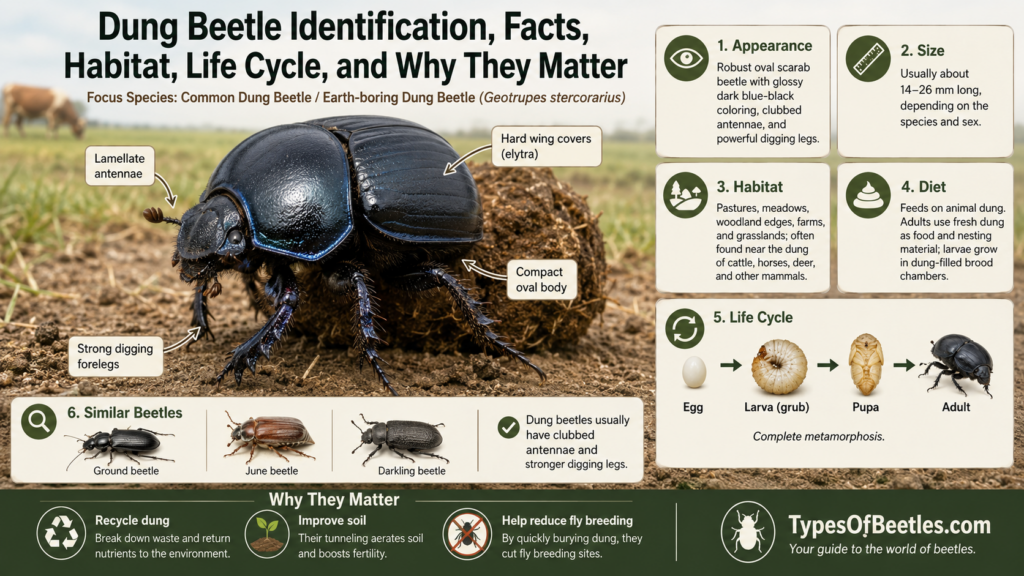
A dung beetle is a beetle that feeds on, buries, rolls, or lives in animal dung. Many dung beetles are scarab beetles, and they are among the most useful insects in grasslands, pastures, savannas, forests, farms, and even some gardens.
For beginners, the easiest way to understand a dung beetle is not to start with a single species name. Instead, look at what the beetle is doing. Some dung beetles roll dung into balls. Some dig tunnels under dung. Others live directly inside dung pats. These behaviors are often more helpful for a first identification than color alone.
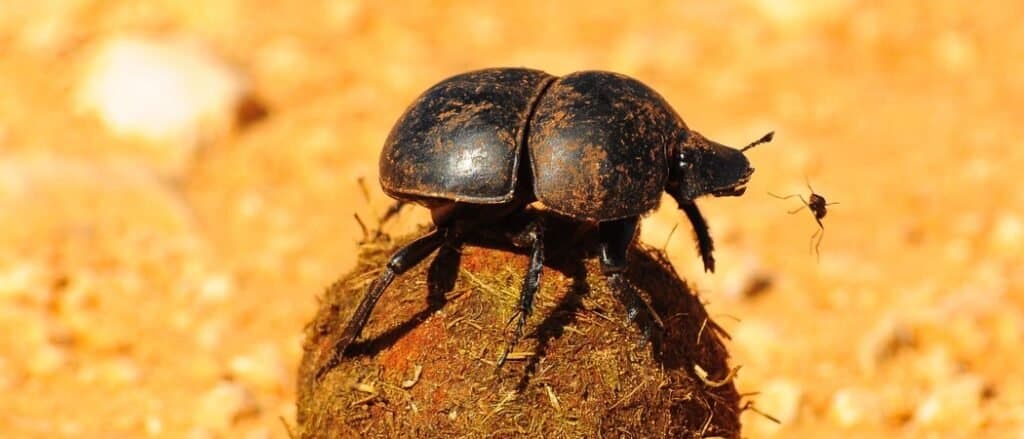
Dung beetles are not usually household pests. They are better understood as natural recyclers. By breaking down animal waste, burying organic material, and moving nutrients into the soil, they help clean up the landscape and support soil life.
This guide explains how to identify dung beetles, where they live, what they eat, how their life cycle works, and why they matter.
About This Guide
This guide is written for beginners, homeowners, gardeners, students, teachers, and nature enthusiasts who want a practical introduction to dung beetles.
Dung beetle identification can vary by region, life stage, season, and photo quality. A small dark beetle near animal droppings may be a dung beetle, but it may also be another kind of scarab, ground beetle, rove beetle, or fly-associated beetle.
For better identification, observe several clues together:
- Size
- Color
- Body shape
- Antennae
- Wing covers
- Leg shape
- Habitat
- Behavior
- Nearby animal dung
- Season
- Geographic location
This article can help you narrow down the likely group, but it should not be treated as a guaranteed species-level identification. For exact species identification, consult regional field guides, university extension resources, museum references, government agriculture resources, or entomology specialists.
What Is a Dung Beetle?
A dung beetle is a beetle that uses animal dung as food, breeding material, or nesting material. The word “dung” simply means animal feces, especially from mammals such as cattle, horses, deer, sheep, goats, elephants, or wild herbivores.
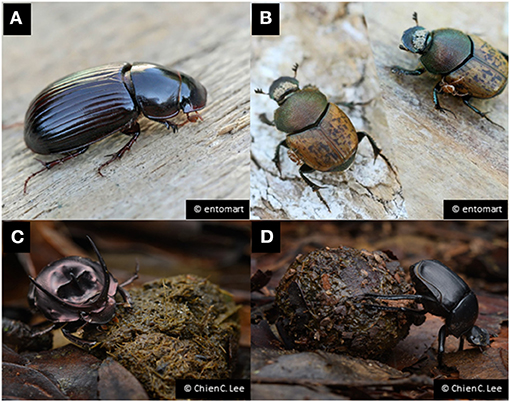
Most familiar dung beetles belong to the scarab beetle group. Some are rounded, dark, and compact. Others are metallic green, bronze, blue, or black. Some male dung beetles have horns or raised structures on the head or thorax. Many have strong digging legs and clubbed antennae.
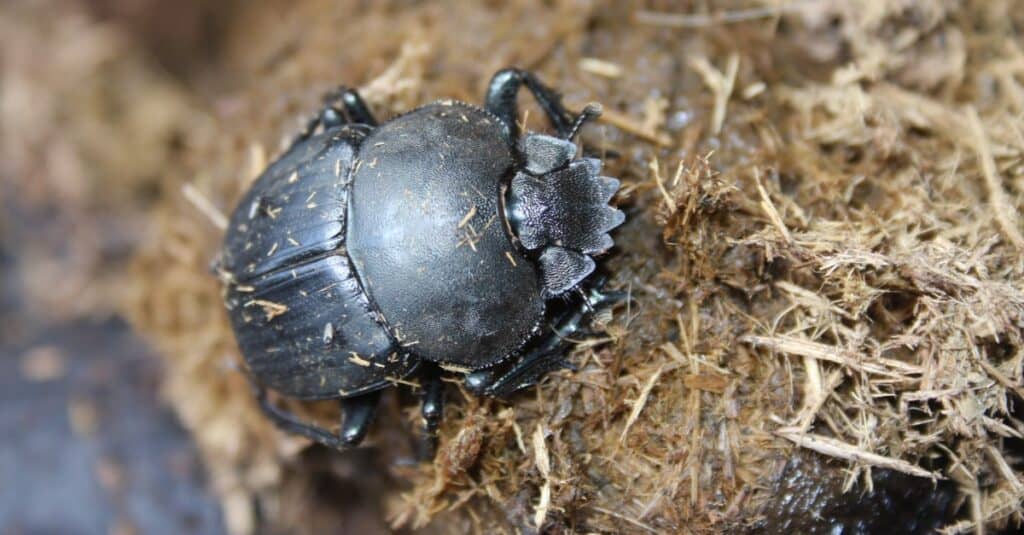
Dung beetles are best known for rolling balls of dung, but not all dung beetles roll. In fact, many species never make the dramatic round balls seen in documentaries. Some dig beneath dung, and some simply live inside it.
The term “dung beetle” is partly ecological. It describes what the beetle does, not just one single species. Different dung beetles may belong to different genera, subfamilies, or families, depending on the region.
Quick Facts About Dung Beetles
- Dung beetles are beetles associated with animal dung.
- Many belong to the scarab beetle family.
- They may roll, bury, tunnel under, or live inside dung.
- They help recycle nutrients into soil.
- Their larvae often develop in dung prepared by the adults.
- They are found on every continent except Antarctica.
- They are especially important in grasslands and pastures.
- Most are not dangerous to people.
- They are usually beneficial outdoors.
- Species identification often requires location, size, close-up photos, and expert references.
How to Identify a Dung Beetle
Dung beetle identification is easiest when you combine body features with behavior. A beetle’s appearance matters, but where it is found and what it is doing are often just as important.
1. Size
Dung beetles vary widely in size. Some are only a few millimeters long, while large tropical species can be several centimeters long.
In gardens, fields, and pastures, many common dung beetles are small to medium-sized. Beginners often overlook the smaller species because they do not look as dramatic as the large rollers seen in nature documentaries.
When observing a possible dung beetle, estimate its size:
- Very small: about 2–5 mm
- Small: about 5–10 mm
- Medium: about 10–20 mm
- Large: over 20 mm
Size alone will not identify the species, but it helps narrow the possibilities.
2. Color
Many dung beetles are black, dark brown, or dull bronze. Others can be metallic green, blue, copper, or reddish-bronze.
Color can be useful, but it is not enough by itself. A shiny green beetle may be a dung beetle in one region, but a flower chafer, leaf chafer, or another scarab in another region. Lighting can also distort color in photos.
Look for color together with body form and behavior.
3. Body Shape
Dung beetles often have a compact, rounded, oval, or slightly elongated body. Many look sturdy rather than delicate.
Common body clues include:
- Rounded or oval outline
- Hard, glossy wing covers
- Strong thorax
- Short, powerful legs
- Low, compact profile
- Heavy-bodied appearance
Some tunnelers look especially robust because they are adapted for digging. Dwellers may be smaller and less obvious.
4. Antennae
Dung beetles and many other scarab beetles have clubbed antennae. The end segments can open like tiny plates or leaves. These are called lamellate antennae.
This feature is important because dung beetles rely heavily on smell. Fresh dung is a temporary resource, so many species must locate it quickly.
If you can see the antennae in a close-up photo, look for a fan-like or clubbed end. However, the antennae may be tucked away and hard to see without magnification.
5. Legs
Dung beetles often have strong legs, especially the front legs. Tunnelers may have front legs shaped for digging. Rollers use their legs to shape and move dung balls. Some species have toothed or spined legs that help them push soil or grip dung.
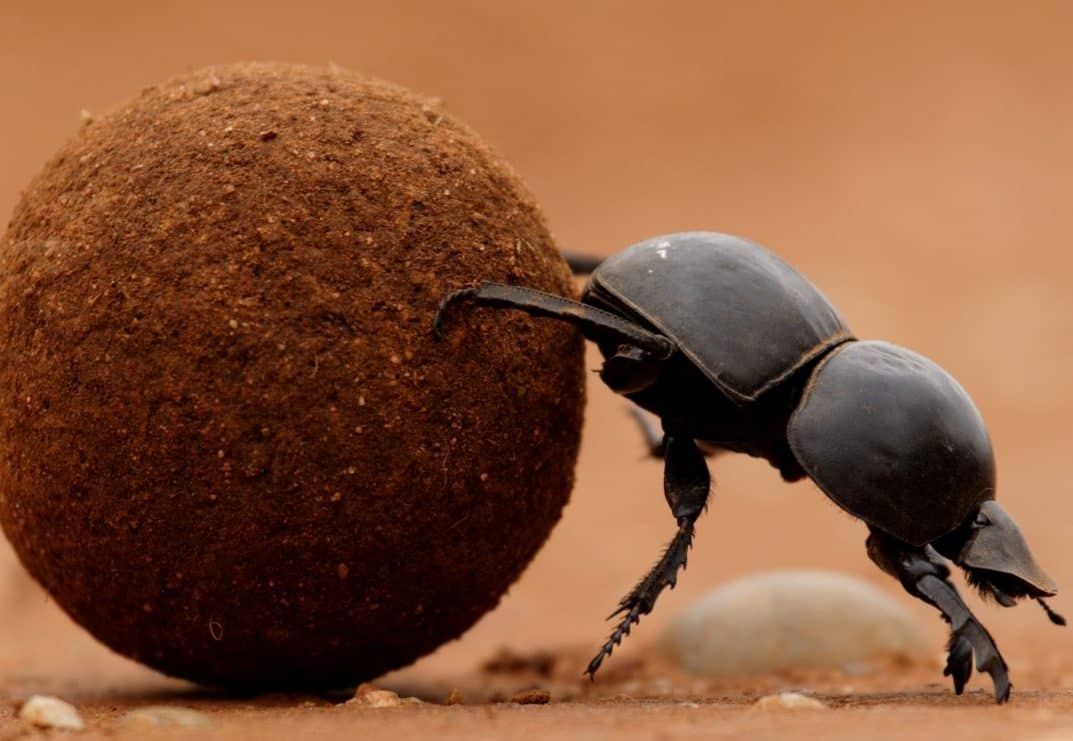
Look for:
- Stout legs
- Broad front tibiae
- Small teeth or spines on the legs
- A digging posture
- Beetles pushing soil or dung
Leg shape is especially helpful when comparing dung beetles with smoother, more slender beetles.
6. Wing Covers
Like other beetles, dung beetles have hardened front wings called elytra. These wing covers protect the delicate flying wings underneath.
Many dung beetles can fly. Flying helps them locate fresh dung over a wide area. You may see them flying low over pastures, near livestock, around wildlife trails, or close to manure piles.
The elytra may be smooth, ridged, grooved, metallic, dull, or slightly textured depending on the species.
7. Behavior
Behavior is one of the strongest clues.
A beetle is more likely to be a dung beetle if you see it:
- Rolling a ball of dung
- Digging beneath a dung pat
- Emerging from animal droppings
- Flying around fresh manure
- Crawling in pasture dung
- Working in pairs near dung
- Carrying or burying organic material
Not every beetle near dung is a dung beetle, but dung-related behavior is a strong sign.
8. Habitat
Dung beetles are often found where animals leave droppings. This includes:
- Cattle pastures
- Horse fields
- Sheep and goat pastures
- Deer trails
- Wildlife areas
- Grasslands
- Savannas
- Forest edges
- Rural gardens
- Compost-rich areas
- Around manure piles
In home gardens, dung beetles are most likely where pet waste, livestock manure, wildlife droppings, or organic matter are present.
Types of Dung Beetles: Rollers, Tunnelers, and Dwellers
One of the clearest ways to understand dung beetles is by their behavior. Many species are grouped into three broad types: rollers, tunnelers, and dwellers.
Rollers
Rollers are the famous dung beetles that shape dung into a ball and roll it away from the original dung pile. They may bury the ball and use it for feeding or reproduction.
The rolling behavior helps the beetle move its food away from competitors. Fresh dung attracts many insects quickly, so leaving the crowded dung pile can be an advantage.
Rollers are the most iconic dung beetles, but they are not the most common type everywhere.
Tunnelers
Tunnelers dig beneath or near a dung pat. Instead of rolling a ball far away, they pull dung into underground tunnels. The dung may be shaped into brood balls or stored in chambers.
Tunnelers are especially important for soil because they move dung below the surface. Their digging can help mix organic material into the soil and improve aeration.
Many large, robust dung beetles are tunnelers.
Dwellers
Dwellers live directly inside dung. They do not usually roll dung or dig deep tunnels. Instead, adults and larvae use the dung pat itself.
Dwellers are easy to miss because they may be small and hidden within the dung. In some regions, dwellers make up a large portion of the dung beetle community.
Dung Beetle vs Similar-Looking Beetles
Many beetles can be mistaken for dung beetles. This is especially true when the beetle is small, dark, shiny, or found near soil.
Dung Beetle vs Ground Beetle
Ground beetles are often fast-running predators. They usually have longer legs, a more flattened body, and threadlike antennae rather than clubbed scarab antennae.
Dung beetles are usually more compact and may be found directly on or under dung. Ground beetles may run around soil, mulch, paths, or garden beds while hunting.
Dung Beetle vs June Beetle
June beetles are also scarabs, so they can look related. Many June beetles are attracted to lights and may feed as larvae on roots.
Dung beetles are more strongly associated with animal waste. June beetles are not usually seen rolling, burying, or living in dung.
Dung Beetle vs Rove Beetle
Rove beetles often occur around dung because many hunt fly eggs or larvae. They have short wing covers that leave much of the abdomen exposed.
Dung beetles usually have full, hard wing covers over the abdomen and a more rounded scarab shape.
Dung Beetle vs Hister Beetle
Hister beetles are small, shiny, hard-bodied beetles that may also occur in dung. They are often predators of fly larvae.
They can look like tiny black polished beetles. A hand lens may be needed to separate them from small dung-associated scarabs.
Dung Beetle vs Carrion Beetle
Carrion beetles feed around dead animals and decaying material. Some dung beetles may also visit carrion or rotting organic matter, depending on the species.
Habitat, body shape, antennae, and behavior are important for telling them apart.
Where Do Dung Beetles Live?
Dung beetles live in many habitats, as long as suitable dung and soil conditions are available. They are especially common in places with mammals.
Common dung beetle habitats include:
- Grasslands
- Pastures
- Open fields
- Savannas
- Forests
- Woodland edges
- Farms
- Heathlands
- Deserts with large herbivores
- Tropical forests
- Rural gardens
- Wildlife corridors
Different species prefer different conditions. Some like sandy soil. Others do better in clay or loam. Some are active in open sunlit pastures, while others are forest specialists.
Moisture also matters. Very dry dung may become less useful for many species. On the other hand, waterlogged soil may make tunneling difficult.
Season affects sightings. In many temperate areas, dung beetles are more active in warmer months. In tropical regions, activity may follow rainfall and animal movement.
What Do Dung Beetles Eat?
Most dung beetles feed on animal dung. Adults often feed on the liquid or nutrient-rich parts of dung, while larvae may chew more solid material inside brood balls or dung masses.
Dung can contain undigested plant material, microbes, moisture, and nutrients. For a dung beetle, it is not waste. It is food, nursery material, and shelter.
Dung beetles may use dung from:
- Cattle
- Horses
- Sheep
- Goats
- Deer
- Elephants
- Wild mammals
- Dogs
- Other vertebrates, depending on species
Not all dung is equally attractive. Some dung beetles prefer certain animals, moisture levels, freshness, or habitats. Fresh dung is often more attractive than old, dry dung because it is easier to detect and use.
Some dung beetles also feed on or visit other decomposing materials, such as carrion, fungi, rotting fruit, or decaying plant matter. This depends on the species.
Dung Beetle Life Cycle
Dung beetles undergo complete metamorphosis. That means they develop through four main stages:
- Egg
- Larva
- Pupa
- Adult
Egg
The female lays eggs in a protected dung resource. In tunnelers, this may be underground in a burrow. In rollers, it may be inside or near a buried dung ball. In dwellers, eggs may be laid directly in the dung pat.
Larva
The larva hatches and feeds on dung prepared by the adults. Beetle larvae are often grub-like, soft-bodied, and pale. They are not miniature versions of the adult.
The larval stage is a major feeding stage. The amount and quality of dung available can affect growth.
Pupa
After feeding and growing, the larva becomes a pupa. During this stage, the insect transforms into its adult form.
The pupa usually remains protected in soil, dung, or a brood chamber.
Adult
The adult emerges and searches for food, mates, and suitable dung for reproduction. Many adults fly to find fresh dung.
The time required for the full life cycle depends on species, temperature, moisture, and food availability.
Why Do Dung Beetles Roll Dung?
Dung beetles roll dung for practical reasons. A dung pile is a crowded place. Flies, other beetles, mites, and competing dung beetles may arrive quickly. By rolling a portion away, a beetle can reduce competition and protect its food or future brood.
A dung ball may be used as:
- Adult food
- A mating resource
- A nursery for eggs
- Food for larvae
- A protected underground brood ball
Not every dung beetle rolls dung. Many species use more hidden strategies, such as tunneling below the dung pat or living inside the dung itself.
Are Dung Beetles Good for Gardens and Farms?
Yes, dung beetles are generally beneficial outdoors. Their value is clearest in pastures and livestock systems, but they also contribute to natural ecosystems.
Dung beetles can help by:
- Breaking down animal waste
- Moving organic matter into soil
- Supporting nutrient cycling
- Improving soil structure
- Creating small tunnels that help aeration
- Reducing the time dung remains on the surface
- Competing with some dung-breeding flies
- Supporting broader food webs
In gardens, dung beetles may be less visible unless there are pets, wildlife, livestock, or nearby natural areas. If you see dung beetles outdoors, they are usually part of the natural cleanup crew.
Are Dung Beetles Harmful to People, Pets, or Homes?
Dung beetles are not considered dangerous household insects. They do not eat wood, fabric, stored grain, or houseplants. They are not like termites, carpet beetles, or pantry beetles.
They may occasionally appear near lights, doors, patios, or garages, especially if there is nearby animal waste or pastureland. This does not usually mean they are infesting the home.
Basic precautions are still sensible:
- Do not handle insects and then touch your face or food.
- Wash hands after garden or pasture work.
- Keep pet waste cleaned up in small yards.
- Use gloves when handling manure or compost.
- Avoid crushing unknown beetles indoors if they can be released outside.
If many beetles are appearing indoors, the issue is likely an attractant nearby, such as animal waste, manure, compost, or outdoor lighting.
Dung Beetles Around Homes and Gardens
Homeowners may notice dung beetles in several situations.
Near Pet Waste
Dog waste can attract many insects, including flies and some dung-associated beetles. Regular cleanup reduces insect activity and keeps the yard healthier.
Near Manure or Compost
If you use aged manure in a garden, you may see beetles nearby. This does not automatically mean there is a pest problem. Many insects are part of the decomposition process.
Fresh manure attracts more insects than well-aged composted manure.
Near Wildlife Droppings
Deer, rabbits, raccoons, foxes, and other animals may leave droppings around rural or suburban properties. Dung beetles may arrive to use these resources.
Near Outdoor Lights
Some scarab beetles fly at night and may come to porch lights. A beetle found at a light is not automatically a dung beetle, but some dung beetles can fly and may be noticed this way.
In Pasture Edges
Homes near cattle, horse, sheep, or goat pastures may have more dung beetle activity. This is usually beneficial and expected.
Common Mistakes When Identifying Dung Beetles
Mistake 1: Assuming Every Dung Beetle Rolls Dung
Rolling is famous, but many dung beetles are tunnelers or dwellers. A beetle can be a dung beetle even if it never rolls a ball.
Mistake 2: Using Color Alone
Black, brown, green, or metallic color is not enough for identification. Many beetle groups share these colors.
Mistake 3: Ignoring Location
A species common in one country or state may not occur in another. Always consider geographic range.
Mistake 4: Confusing Adult Beetles with Larvae
Adult dung beetles are hard-bodied beetles. Larvae are soft, pale grubs. They look completely different.
Mistake 5: Expecting One Universal Dung Beetle
“Dung beetle” refers to many species. Some are tiny. Some are large. Some are dull black. Some are brightly metallic.
Mistake 6: Treating Online Photos as Exact Matches
Photo-based identification can be limited by angle, lighting, scale, and missing details. For species-level confirmation, use regional keys or expert review.
How to Observe Dung Beetles Responsibly
Dung beetles can be fascinating to watch, especially in pastures or wildlife areas. However, observe them carefully and respectfully.
Good observation habits include:
- Watch without disturbing the dung pat too much.
- Take clear photos from above and from the side.
- Include a size reference, such as a ruler or coin.
- Photograph the habitat.
- Note the date, time, and location.
- Avoid handling dung directly.
- Wear gloves if working around manure.
- Do not move beetles long distances.
- Avoid collecting unless you are doing approved research or working with a local expert.
If you are photographing for identification, try to capture:
- Full body shape
- Head and antennae
- Legs
- Wing covers
- Side profile
- Behavior
- Nearby dung or soil conditions
When to Seek Professional Help
Dung beetles outdoors usually do not require control. In most cases, they should be left alone.
Consider seeking help if:
- Large numbers of beetles are repeatedly entering the home.
- You are managing a livestock pasture and want to improve dung breakdown.
- You suspect a broader fly or manure-management issue.
- You need species-level identification for research, agriculture, or conservation.
- You are dealing with animal health concerns related to manure, parasites, or pasture management.
Helpful contacts may include:
- Local university extension offices
- Agricultural advisors
- Entomology departments
- Natural history museums
- Livestock veterinarians
- Licensed pest professionals, when insects are entering buildings in large numbers
For farms, the best solution is usually habitat and manure management, not broad insecticide use. Broad-spectrum insecticides can sometimes reduce beneficial insects along with target pests.
Suggested Sources for Further Identification
For responsible identification, consult sources that focus on your region. Good source types include:
- University extension resources
- Museum insect collections
- Regional beetle field guides
- Government agriculture departments
- Entomology textbooks
- Natural history societies
- Peer-reviewed entomology papers
- Local insect recording groups
- Expert-reviewed identification platforms
When possible, compare your beetle with sources from the same country, state, province, or ecological region.
FAQ
Frequently Asked Questions About Dung Beetles
What is a dung beetle?
A dung beetle is a beetle that feeds on, buries, rolls, or lives in animal dung. Many dung beetles are scarab beetles, but the term describes a dung-using lifestyle rather than one single species.
Do all dung beetles roll dung?
No. Only some dung beetles roll dung into balls. Others dig tunnels beneath dung or live directly inside dung pats.
What do dung beetles eat?
Most dung beetles eat animal dung. Adults often feed on liquid or nutrient-rich parts of dung, while larvae feed on dung prepared by the adults.
Are dung beetles good for the garden?
Dung beetles are generally beneficial outdoors. They help break down animal waste, move nutrients into soil, and support natural decomposition.
Are dung beetles harmful to humans?
Dung beetles are not usually harmful to humans. They are not household pests and do not damage wood, clothing, stored food, or furniture.
Why do dung beetles roll poop?
Some dung beetles roll dung away from the main dung pile to reduce competition. The dung ball may be used as food or as a nursery for eggs and larvae.
Where do dung beetles live?
Dung beetles live in habitats where animal dung is available, including pastures, grasslands, forests, savannas, farms, wildlife areas, and some rural gardens.
Can dung beetles fly?
Many dung beetles can fly. Flying helps them find fresh dung, which may appear unpredictably across a landscape.
What does a dung beetle look like?
A dung beetle often has a compact, rounded or oval body, hard wing covers, strong legs, and clubbed antennae. Some species are black or brown, while others are metallic green, blue, bronze, or copper.
Do dung beetles live in houses?
Dung beetles do not normally live in houses. If they appear indoors, they may have entered accidentally from nearby outdoor areas, lights, manure, pet waste, or pastureland.
Are dung beetles the same as scarab beetles?
Many dung beetles are scarab beetles, but not all scarab beetles are dung beetles. Scarab beetles include many groups, such as June beetles, flower chafers, rhinoceros beetles, and dung beetles.
How can I identify a dung beetle species?
To identify a dung beetle species, record the beetle’s size, color, body shape, antennae, legs, behavior, habitat, date, and location. Use regional field guides, museum references, university extension resources, or expert review for confirmation.
Conclusion
The dung beetle is one of nature’s most effective recyclers. Although it is best known for rolling balls of dung, many dung beetles live quieter lives as tunnelers or dwellers. Together, they break down animal waste, move nutrients into soil, reduce surface dung, and support healthier ecosystems.
For identification, do not rely on one feature alone. Look at size, color, body shape, antennae, wing covers, leg structure, habitat, behavior, and location. A beetle found near dung may be a dung beetle, but exact species identification often depends on regional details and close observation.
For homeowners and gardeners, dung beetles are usually beneficial outdoor insects. For farmers, land managers, teachers, and naturalists, they are excellent examples of how small insects can have a large ecological role.
If you find a dung beetle, take a moment to observe it carefully. It may be small, but it is doing some of the most important cleanup work in the natural world.