

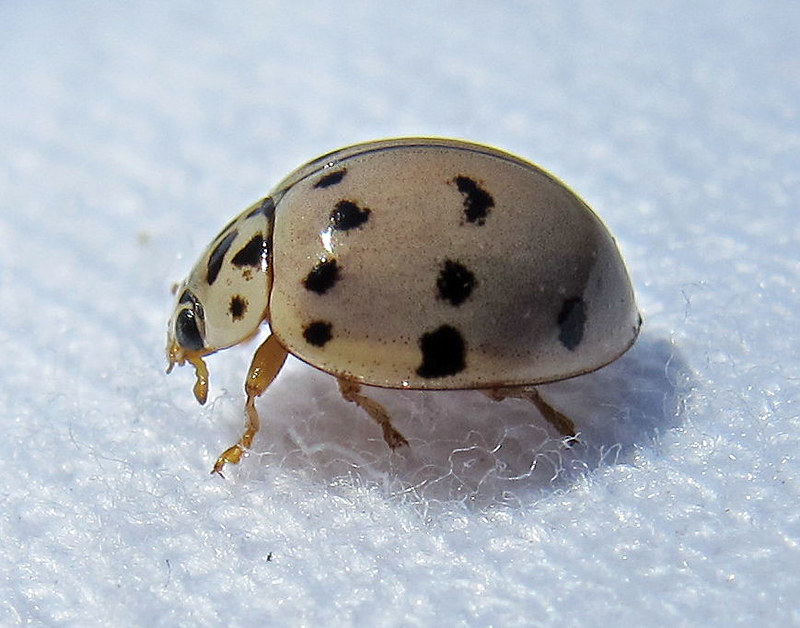
Beetles can live for a few weeks, several months, or several years, depending on the species and life stage. Some adults live only long enough to mate and lay eggs. Others survive through winter and return the following season. In many species, the larval stage actually lasts longer than the adult stage — so the full life cycle is often much longer than the brief window when you spot the beetle walking, flying, or feeding.
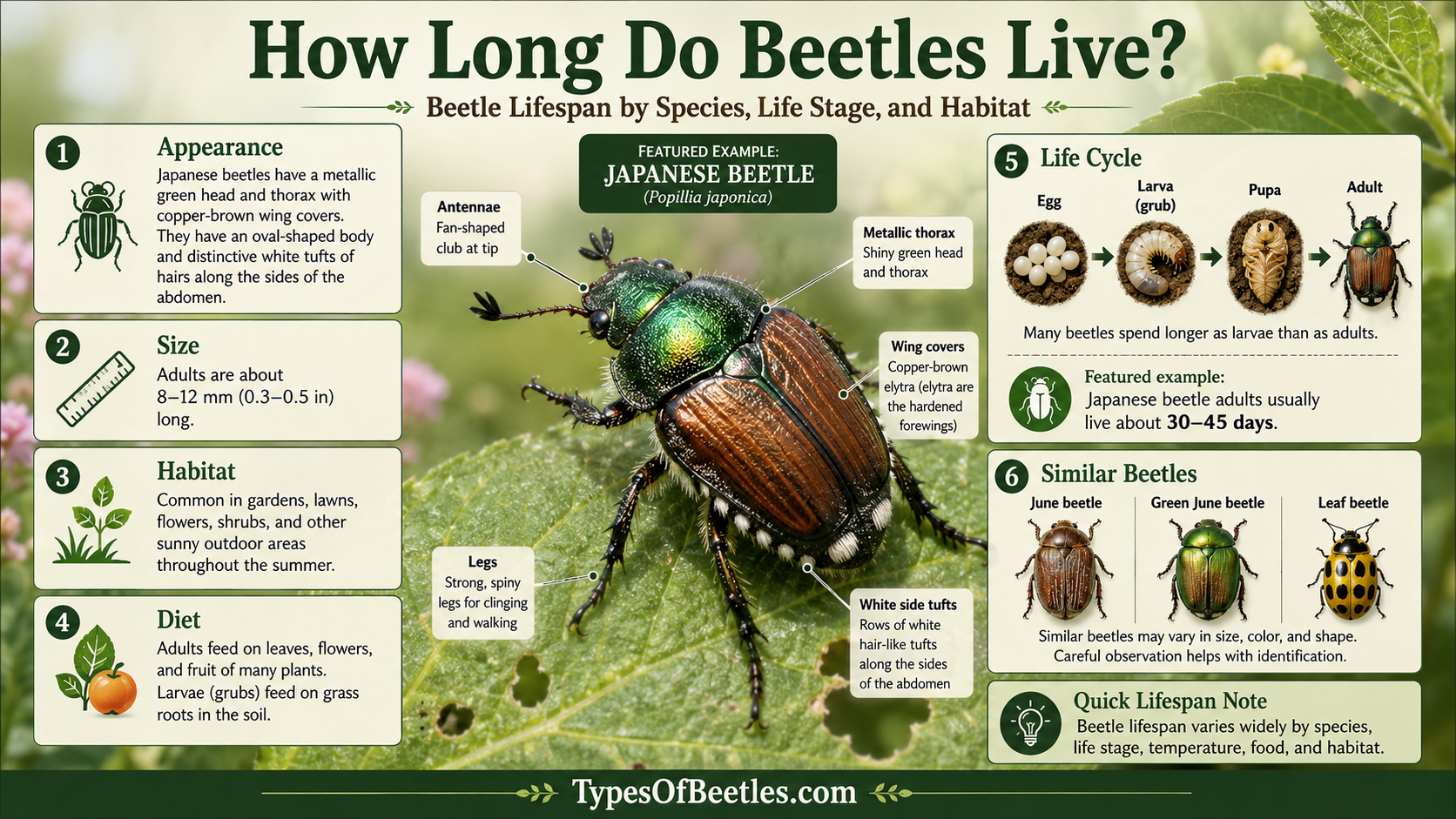
A simple starting point: most adult beetles live somewhere between several weeks and a few months, but some species live a year or longer, and a few have unusually extended life cycles. Japanese beetle adults, for example, typically live about 30 to 45 days. Some ground beetles can survive two years or more as adults. Carpet beetle life cycles may stretch from a few months to nearly two years, depending on temperature, food, and species.
Part of what makes this question tricky is that “beetle lifespan” can mean two different things:
- Adult lifespan: how long the beetle lives after it becomes an adult
- Total life cycle: the full span from egg through larva, pupa, and adult
For home observations, garden questions, and classroom learning, it helps to keep both in mind.
About This Guide
This guide is written for beginners, homeowners, gardeners, students, teachers, and curious nature observers who want a clear, honest explanation of beetle lifespan without excessive technical language.
Lifespan estimates can vary by region, season, species, life stage, temperature, food availability, and habitat. A single photo or a quick outdoor sighting is rarely enough to identify a species with certainty. When observing beetles, it helps to consider several clues together:
- Size
- Color
- Body shape
- Antennae
- Wing covers
- Legs
- Habitat
- Behavior
- Season
- Location
This article covers common lifespan patterns, but it is not a guaranteed species identification tool. For difficult identifications, consult university extension resources, museum collections, natural history references, government agriculture resources, and entomology guides.
Quick Answer: How Long Do Beetles Live?
Most beetles live somewhere between a few weeks and a few years. Many adults live only weeks or months, but some survive considerably longer. In many species, the larval stage is the longest part of life.
Here is a beginner-friendly summary:
| Beetle Type or Stage | Typical Lifespan Pattern |
|---|---|
| Adult Japanese beetles | About 30–45 days |
| Adult fireflies | Often a few weeks |
| Carpet beetle life cycle | About 3 months to 2 years, depending on conditions |
| Adult furniture carpet beetles | Often 4–8 weeks |
| Ground beetles | Adults may live 2 years or more in some species |
| Darkling beetles | Some species may live around a year as adults |
| Wood-boring beetles | Some have unusually long larval development inside wood |
Japanese beetles are a good example of a short-lived adult beetle. Activity is concentrated in summer, and individual adults typically live about 30 to 45 days.
Ground beetles are nearly the opposite. Some species can take up to a year to develop, and adults may live two years or more depending on species and location.
Carpet beetles are especially relevant for homeowners because their larvae can remain hidden in dark places for an extended period. The University of Florida notes that carpet beetle life cycles can range from three months to two years depending on conditions.
Why Beetle Lifespan Varies So Much
There are more beetle species than most people realize. Beetles belong to the insect order Coleoptera, one of the largest groups of animals on Earth. They live in forests, gardens, homes, wetlands, deserts, farms, stored food areas, dead wood, soil, and freshwater edges — which means their lifespans are far from uniform.
A beetle’s lifespan depends on several factors:
- Species: A firefly, carpet beetle, ground beetle, and rhinoceros beetle each have different life histories.
- Life stage: Larvae often live longer than adults.
- Temperature: Warmer conditions tend to speed development in many insects.
- Food availability: Larvae may develop faster when food is plentiful.
- Season: Some beetles overwinter as adults, larvae, eggs, or pupae.
- Habitat: Soil, leaf litter, wood, stored products, and indoor spaces create different survival conditions.
- Predators and disturbance: Birds, spiders, other insects, pesticides, cleaning, mowing, and weather can all cut a beetle’s life short.
This is why the best answer to “how long do beetles live” is not a single number — it is a range shaped by biology and environment.
The Beetle Life Cycle Explained
Beetles go through complete metamorphosis, developing through four main stages:
- Egg
- Larva
- Pupa
- Adult
This four-stage life cycle is a defining feature of the order Coleoptera, and it means that a beetle looks and behaves very differently at each stage of its life.
Egg Stage
A female beetle lays her eggs in locations where the young larvae are likely to survive. The specific site depends entirely on the species.
Eggs may be laid in soil, under bark, in cracks and crevices, near plant roots, on leaves, in stored food, in lint or natural fibers, in decaying wood, or near prey insects.
Some eggs hatch within days; others take longer depending on temperature and moisture.
Larval Stage
The larval stage is typically the main feeding and growth period. Beetle larvae can look very different from the adults — some are soft, pale grubs; others are dark, flattened, spiny, or worm-like.
Common beetle larvae include:
- White grubs in soil (many scarab beetles)
- Carpet beetle larvae in homes
- Mealworms from darkling beetles
- Predatory ground beetle larvae
- Wood-boring larvae inside dead or processed wood
- Firefly larvae in soil or leaf litter
In many species, this stage lasts considerably longer than the adult stage. Fireflies may spend most of their lives as larvae, with the full life cycle running from a few months to several years depending on the species.
Pupal Stage
The pupa is the transformation stage. The larva reorganizes into an adult beetle, and typically does not feed during this time.
Beetle pupae may be found in soil, inside wood, in hidden cracks, in stored products, in leaf litter, or near the larval feeding site. The pupal stage may last days or weeks, depending on species and temperature.
Adult Stage
The adult is the form most people recognize as a beetle. Adult beetles generally have:
- Hard, protective wing covers (elytra)
- Six legs
- Antennae
- Chewing mouthparts
- Membranous flight wings hidden beneath the elytra in many species
Adult beetles focus on feeding, dispersing, mating, and laying eggs. Some live only a few weeks; others survive through winter or persist for several years.
How Long Beetles Live by Life Stage
How Long Do Beetle Eggs Last?
Beetle eggs typically hatch within a few days to several weeks, depending on species and environment. Japanese beetle eggs, for example, may hatch in about one to two weeks under suitable summer conditions. Missouri Extension describes Japanese beetle eggs hatching within seven to fourteen days after being laid in the soil.
How Long Do Beetle Larvae Live?
Larvae may live anywhere from weeks to years — often making this the longest stage of the beetle’s life cycle.
Larval lifespan depends heavily on food quality, temperature, moisture, species, season, whether the larva must overwinter, and whether development is occurring indoors or outdoors.
Carpet beetle larvae are a useful household example. Virginia Tech notes that carpet beetle larval development can span 3 to 36 months, with larvae molting several times before pupating.
Firefly larvae also illustrate the point: some may remain underground for up to two years, while adult fireflies live only a few weeks.
How Long Do Beetle Pupae Last?
The pupal stage is usually shorter than the larval stage — typically a few days to several weeks. For furniture carpet beetles, the University of California Agriculture and Natural Resources notes that the pupal stage may last approximately 14 to 17 days before adults emerge.
How Long Do Adult Beetles Live?
Adult beetles commonly live from several weeks to several months, with many exceptions in both directions.
Some adults emerge mainly to reproduce and die within weeks. Others feed through a season, overwinter, and survive for more than a year.
Quick reference:
- Japanese beetle adults: about 30–45 days
- Furniture carpet beetle adults: about 4–8 weeks
- Firefly adults: often 1–4 weeks
- Ground beetle adults: sometimes 2 years or more
- Some darkling beetles: may live about a year as adults
Lifespan Examples by Common Beetle Type
Carpet Beetles
Carpet beetles are small beetles often noticed indoors, particularly near windows or flowers. The adults are not usually the main concern — it is the larvae that cause damage to natural fibers, stored items, and fabric.
The full carpet beetle life cycle can take three months to two years depending on species and conditions.
For furniture carpet beetles specifically:
- Eggs hatch in about 9–16 days
- Larvae live about 70–94 days before pupating
- Pupae last about 14–17 days
- Adults live about 4–8 weeks
These ranges explain why carpet beetle activity can seem to drag on for months even when adults are rarely visible.
Japanese Beetles
Japanese beetles are familiar summer garden beetles with metallic green bodies and coppery wing covers, often spotted feeding on leaves, flowers, and fruit.
They typically have one generation per year. Adults emerge in early summer, feed, mate, and lay eggs before dying off. Individual adults live about 30 to 45 days.
Their total life cycle is much longer than their adult stage, because the grub develops in the soil and overwinters before pupating and emerging the following summer.
Lady Beetles
Lady beetles — commonly called ladybugs — are beneficial in many gardens because both larvae and adults can feed on aphids and other small insects.
Adult lifespan varies by species. Iowa State University Extension notes that multicolored Asian lady beetle adults typically live 30 to 90 days, though some may survive up to three years under certain conditions.
Lady beetles also make an important broader point: the adult is only part of the story. Larvae are active predators long before they ever become the spotted beetles most people recognize.
Ground Beetles
Ground beetles are usually found moving quickly across soil, mulch, garden beds, or paths. Many are nocturnal predators feeding on small insects, larvae, slugs, and other invertebrates.
Some ground beetles live considerably longer than typical garden beetles. Colorado State University notes they can take up to a year to reach adulthood, with adults living two years or more. South Dakota State University Extension adds that many species are nocturnal and may have lifespans of 2 to 4 years.
Fireflies
Fireflies are beetles, even if the glowing abdomen makes that easy to forget. Their light-producing behavior makes them one of the most recognizable beetle groups.
Adult fireflies often live only briefly — Oklahoma State University Extension notes that adults may survive one to four weeks, focused mainly on reproduction.
The full firefly life cycle is a different matter. Larvae may live in soil, leaf litter, or logs for much of their development, and many species spend the majority of their lives in the larval stage.
Darkling Beetles
Darkling beetles include many ground-dwelling species as well as the beetles associated with mealworms. Their lifespan depends on species, temperature, food, and whether they are in the wild or a controlled rearing environment.
Virginia Tech notes that darkling beetles undergo complete metamorphosis and that many species develop slowly, with some living for roughly a year as adults.
Wood-Boring Beetles
Wood-boring beetles can have unusually extended larval stages. In some cases, beetles have been reported emerging from lumber, furniture, or structural wood years after the wood was cut and processed.
This does not mean all wood-boring beetles live for decades. It means that certain species, under specific conditions, can have very long larval development inside wood. Wood type, moisture content, temperature, and species all play a role.
Adult Beetle Lifespan vs. Full Life Cycle
A common point of confusion is treating adult lifespan and total life cycle as the same thing. For most beetles, they are not.
- The adult stage may last weeks or months.
- The larval stage often lasts considerably longer.
- The total life cycle may span a year or more.
Adult Japanese beetles live about 30–45 days, but the species follows a one-year life cycle because the grub stage overwinters in the soil before the next summer’s adults appear.
Carpet beetles work similarly. An adult may survive only weeks, but the full life cycle can stretch over months or years depending on food, temperature, humidity, and species.
So when someone asks “how long do beetles live,” the most useful follow-up is: Are you asking about the adult beetle, or the full life cycle from egg to adult?
Beetles Around the Home and Garden
How Long Do Beetles Live in a House?
Indoor beetles may survive from days to months, depending on species and whether suitable food, moisture, and shelter are available.
Common indoor beetles include carpet beetles, drugstore beetles, flour beetles, larder beetles, lady beetles overwintering indoors, ground beetles that wandered inside, and wood-boring beetles emerging from structural wood.
Indoor warmth can sometimes accelerate insect development. Ohio State University notes that warmer rooms may shorten certain carpet beetle life cycles, while others may run two to three years depending on the species.
How Long Do Beetles Live in the Garden?
Garden beetles vary widely. Some adults appear only during part of a season. Others overwinter in soil, leaf litter, bark, mulch, or sheltered spots.
In gardens, beetle lifespan is shaped by soil temperature, plant availability, moisture, predators, seasonal change, disturbance from lawn care, pesticide exposure, and the presence of prey or host plants.
Japanese beetles are usually visible as adults in summer. Ground beetles tend to live longer and stay hidden during daylight hours.
Are Beetles in the House Always a Problem?
Not necessarily. A single beetle indoors is often just an accidental visitor that entered through a door, window, firewood, or gap in the building.
Repeated sightings are worth investigating, particularly if you notice:
- Many small beetles near windows
- Larvae in carpets, closets, drawers, or stored fabrics
- Beetles in stored grains or pantry foods
- Small holes in wood or powdery frass
- Ongoing damage to natural fibers
- Beetles repeatedly emerging from the same area
Identification Clues That Help Estimate Beetle Life Stage
If you want to understand how long a beetle may live, it helps to first figure out what life stage you are looking at.
Clues You Are Looking at an Adult Beetle
Adult beetles typically have hard wing covers, six visible legs, antennae, a distinct head and thorax, and a firmer body than larvae. Most can walk actively and many can fly. Adults are the stage most often seen on flowers, leaves, bark, walls, windows, and garden paths.
Clues You Are Looking at a Beetle Larva
Beetle larvae may be worm-like, grub-like, hairy, flattened, pale, or dark. They are typically found in soil, wood, fabric, stored food, or leaf litter, and lack hardened wing covers. Carpet beetle larvae, for example, are often found in dark, protected spaces and can be more significant indoors than the adults.
Clues You Are Looking at a Pupa
A pupa is usually still or nearly motionless, hidden in soil, wood, food material, or a protected site, and is not feeding. Because pupae are well concealed, most casual observers rarely encounter them.
Common Mistakes About Beetle Lifespan
Assuming all beetles live the same length of time. Beetles are enormously diverse. A firefly, carpet beetle, Japanese beetle, ground beetle, and darkling beetle each have different life histories.
Counting only the adult stage. Many beetles spend more time as larvae than as adults. Counting only the adult stage significantly underestimates the full life cycle.
Thinking indoor beetles came from nowhere. Carpet beetles, stored product beetles, and wood-boring beetles may develop quietly for weeks or months before adults become visible.
Assuming any beetle is harmful. Many beetles are neutral or beneficial. The Smithsonian notes that beetles play valuable roles as decomposers and predators, and ladybird beetles are well-known controllers of aphid populations.
Trying to identify a beetle from color alone. Many unrelated beetles share similar colors — black, brown, red, metallic green, or spotted. Better identification clues include body shape, antennae form, wing cover texture, size, habitat, season, behavior, and location.
What Affects How Long Beetles Live?
Species is the single largest factor. Some beetles are built for short adult lives; others are adapted to survive across seasons.
Temperature affects development rate. Warmer conditions typically speed up insect development, which is why indoor beetles may develop differently from outdoor ones.
Food availability shapes larval success. Larvae with abundant food develop more reliably. Scarcity can slow development or reduce survival.
Moisture matters for soil-dwelling species. Grubs and firefly larvae may depend on adequate ground moisture; dry conditions can reduce survival for some species.
Overwintering strategy varies widely. Depending on the species, beetles may survive winter as eggs, larvae, pupae, or adults — sheltering in soil, leaf litter, bark, wood, or indoor spaces.
Predators take a significant toll. Beetles are eaten by birds, spiders, frogs, lizards, mammals, predatory insects, and other beetles. A beetle’s potential lifespan is often longer than what it achieves in the wild.
Human activity — cleaning, storage practices, mowing, pesticide use, sealing gaps, and changes to garden habitat — can all affect whether beetles complete their life cycles.
When to Seek Professional Help
Most beetle sightings do not require professional attention. A single beetle indoors is often harmless and accidental.
Consider seeking expert identification if:
- Beetles keep appearing indoors in large numbers
- You find larvae in stored food, carpets, wool, feathers, or natural fibers
- There are signs of wood damage or powdery frass from small holes
- You cannot determine whether the insect is a beetle, termite, bed bug, or something else
- A school, museum, garden, or property needs accurate pest identification
- You suspect an agricultural or structural pest problem
When documenting a beetle for identification, take clear photos from several angles and include a size reference if possible. Note the date, location, habitat or room, any associated plants, and the beetle’s behavior.
Credible Sources Worth Consulting
For accurate beetle lifespan and identification information, strong source types include:
- University extension entomology pages
- Museum insect collections and natural history guides
- Government agriculture resources
- Integrated pest management (IPM) resources
- Entomology textbooks and field guides
- Peer-reviewed life history references
- Local naturalist organizations
- Regional beetle identification guides
FAQ: How Long Do Beetles Live?
How long do beetles live? Beetles may live from a few weeks to several years, depending on species and life stage. Many adult beetles live for weeks or months, while larvae often live much longer.
How long do beetles live as adults? Many adult beetles live for several weeks to a few months. Some, such as certain ground beetles, can survive for more than a year.
How long do beetles live in a house? Indoor beetles may live from days to months, depending on species, food, temperature, and shelter. Carpet beetles and stored product beetles may keep appearing if larvae are actively developing indoors.
Do beetles live longer as larvae or adults? In many species, beetles spend more time as larvae than as adults. The larval stage is typically the main feeding and growth phase.
How long do carpet beetles live? Carpet beetle life cycles can range from about three months to two years. Adult furniture carpet beetles may live about four to eight weeks, while larvae can live considerably longer.
How long do Japanese beetles live? Adult Japanese beetles typically live about 30 to 45 days. Their full life cycle is roughly one year because they spend part of it as grubs in the soil.
How long do lady beetles live? Lady beetle lifespan depends on the species. Some adults live a few months, while multicolored Asian lady beetles may survive considerably longer under favorable conditions.
How long do fireflies live? Adult fireflies often live only a few weeks, but the full life cycle can be much longer because most fireflies spend the majority of their lives as larvae.
Can beetles live through winter? Yes. Many beetles survive winter as adults, larvae, eggs, or pupae, sheltering in soil, leaf litter, bark, wood, or protected indoor spaces, depending on the species.
Why do I keep seeing beetles in my house? Repeated sightings may indicate beetles are entering from outdoors, overwintering inside, or developing from larvae hidden in stored food, fabrics, wood, or accumulated debris.
Do all beetles have the same life cycle? Most beetles go through complete metamorphosis — egg, larva, pupa, adult — but the timing and habitat of each stage vary considerably by species.
Can I identify a beetle by how long it lives? Lifespan alone is not sufficient for identification. Use multiple clues: size, body shape, color, antennae, wing covers, habitat, season, behavior, and location.
Conclusion: How Long Do Beetles Live?
The most accurate answer is: it depends on the beetle.
Many adults live only a few weeks or months. Some survive a year or longer. In many species, the larval stage lasts longer than the adult stage, making the full life cycle considerably longer than the brief period when the adult is visible.
For practical purposes, the most useful way to approach beetle lifespan is to ask three questions:
- What species or beetle group is it?
- Is it an egg, larva, pupa, or adult?
- Where was it found — indoors, in soil, on plants, in wood, or around stored food?
Observing several clues at once, rather than relying on any single feature, will give you a much clearer picture — not just of how long a beetle may live, but of the role it plays in the home, garden, or wider environment.