

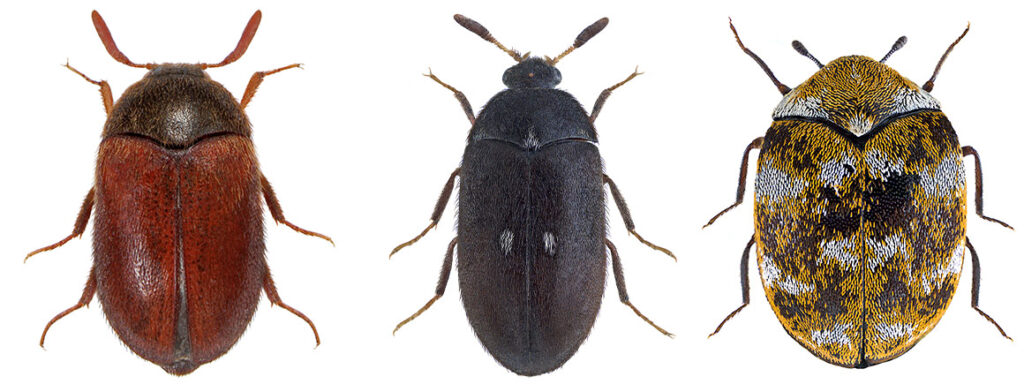
Finding small beetles in house corners, window sills, pantry shelves, carpets, or closets can feel unsettling. One day you notice a tiny black beetle crawling across the floor. A few days later, another appears near the window. Then you start wondering: Are they coming from outside? Are they eating my clothes? Are they in the pantry?
The good news is that most small beetles found indoors are not dangerous to people. The bad news is that some can damage fabrics, stored foods, rugs, furniture, or natural materials if they are ignored.
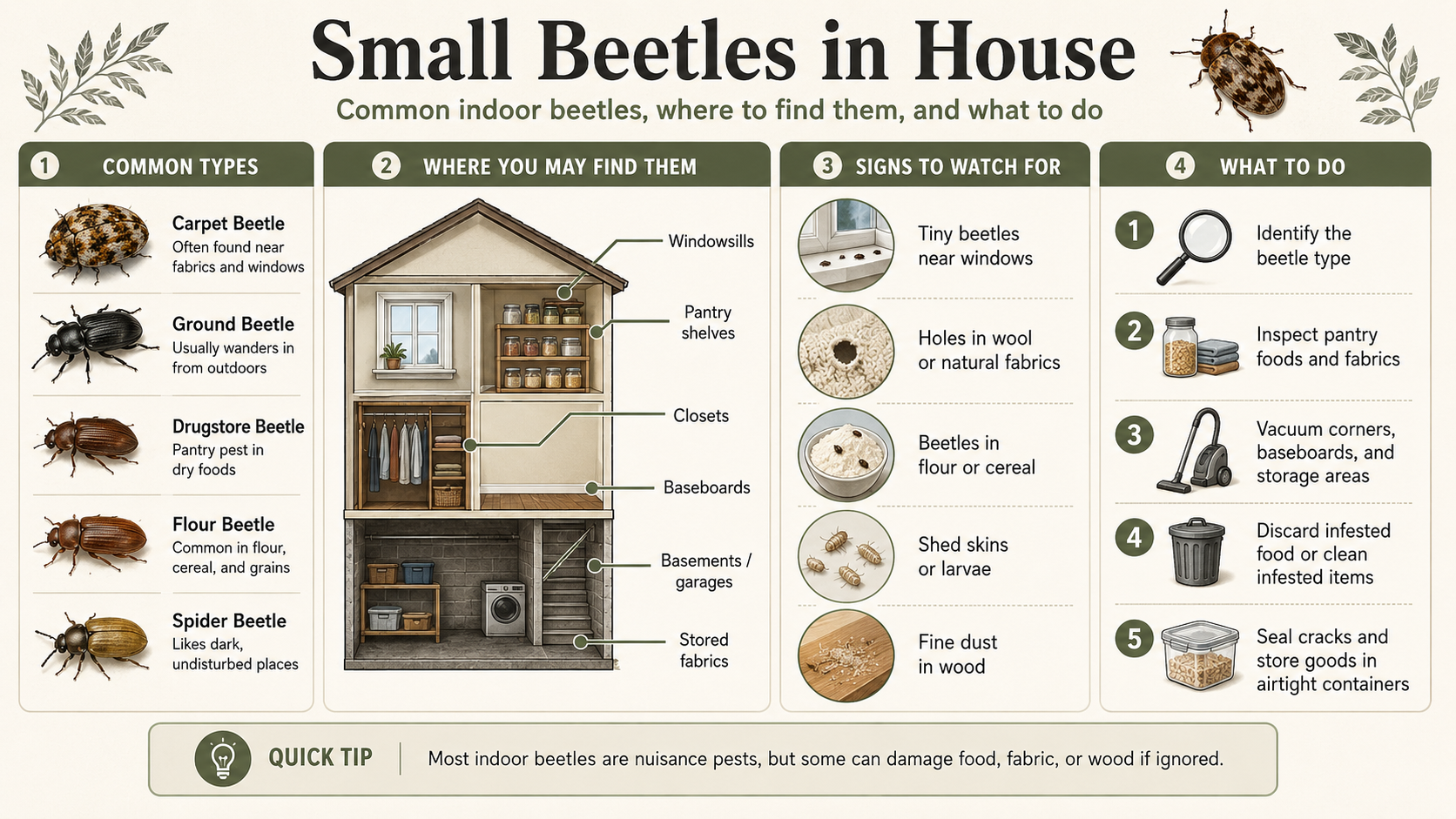
The key is identification. A beetle near a window may be a harmless outdoor visitor. A tiny beetle in flour or cereal may be a pantry pest. A fuzzy larva under a wool rug may point to carpet beetles. Once you know which beetle you are dealing with, the solution becomes much clearer.
Why Are There Small Beetles in My House?
Small beetles usually enter homes for one of three reasons: food, shelter, or accident.
Some beetles are attracted to stored dry foods such as flour, cereal, rice, pasta, spices, pet food, birdseed, or dried fruit. Others feed on natural materials such as wool, silk, fur, feathers, leather, lint, dead insects, or pet hair. Many simply wander indoors through cracks around doors, windows, vents, garages, or utility lines.
Carpet beetles, for example, are commonly found in homes, warehouses, museums, and other places where fabric, yarn, furs, feathers, or stored organic materials are present. Their larvae can feed on wool, leather, silk, fur, pet hair, feathers, and similar materials.
Pantry pests are different. Flour beetles, drugstore beetles, cigarette beetles, and grain beetles are usually connected to stored dry foods. University extension sources note that flour beetles infest products such as flour, bran, cereal products, dried fruits, nuts, and chocolate, while drugstore beetles may infest cereal products, pasta, crackers, dry pet food, birdseed, dried fruits, and spices.
Common Small Beetles in House: How to Identify Them
Not every tiny beetle in your home is the same. Here are the most common indoor beetles and the clues that help separate them.
1. Carpet Beetles
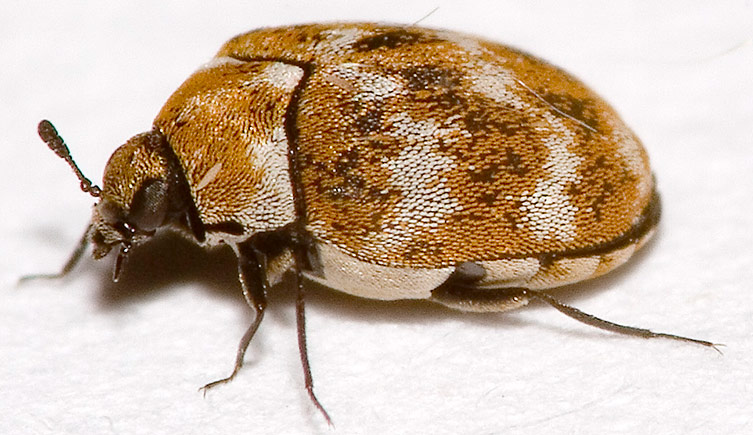
Carpet beetles are among the most common small beetles found indoors. Adults are usually very small, often around 1/8 to 1/10 inch long, with rounded bodies and short antennae. Depending on the species, they may look black, brown, or mottled with white, yellow, and brown scales.
You may see adult carpet beetles near:
- Window sills
- Curtains
- Light fixtures
- Baseboards
- Closet corners
- Air vents
- Stored clothing
- Rugs and upholstered furniture
Adults are often drawn toward light, which is why people commonly notice them near windows. The adult beetles themselves usually do not damage fabric indoors. The real problem is the larval stage.
Carpet beetle larvae are often slightly longer than adults and can look fuzzy, hairy, or bristly. They prefer dark, quiet areas and may feed on wool, silk, leather, fur, feathers, pet hair, lint, dead insects, and other organic debris.
Signs of carpet beetles
Look for:
- Tiny adult beetles near windows
- Fuzzy larvae under furniture or along baseboards
- Shed larval skins
- Irregular holes in wool, silk, fur, or natural-fiber items
- Damage in closets, rugs, stored blankets, or upholstered furniture
Carpet beetle larvae do not make webbing like clothes moth larvae, but they may leave shed skins and small fecal pellets where they have been feeding. UC IPM notes that these traces can help reveal where larvae have been active.
2. Black Carpet Beetles
Black carpet beetles are a specific type of carpet beetle and are often blamed when people say they are seeing little black beetles in the house.
They are small, dark, oval beetles. Their larvae can be especially destructive because they feed on many animal-based materials, including wool, silk, leather, fur, pet hair, feathers, and natural-bristle brushes. Penn State Extension describes black carpet beetles as common pests in kitchen cupboards as well as woolen carpets and similar materials.
If you see small black beetles near windows plus fabric damage in a closet, rug, or storage box, black carpet beetles should be high on your list.
3. Ground Beetles
Ground beetles are usually outdoor insects. They are often shiny black or dark brown, with long legs and fast movement. Compared with carpet beetles or pantry beetles, they are usually larger and more noticeable.
You may find ground beetles in:
- Basements
- Garages
- Mudrooms
- Ground-level rooms
- Near door thresholds
- Along baseboards
Ground beetles usually enter homes by accident, especially through gaps under doors, garage thresholds, or cracks around foundations. They do not normally reproduce indoors, and they are not pantry or fabric pests.
If you see one or two fast-moving black beetles near a door or basement wall, especially after rain, landscaping, or seasonal weather changes, they may simply be accidental invaders.
4. Drugstore Beetles
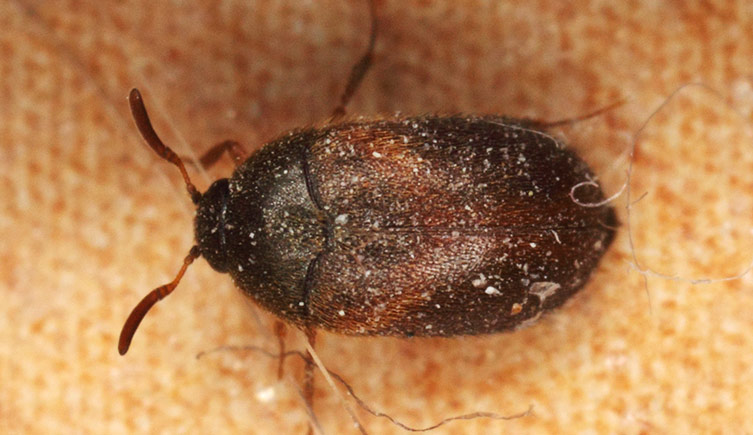
Drugstore beetles are small pantry pests. They are usually reddish-brown rather than truly black, but because of their tiny size and indoor location, many people mistake them for small black beetles.
They are often found around:
- Flour
- Cake mix
- Rice
- Pasta
- Crackers
- Cookies
- Spices
- Dry pet food
- Birdseed
- Dried fruit
- Chocolate
University of Minnesota Extension notes that drugstore beetles infest many dried foods, including cereal products, pasta, crackers, dry pet food, birdseed, chocolate, raisins, dried fruits, and spices.
If you are seeing tiny beetles in your kitchen or pantry, inspect unopened and opened packages carefully. They can appear inside food packages, around shelf cracks, or near pantry lights.
5. Flour Beetles
Flour beetles are another common pantry beetle. They are small, reddish-brown, flattened, and elongated. They commonly infest flour, cereal, bran, dried fruits, nuts, chocolate, and similar stored food products.
They are often found in:
- Flour bags
- Cereal boxes
- Baking mixes
- Pantry shelves
- Dry grains
- Old packages stored for months
If small beetles appear mostly in the kitchen, start by checking grain-based products. Do not only inspect the open packages. Pantry beetles may also be found in sealed-looking boxes if the original product was already infested before it came home.
6. Sawtoothed Grain Beetles
Sawtoothed grain beetles are tiny, narrow pantry beetles. They are usually brown and flat, which helps them squeeze into food packaging and shelf cracks.
They may infest:
- Cereal
- Oats
- Flour
- Pasta
- Cornmeal
- Dried pet food
- Spices
- Herbs
- Bread products
Because they are small and quick-moving, people often notice them only after they have spread across multiple pantry items.
7. Spider Beetles
Spider beetles are small, rounded beetles with long legs. At first glance, they can be mistaken for spiders, ticks, or bed bugs. Some are dark brown to black and have a shiny, bulbous body.
They are usually found in quiet, undisturbed places such as:
- Attics
- Wall voids
- Storage rooms
- Pantries
- Crawl spaces
- Areas near old rodent nests
- Forgotten dry goods or organic debris
Spider beetles are scavengers. They may feed on grains, pet food, feathers, wool, dead insects, and stored organic material. If you see tiny dark beetles in neglected corners, cabinets, or storage spaces, spider beetles are possible.
8. Powderpost Beetles
Powderpost beetles are wood-infesting beetles. They are small, narrow, and often reddish-brown to dark brown or black. Unlike carpet beetles or pantry beetles, they are associated with wood.
Look for:
- Tiny round exit holes in wood
- Fine powdery dust, called frass
- Damage in hardwood furniture, flooring, trim, or cabinets
- Repeated powder appearing below wood surfaces
If you see tiny beetles plus powdery dust near wooden furniture or flooring, the issue may be wood-boring beetles rather than general household beetles.
9. Lady Beetles and Asian Lady Beetles
Lady beetles are not usually thought of as “small black beetles,” but some indoor sightings involve dark or spotted lady beetles gathering near windows, walls, or ceilings.
Asian lady beetles may enter homes in groups during cooler seasons. They are usually more of a nuisance than a destructive pest. They do not eat fabric, pantry food, or wood.
10. Other Occasional Beetles
Homes can occasionally attract other beetles, especially if there are outdoor lights, open windows, firewood, potted plants, old cardboard, bird nests, rodent nests, or stored organic material nearby.
If you see only one beetle, it may not mean there is an infestation. If you see many beetles repeatedly in the same area, there is probably a food source, entry point, or breeding site nearby.
Small Black Beetles in House: Quick Identification Guide
| Where You See Them | Most Likely Beetle | What to Check |
|---|---|---|
| Window sills, curtains, light areas | Carpet beetles | Closets, rugs, wool, pet hair, dead insects |
| Pantry shelves or food packages | Flour beetles, drugstore beetles, grain beetles | Flour, cereal, rice, pasta, spices, pet food |
| Basement, garage, near exterior doors | Ground beetles | Door gaps, garage thresholds, foundation cracks |
| Closets, under furniture, baseboards | Carpet beetle larvae | Shed skins, fabric holes, lint, pet hair |
| Wood furniture or flooring | Powderpost beetles | Exit holes, fine powder, wood damage |
| Attics, crawl spaces, quiet corners | Spider beetles | Old food, nests, organic debris, stored materials |
How Do Small Beetles Get Inside?
Small beetles can enter your house in several ways.
They may come through:
- Cracks around windows and doors
- Gaps under exterior doors
- Garage thresholds
- Attic vents
- Utility line openings
- Damaged screens
- Foundation gaps
- Open windows or doors
They can also hitchhike indoors on:
- Groceries
- Flour, grain, cereal, rice, or spices
- Pet food or birdseed
- Cut flowers
- Used furniture
- Secondhand rugs
- Wool clothing
- Firewood
- Cardboard boxes
- Dried flowers or natural decorations
Carpet beetle adults may enter from flowers outdoors because adults feed on pollen and nectar, then end up inside near windows and light sources. UC IPM notes that adult carpet beetles are often found on window sills, drapes, or window panes when they are indoors.
Are Small Beetles in the House Dangerous?
Most small beetles in the house are not dangerous in the way mosquitoes, ticks, or stinging insects can be. They usually do not bite people, spread serious disease, or attack pets.
However, they can still create problems.
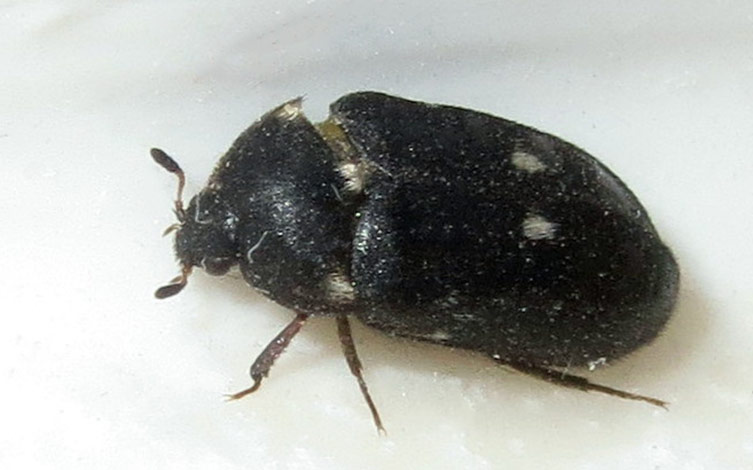
Carpet beetle larvae may damage wool, silk, fur, feathers, leather, natural-bristle brushes, taxidermy, and stored fabrics. Pantry beetles can contaminate dry foods and make pantry goods unusable. Wood-boring beetles may damage wood if they are established in furniture or structural material.
Some carpet beetle larvae also have bristly hairs that may irritate sensitive skin in some people. This is not the same as a true bite, but it can still cause concern when larvae are active in bedding, closets, or upholstered furniture.
How to Get Rid of Small Beetles in House
The best method depends on the beetle type, but the general process is the same: identify the source, remove the food, clean thoroughly, and block re-entry.
Step 1: Find the Source
Do not only kill the beetles you see. Try to find where they are coming from.
Check:
- Pantry shelves
- Flour, cereal, rice, pasta, spices, pet food, and birdseed
- Closets with wool, silk, fur, leather, or feathers
- Rugs, carpets, and upholstered furniture
- Baseboards and air vents
- Window sills
- Under furniture
- Attics and storage boxes
- Used furniture or secondhand textiles
- Wood furniture with holes or powder
If beetles keep appearing in one room, the source is often close by.
Step 2: Vacuum Thoroughly
Vacuuming is one of the most useful first steps for carpet beetles and many household beetle problems.
Focus on:
- Baseboards
- Carpet edges
- Under furniture
- Closet floors
- Air vents
- Upholstered furniture seams
- Window sills
- Corners where lint and pet hair collect
University extension guidance commonly recommends vacuuming beetles, larvae, lint, pet hair, food crumbs, and organic debris from affected areas; after vacuuming, dispose of the vacuum bag or contents outdoors.
Step 3: Wash, Heat, or Discard Infested Fabric Items
For carpet beetles, inspect wool clothing, silk scarves, fur items, feather-filled materials, rugs, blankets, and stored textiles.
Depending on the item, you can:
- Wash it in hot water if safe
- Use a hot dryer cycle if the fabric allows
- Dry-clean delicate items
- Freeze small items when appropriate
- Discard heavily damaged or heavily infested materials
The University of Kentucky notes that laundering, dry-cleaning, discarding infested items, and using dryer heat can help kill eggs or larvae, while vacuuming removes larvae as well as supporting debris such as hair and lint.
Step 4: Clean Out the Pantry
If beetles are in the kitchen, inspect all dry goods.
Check:
- Flour
- Cornmeal
- Oats
- Rice
- Pasta
- Cereal
- Crackers
- Cookies
- Spices
- Dried fruit
- Nuts
- Chocolate
- Pet food
- Birdseed
Throw away infested products in sealed bags. Then vacuum pantry shelves, cracks, corners, and shelf-pin holes. Wipe shelves before restocking.
Store replacement foods in airtight glass, metal, or thick plastic containers. Thin cardboard and paper packaging are not enough for long-term protection.
Step 5: Seal Entry Points
After cleaning, reduce the chance of new beetles entering.
Seal or repair:
- Window gaps
- Door sweeps
- Torn screens
- Garage threshold gaps
- Foundation cracks
- Utility openings
- Attic vents where insects may enter
Outdoor beetles often slip inside by accident. For ground beetles and seasonal nuisance beetles, exclusion is usually more important than indoor treatment.
Step 6: Reduce Attractants
Small beetles are often supported by overlooked food sources.
Reduce:
- Pet hair buildup
- Lint under furniture
- Food crumbs
- Dead insects in window tracks
- Old pantry goods
- Forgotten birdseed
- Unsealed pet food
- Secondhand textiles that are not cleaned before storage
- Old natural decorations, dried flowers, or animal-based materials
A very clean home can still get beetles, but clutter, lint, stored dry foods, and undisturbed spaces make infestations easier to establish.
Should You Use Insecticide?
Insecticide should not be the first step for most small beetle problems. If you do not remove the food source, beetles can keep appearing.
For pantry beetles, spraying shelves is usually unnecessary and can be risky around food storage areas. Removing infested food and cleaning thoroughly is the foundation.
For carpet beetles, targeted treatment may help in cracks, baseboards, or hidden areas, but only after vacuuming, laundering, and removing infested materials. If the infestation is large, recurring, or connected to wall voids, nests, or inaccessible areas, a licensed pest professional may be a better option.
How to Prevent Small Beetles from Coming Back
Prevention is much easier than dealing with a full infestation.
Use these habits:
- Store dry foods in airtight containers
- Avoid keeping old flour, grains, spices, or pet food too long
- Vacuum baseboards, under furniture, and closet floors regularly
- Clean pet hair and lint from hidden areas
- Inspect secondhand furniture, rugs, and clothing before bringing them inside
- Wash or dry-clean wool and silk items before long-term storage
- Store valuable fabrics in sealed containers
- Repair screens and seal door gaps
- Keep window sills and tracks clean
- Remove dead insects from light fixtures and windows
For carpet beetles, pay special attention to dark, quiet spaces. Larvae often feed where people rarely look: behind furniture, under rugs, along baseboards, inside storage boxes, and in closet corners.
When to Call a Professional
You may want professional help if:
- Beetles keep returning after cleaning
- You cannot find the source
- Fabric damage is spreading
- Pantry beetles keep appearing in multiple cabinets
- You see wood holes and powdery frass
- Beetles may be coming from wall voids, attic nests, or rodent nests
- The infestation involves valuable rugs, museum items, taxidermy, or antique textiles
A professional can help identify the beetle correctly and locate hidden sources that are easy to miss.
Final Thoughts: Do Not Panic, But Do Investigate
Seeing small beetles in house areas does not always mean you have a serious infestation. A single ground beetle near a door may be nothing more than an accidental visitor. A few adult carpet beetles near a window may be an early warning sign. Tiny beetles in flour or cereal usually mean it is time to clean the pantry.
The most important step is to connect the beetle to the place where it appears. Window beetles often point to carpet beetles or outdoor invaders. Pantry beetles point to stored foods. Beetles near damaged wood point to wood-boring pests. Beetles in closets or rugs point to fabric-feeding larvae.
Identify the beetle, remove the source, clean thoroughly, and seal the entry points. In most homes, that simple process solves the problem before it becomes a bigger one.
FAQ
Why do I keep finding small beetles in my house?
Small beetles usually come indoors because they found food, warmth, shelter, or an entry point. Some arrive in pantry foods, pet food, birdseed, secondhand furniture, flowers, or textiles. Others enter through cracks, windows, doors, vents, or garages.
What are the tiny black beetles near my window?
Tiny black beetles near windows are often carpet beetles, especially if they are small, oval, and slow-moving. Adult carpet beetles are attracted to light and are commonly found on window sills, curtains, or window panes.
Are small beetles in the house harmful?
Most small indoor beetles are not directly harmful to people, but some can damage household items. Carpet beetle larvae can damage wool, silk, fur, feathers, leather, and similar materials. Pantry beetles can contaminate stored foods.
Do carpet beetles bite?
Carpet beetles do not bite like mosquitoes or bed bugs. However, the bristly hairs of larvae may irritate sensitive skin in some people.
How do I know if beetles are coming from my pantry?
If beetles appear in the kitchen, pantry, cupboards, or near dry food packages, inspect flour, cereal, rice, pasta, spices, pet food, birdseed, dried fruit, nuts, and baking mixes. Flour beetles and drugstore beetles commonly infest stored dry foods.
What is the fastest way to get rid of small beetles in the house?
The fastest practical method is to find the source, remove infested food or fabric, vacuum thoroughly, wash or heat-treat affected items when possible, and seal entry points. Killing visible beetles without removing the source usually does not solve the problem.
Should I throw away food if I find beetles in it?
Yes. If dry food contains beetles, larvae, webbing, powder, or contamination, seal it in a bag and discard it. Then clean the pantry shelf before restocking.
Can small beetles live in carpets?
Yes, carpet beetle larvae can live near carpets, rugs, baseboards, and upholstered furniture, especially where lint, pet hair, dead insects, or natural fibers are present.
Why are beetles appearing after I cleaned?
You may still have hidden larvae, eggs, or an overlooked source. Check under furniture, closet corners, pantry cracks, air vents, pet bedding areas, wool storage, and old dry foods.
When should I call pest control for small beetles?
Call a professional if the beetles keep returning, you cannot find the source, fabric damage continues, pantry pests spread across multiple cabinets, or you suspect wood-boring beetles.