

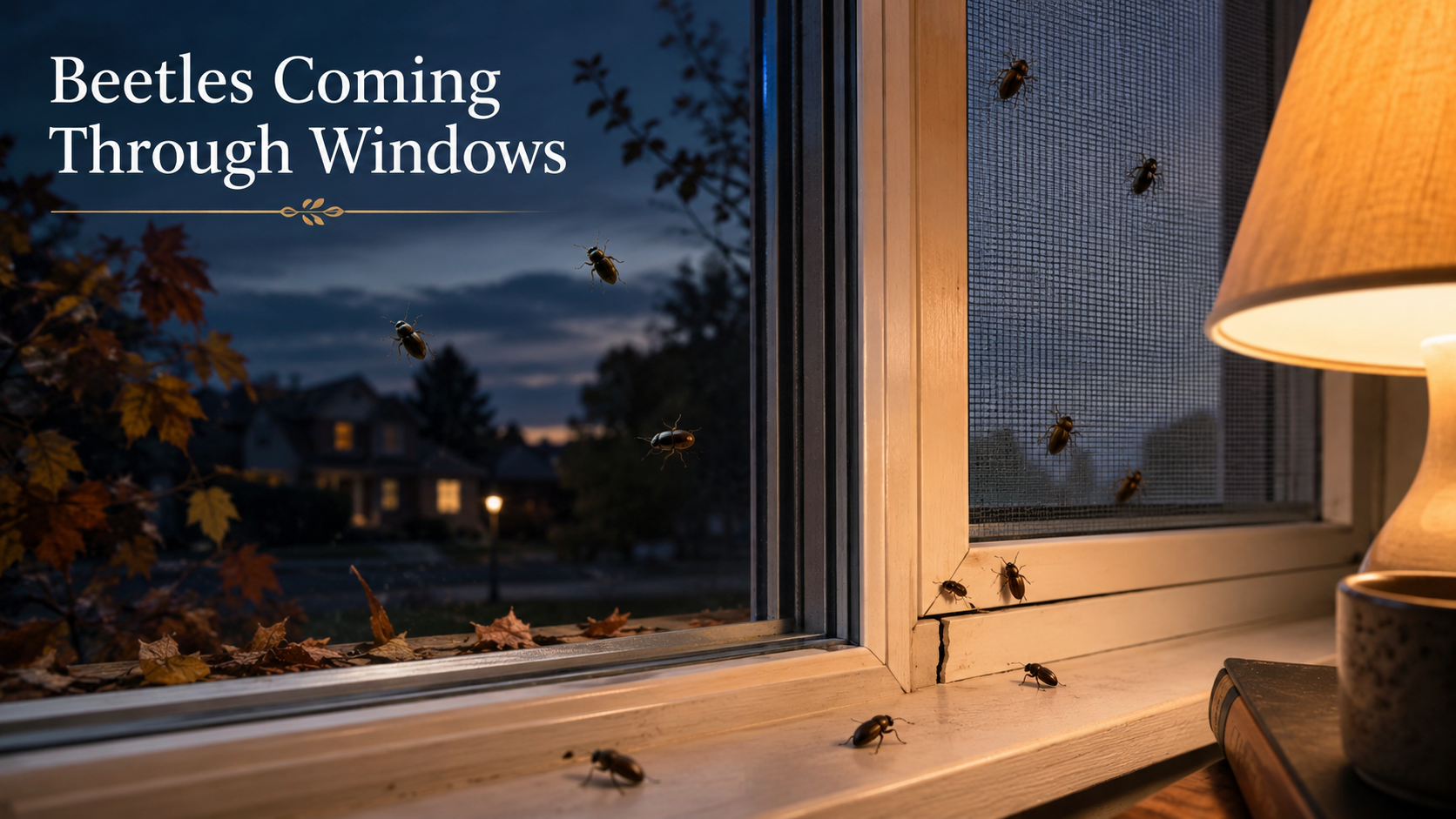
Beetles coming through a window are usually there for one of three reasons: they were attracted by light, they found a small gap around the window frame or screen, or seasonal weather pushed them toward shelter. In many cases, the beetles are not “nesting” in the window itself. They are using the window area as a bright, warm, or accessible entry point.
A beetle at the window can be a flying outdoor beetle that came toward a lamp at night, a household beetle trying to move between indoor and outdoor spaces, or a seasonal invader searching for shelter. Some beetles are harmless accidental visitors. Others may point to stored food, plant, moisture, or structural entry issues.
The best first step is not to panic or rely on color alone. Look at the beetle’s size, body shape, antennae, wing covers, markings, behavior, season, and where it appears. If you need help comparing common shapes and features, start with this beetle identification guide.
About This Guide
This guide explains why beetles may appear at windows, how light and tiny openings affect beetle entry, and what clues can help you narrow down the likely type of beetle.
Beetle identification can vary by region, season, life stage, sex, size, color, body shape, antennae, wing covers, markings, habitat, behavior, and photo quality. Many beetles look similar, especially in poor lighting or when photographed from only one angle.
This article is educational and not a substitute for a local inspection. If beetles are damaging stored food, plants, wood, fabrics, or crops, or if many insects keep appearing indoors, consider contacting a local extension office, museum, university entomology department, or qualified pest professional.
Table of Contents
- Why beetles come through windows
- Are beetles attracted to light?
- How beetles get through window gaps
- Why beetles appear in certain seasons
- Common beetles and similar insects near windows
- Identification clues to observe
- What to do when beetles are at the window
- Prevention steps
- FAQ
- References and further reading
Why Are Beetles Coming Through the Window?
Beetles usually come through windows because the window gives them access to light, warmth, shelter, or an opening.
At night, indoor lamps and exterior lights can draw flying insects toward glass, screens, and frames. Some beetles are nocturnal or evening-active, so they are more likely to appear when lights are on after sunset. Certain beetles and beetle-like household invaders also gather around warm, bright windows when they are trying to leave indoor shelter or find overwintering sites.
Windows are also full of possible entry points:
- Small tears in screens
- Loose screen edges
- Gaps around window frames
- Cracks in caulk
- Open weep holes
- Spaces around air conditioners
- Poorly sealed sliding windows
- Gaps under storm windows
- Damaged weatherstripping
If beetles keep appearing in the same window, the problem is often not the glass. It is usually the light pattern, a nearby outdoor beetle source, or a small opening around the window assembly.
Are Beetles Attracted to Light?
Yes, many flying beetles are attracted to artificial light, especially at night. This does not mean every beetle species responds the same way, but light attraction is common enough that windows, porch lights, and bright indoor rooms often become beetle gathering points.
Some beetles use natural light cues for orientation. Artificial light can interrupt those cues and bring insects toward buildings. This is why beetles may collect on window screens, patio doors, porch ceilings, garage lights, and bright walls.
Light attraction is especially likely when:
- Beetles appear mostly at night
- They gather on the outside of the window first
- They are flying or bumping against glass
- The problem is worse near porch lights or bright indoor lamps
- The beetles disappear or decrease when lights are turned off
- The issue is seasonal, especially during warm months or migration/overwintering periods
Some insects found near windows are not beetles, so look carefully before deciding. For example, true bugs, moths, flies, and wasps can also gather around lights. Beetles have hardened front wings called elytra, which often form a visible line down the back.
For broader context on beetle forms and families, see types of beetles and beetle species.
How Beetles Get Through Window Gaps
Beetles do not need a large opening to enter a home. A small gap can be enough, especially for tiny beetles.
Common entry points include:
Torn window screens
A small tear in a screen can let beetles and other insects pass through, especially if the screen is loose or stretched.
Loose screen frames
Even if the mesh is intact, the screen frame may not sit tightly in the window track. Beetles can crawl around the edge.
Gaps around window trim
Older caulk can crack or pull away from the frame. Small beetles may enter through these openings.
Sliding window tracks
Dirt, warped frames, missing seals, or incomplete closure can leave small spaces where beetles crawl in.
Window air conditioner gaps
Air conditioner side panels often leave small openings. These gaps can attract insects if warm indoor air and light leak through them.
Weep holes
Some windows include drainage openings. These are normal parts of window design, but they can also be insect pathways if not properly screened or protected.
Light leaks
At night, light escaping through cracks can make an opening more attractive. If you stand outside after dark and see light around a window frame, insects may be able to find the same path.
Why Beetles Appear More in Certain Seasons
Beetles are often seasonal. The timing can give you important clues.
Spring
In spring, some beetles become active again after winter. You may see them near windows as they move toward warmth and daylight. Some insects that sheltered in wall voids, attics, or cracks may appear indoors when temperatures rise.
Summer
Summer is a common time for flying beetles at night. Outdoor lights, garden plants, mulch, soil, trees, and flowering areas can all influence beetle activity. If beetles appear mainly after dark, light attraction is a strong possibility.
Late summer and fall
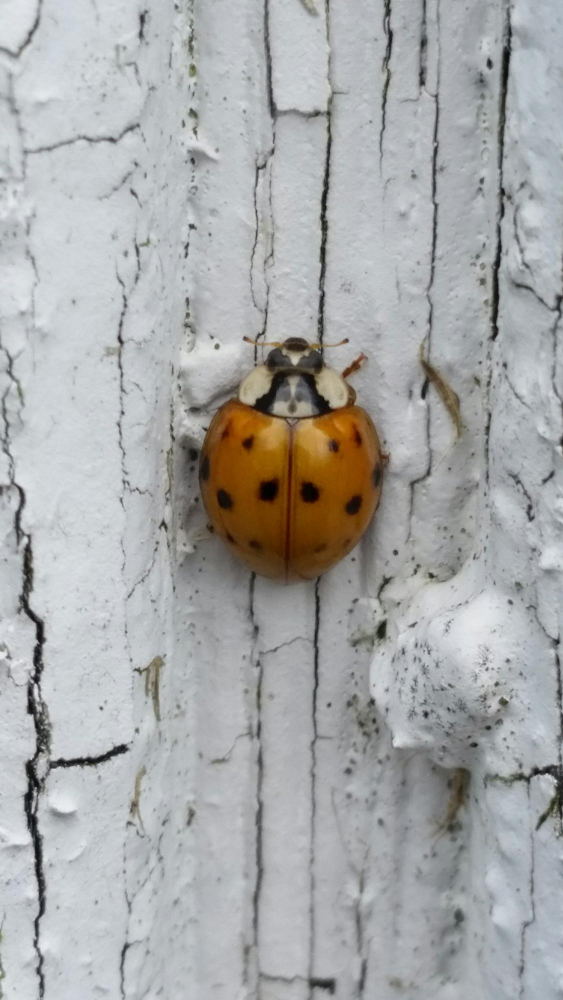
Some beetles and beetle-like insects move toward buildings as weather changes. They may seek protected places to overwinter. Multicolored Asian lady beetles, for example, are well known for gathering on buildings and entering cracks during cooler seasons. They often appear around windows, walls, and sunny sides of homes. University and extension references commonly describe prevention through exclusion, such as sealing openings and repairing screens, before insects enter buildings.
Winter
If beetles appear indoors in winter, they may have entered earlier and become active on warm, sunny days. Window areas are common because they are bright and sometimes warmer than other parts of the room.
Common Beetles and Beetle-Like Insects Found Near Windows
Not every small insect at a window is the same type of beetle. These are common possibilities.
Flying outdoor beetles
Many outdoor beetles fly at night and may be drawn to lights. They may enter accidentally when a window or door is open. These beetles are often temporary visitors.
Possible clues:
- Appear at night
- Often found near porch lights or bright windows
- May be larger than stored-food beetles
- Usually appear singly or in small numbers
- Often leave when captured and released outdoors
Ground beetles
Ground beetles often live outdoors under stones, logs, leaf litter, mulch, or soil debris. Some may wander indoors by accident.
Possible clues:
- Often dark, black, or brown
- Usually fast-running
- Often found near doors, basements, garages, or ground-level windows
- Usually not feeding on household items
If the beetle is dark and found indoors, compare it with this black beetle identification guide.
Carpet beetles
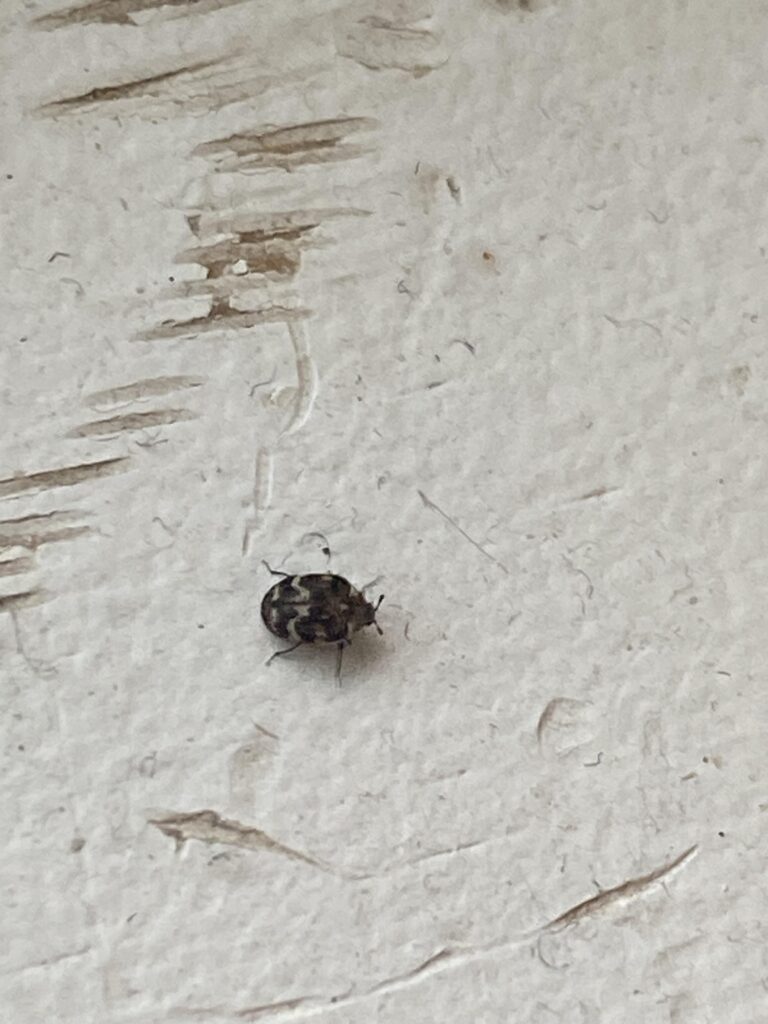
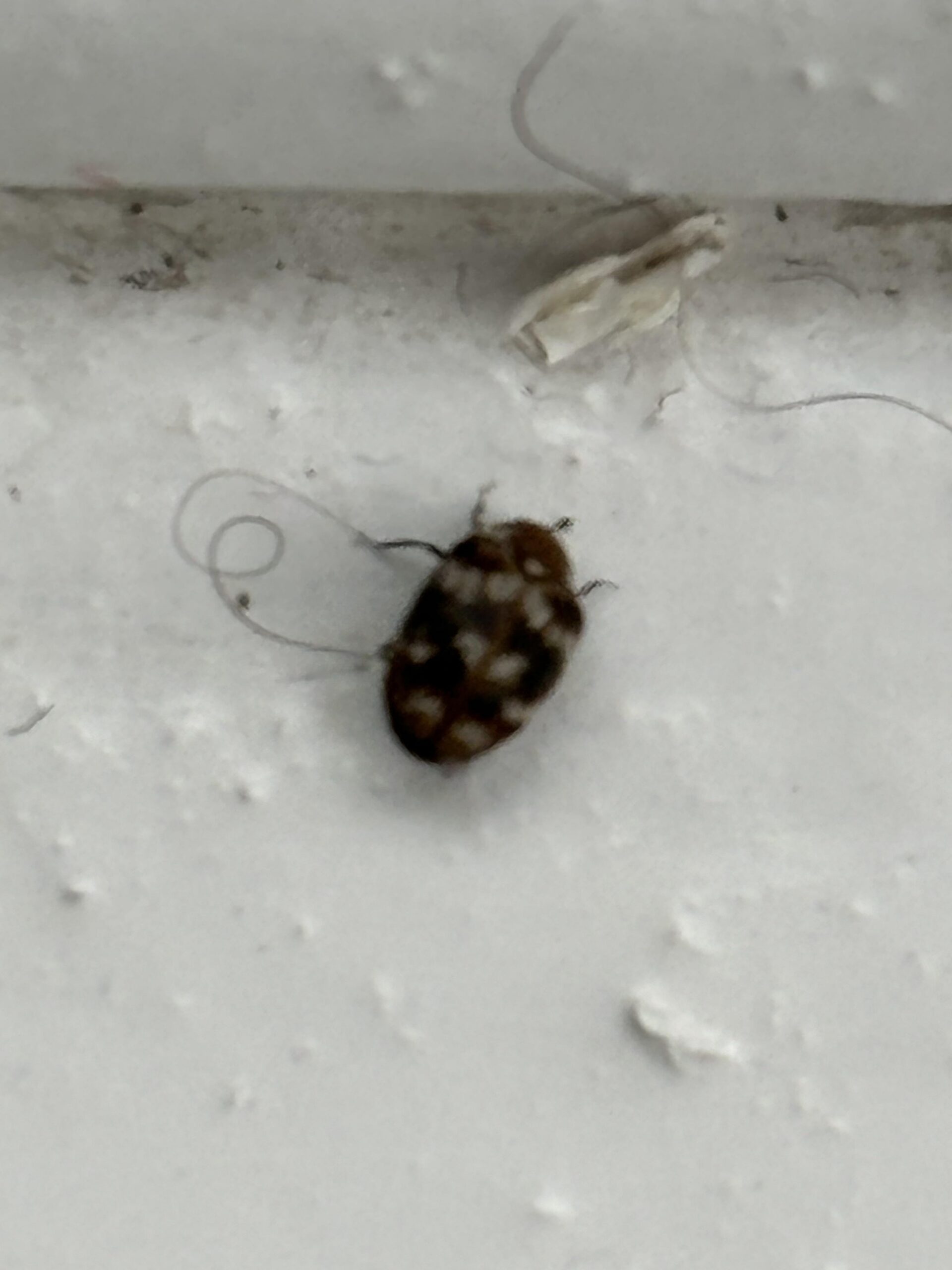
Adult carpet beetles are often found near windows because they are attracted to light and may try to move outdoors. Their larvae, not the adults, are usually the stage associated with damage to natural fibers, lint, hair, feathers, or stored animal-based materials.
Possible clues:
- Adults are small and oval
- Some have mottled patterns
- Adults may appear on windowsills
- Larvae may be found in closets, rugs, vents, lint, or stored fabrics
Stored food beetles
Some small beetles are linked to pantry products such as flour, grains, spices, cereal, rice, pet food, or dry plant-based products. Adults may wander toward windows after emerging indoors.
Possible clues:
- Small size
- Repeated indoor sightings
- Found near pantry shelves or kitchen windows
- May appear in packaged dry foods
- Often requires checking stored products
Lady beetles
Lady beetles are beetles, even though many people call them ladybugs. Some species are beneficial predators outdoors. Multicolored Asian lady beetles can gather on buildings and enter homes in fall to seek shelter. They may later appear at windows when trying to get back outside. They vary from yellow-orange to red and may have many spots, few spots, or no obvious spots. A dark M- or W-shaped mark behind the head is a common identification clue for multicolored Asian lady beetles.
Click beetles
Click beetles are usually outdoor insects that may fly to lights. They are named for the clicking motion they can make when flipping themselves upright.
Possible clues:
- Elongated body
- Hard shell
- May “click” or jump when handled
- Often attracted to lights at night
Longhorn beetles
Longhorn beetles often have very long antennae. Many are associated with wood, trees, or plant material outdoors. Some adults come to lights.
Possible clues:
- Long antennae, sometimes as long as or longer than the body
- Narrow to medium body shape
- Often found near wooded areas, firewood, or outdoor lights
- Some species have striped or patterned wing covers
Comparison Table: Why Beetles May Be at Your Window
| Situation | Most likely reason | What to check | What it may mean |
|---|---|---|---|
| Beetles appear at night on the outside of the glass | Light attraction | Porch lights, indoor lamps, bright windows | Outdoor beetles are being drawn toward the building |
| Beetles appear inside near one window | Entry gap | Screen edges, caulk, tracks, air conditioner gaps | Beetles may be entering through a small opening |
| Small beetles appear on kitchen windowsills | Indoor source possible | Pantry products, dry foods, spices, pet food | Stored food beetles may be emerging indoors |
| Tiny oval beetles appear on bedroom windowsills | Light-seeking adults | Carpets, closets, lint, wool, feathers | Carpet beetles may be present indoors |
| Orange or red beetles gather in fall | Seasonal shelter behavior | Sunny walls, attic gaps, window frames | Lady beetles may be seeking overwintering sites |
| Black beetles appear near basement windows | Outdoor wandering | Ground-level gaps, mulch, damp areas | Ground beetles may be entering accidentally |
| Beetles appear after bringing in firewood | Outdoor material source | Firewood, bark, wood piles | Wood-associated beetles may be emerging |
Identification Clues to Observe Before Removing the Beetle
Try to observe several clues before deciding what kind of beetle it is.
Size
Use a ruler if possible. Is the beetle 2 mm, 5 mm, 10 mm, or larger? Size helps separate tiny pantry beetles from larger outdoor beetles.
Body shape
Is it round, oval, long, flattened, dome-shaped, or narrow? Body shape is often more useful than color.
Color and markings
Color can help, but it should not be the only clue. Many unrelated beetles are black, brown, or reddish. Some species also vary by age, sex, or region.
Antennae
Antennae can be short, clubbed, saw-like, threadlike, or very long. Long antennae may suggest a longhorn beetle, while clubbed antennae may point toward certain scarab or lady beetle groups.
Wing covers
Beetles usually have hardened front wings called elytra. Look for a straight line down the back where the wing covers meet.
Behavior
Ask:
- Does it fly toward light?
- Does it run quickly?
- Does it play dead?
- Does it gather with others?
- Does it appear only at night?
- Is it found near food, plants, carpet, wood, or windows only?
Location
A beetle on a kitchen window may suggest something different from a beetle on a basement window, bedroom windowsill, or porch screen.
For a broader visual comparison, use common types of beetles with pictures.
What to Do When Beetles Are Coming Through the Window
If you see a few beetles at the window, simple steps are usually enough.
1. Capture and release outdoor beetles
Use a cup and stiff paper to capture the beetle. Release it away from the house, preferably near vegetation or shelter.
2. Avoid crushing beetles indoors
Some beetles can leave stains or odors when crushed. Lady beetles, for example, may release defensive fluid when disturbed. Vacuuming or gentle capture is usually cleaner than smashing.
3. Turn off unnecessary lights
If beetles are gathering outside at night, reduce light attraction.
Helpful changes include:
- Turn off porch lights when not needed
- Close curtains at night
- Move bright lamps away from windows
- Use motion-activated exterior lighting
- Use warmer or less insect-attractive outdoor lighting where appropriate
4. Inspect the window during daylight
Look for tears, gaps, loose screens, old caulk, and dirty tracks. A gap that looks tiny to a person may be large enough for small beetles.
5. Check indoor sources if beetles keep appearing
If beetles appear repeatedly indoors, especially small beetles, inspect:
- Pantry shelves
- Dry grains and flour
- Pet food
- Bird seed
- Spices
- Dried flowers
- Closets
- Rugs
- Stored fabrics
- Window tracks
- Attic spaces
- Firewood storage
For general home-related beetle topics, see beetles around the home.
How to Prevent Beetles from Entering Through Windows
Prevention is mostly about exclusion and light management.
Seal gaps around windows
Use appropriate exterior caulk for cracks around frames and trim. Replace missing or damaged seals.
Repair or replace screens
Patch small holes and replace screens with larger tears. Make sure the screen frame fits tightly.
Clean window tracks
Dead insects, dust, and debris can keep windows from closing fully. Clean tracks so the window seals properly.
Check weatherstripping
Old weatherstripping can shrink, crack, or flatten. Replace it if light or air leaks through.
Inspect window air conditioner panels
Foam strips, rigid panels, and side curtains should fit tightly. Light leaks around AC units can attract insects and reveal entry points.
Reduce exterior light attraction
Keep bright exterior lights away from windows when possible. Turn off unnecessary lights during heavy beetle activity.
Manage outdoor conditions near windows
Beetles may be more common near windows with:
- Dense vegetation touching the house
- Mulch piled against the foundation
- Firewood stacked near windows
- Outdoor lights above plant beds
- Moist debris near basement windows
You do not need to remove every plant or outdoor habitat. The goal is to reduce direct pathways into the house.
Common Mistakes When Dealing With Beetles at Windows
Mistake 1: Assuming every beetle is a pest
Many beetles are accidental visitors. A single beetle at a window does not always mean infestation.
Mistake 2: Identifying by color alone
Black, brown, red, and green beetles can belong to many different families. Body shape, antennae, size, and location matter more.
Mistake 3: Ignoring tiny gaps
Repeated beetles at the same window often point to a physical entry point.
Mistake 4: Leaving lights on all night
Bright lights can keep attracting flying insects. If the window is also poorly sealed, beetles may find their way inside.
Mistake 5: Using pesticides before identifying the issue
Pesticides are not always necessary and may not solve the cause. Start with identification, sanitation, exclusion, and light reduction. If pesticides are needed, follow the product label and consider professional advice.
Mistake 6: Forgetting about indoor sources
If beetles keep appearing inside even when windows are sealed, the source may be indoors. Stored food beetles and carpet beetles may show up at windows because adults move toward light.
Are Beetles Coming From Inside or Outside?
Use the pattern to decide.
More likely outside
The beetles are probably coming from outside if:
- They appear after dark
- They gather on exterior glass or screens
- They are worse near outdoor lights
- You see only a few at a time
- The problem increases in warm weather
- They disappear after lights are reduced and gaps are sealed
More likely inside
The beetles may have an indoor source if:
- You find them on the inside of windows every day
- They appear even when windows stay closed
- They are tiny and repeated
- You find larvae, shed skins, or damaged materials
- They appear near pantry shelves, carpets, closets, or stored items
- Multiple rooms have the same beetle
When to Seek Professional Help
Professional help may be useful when:
- Large numbers of beetles appear repeatedly indoors
- You suspect stored food infestation
- You find larvae in carpets, closets, or stored fabrics
- Beetles are damaging plants, wood, crops, or stored products
- You cannot find the entry point
- Someone in the home has allergy concerns
- You need species-level identification for safety, property, or agricultural reasons
A local extension office or museum may help with identification. A pest professional may help inspect entry points, indoor sources, and prevention options.
FAQ
Why are beetles coming through my window?
Beetles may come through your window because they are attracted to light, warmth, or shelter, or because there is a small gap in the screen, frame, caulk, or window track.
Are beetles attracted to window light?
Many flying beetles are attracted to artificial light at night. Bright indoor lamps, porch lights, and light leaking around windows can draw beetles toward glass and screens.
Can beetles squeeze through closed windows?
Some small beetles can enter through tiny gaps even when a window looks closed. Loose screens, cracked caulk, worn weatherstripping, and sliding window tracks are common entry points.
Why do beetles gather on my window at night?
Nighttime beetle activity is often linked to artificial light. Beetles flying outdoors may be drawn to illuminated windows, especially during warm seasons.
Why do I find dead beetles on my windowsill?
Dead beetles on a windowsill may have entered from outside and become trapped, or they may have emerged indoors and moved toward light. Repeated dead beetles can suggest an entry gap or indoor source.
Are window beetles dangerous?
Most beetles found at windows are not dangerous to people. However, some beetles can be household pests, contaminate stored food, damage fabrics as larvae, or become a nuisance in large numbers.
Do beetles lay eggs in window frames?
Some beetles may hide in cracks, but most beetles seen at windows are not laying eggs in the window frame itself. If beetles keep appearing, inspect nearby food, fabric, plants, wood, or outdoor entry points.
What kind of beetles come through windows?
Common possibilities include outdoor flying beetles, ground beetles, carpet beetles, stored food beetles, lady beetles, click beetles, and longhorn beetles. Identification depends on size, shape, antennae, markings, behavior, and location.
How do I stop beetles from coming through my window?
Seal gaps, repair screens, clean tracks, replace worn weatherstripping, reduce unnecessary lights at night, and inspect indoor sources if beetles continue appearing.
Should I spray around my windows for beetles?
Do not spray before understanding the cause. Exclusion, cleaning, and light reduction are often better first steps. If using pesticides, follow the label exactly or consult a qualified pest professional.
Why are orange beetles coming in through my window in fall?
Orange or red beetles gathering around windows in fall may be lady beetles, including multicolored Asian lady beetles. They often seek sheltered overwintering sites and may enter through cracks around windows, siding, doors, or attics.
Do beetles at windows mean my house is infested?
Not always. A few beetles at a window may be accidental visitors. Repeated sightings, larvae, damaged materials, or beetles appearing in many rooms may suggest an indoor source that needs closer inspection.
Conclusion
Beetles coming through a window are usually responding to light, using a small opening, or following seasonal shelter behavior. The window is often a clue, not the root cause.
Start by observing the beetle carefully. Note its size, body shape, antennae, color, markings, season, and behavior. Then check the window for gaps, reduce light attraction, and inspect possible indoor sources if beetles keep appearing.
The key is to avoid guessing from color alone. A calm, step-by-step approach will help you decide whether the beetle is an outdoor visitor, a seasonal invader, or a sign of something inside the home. For more help comparing beetle groups, explore beetle facts, flying beetles, and black beetles in house.