

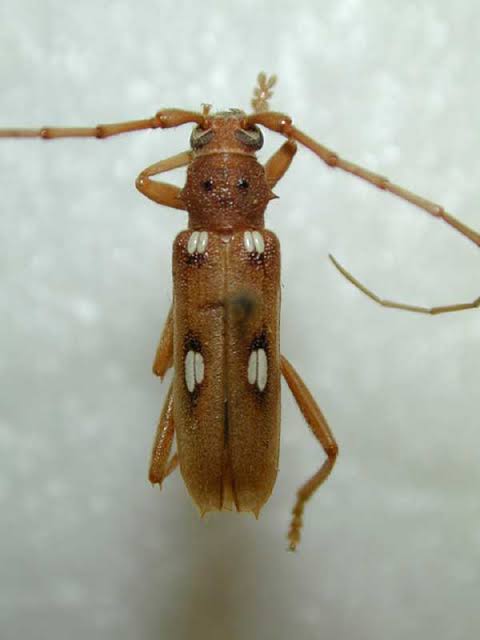
Brown beetle identification with pictures starts with one simple rule: do not rely on color alone. Many beetles are brown, reddish-brown, tan, bronze, chestnut, or dark brown, and different species can look similar in a quick photo. A more reliable identification comes from comparing size, body shape, antennae, wing covers, markings, where the beetle was found, and what it was doing.
A tiny oval brown beetle in a pantry is very different from a large brown beetle bumping into a porch light at night. A hairy brown larva under a rug is different from a shiny ground beetle under a log. A brown beetle on a garden leaf may be feeding on plants, while another brown beetle in the soil may be hunting smaller insects.
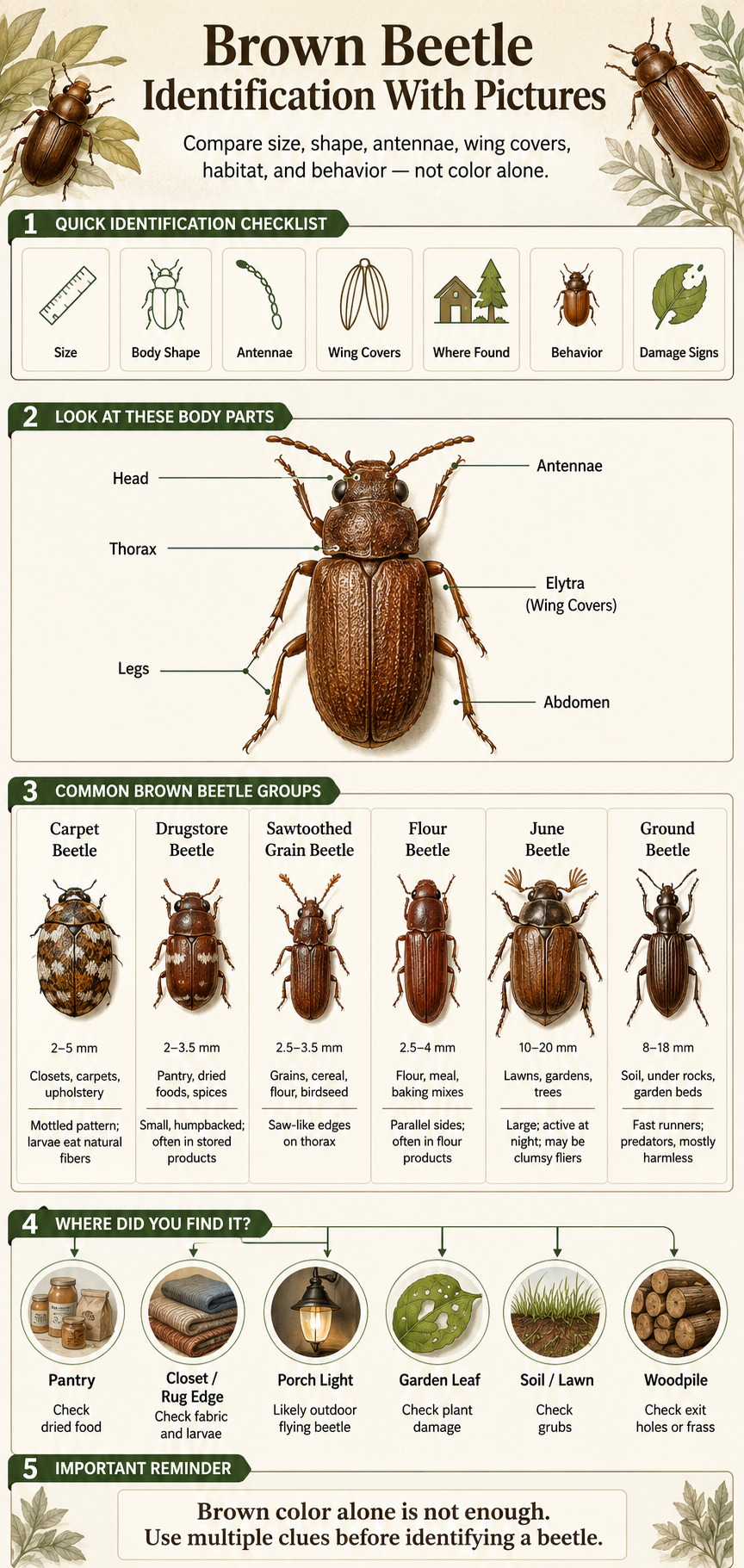
This guide is designed for beginners who want a calm, practical way to compare common brown beetles. It will not identify every species in the world, but it will help you narrow down the most likely groups and understand which clues matter before you take action.
About This Guide
Beetle identification can vary by region, life stage, season, sex, size, color, body shape, antennae, wing covers, markings, habitat, behavior, and photo quality. Many beetles look similar, especially in blurry pictures, at immature life stages, or when their markings are rubbed, hidden, or unclear.
Use this guide as an educational starting point. For species-level identification, crop damage, museum specimens, food contamination, possible infestation, or safety concerns, consult a local extension office, natural history museum, pest professional, or qualified insect expert.
For a broader starting point, you can also use this beetle identification guide before comparing more specific brown beetle groups.
Table of Contents
- Why Brown Beetles Are Hard to Identify
- Quick Brown Beetle Identification Checklist
- Beetle Body Parts to Look At
- Common Brown Beetles Compared
- Small Brown Beetles in the House
- Brown Beetles in the Pantry
- Brown Beetles in Gardens and Lawns
- Brown Beetles Around Lights, Wood, and Soil
- Similar-Looking Insects That Are Not Beetles
- Habitat, Diet, and Life Cycle Clues
- When to Seek Expert Help
- FAQ
- References and Further Reading
Why Brown Beetles Are Hard to Identify
Brown is one of the most common beetle colors. It can appear as tan, amber, reddish-brown, dark chocolate, bronze, copper, or almost black. Lighting also changes how a beetle looks in a photo. A beetle photographed under a warm indoor lamp may look more reddish than it really is. A shiny beetle photographed with flash may look black in one picture and brown in another.
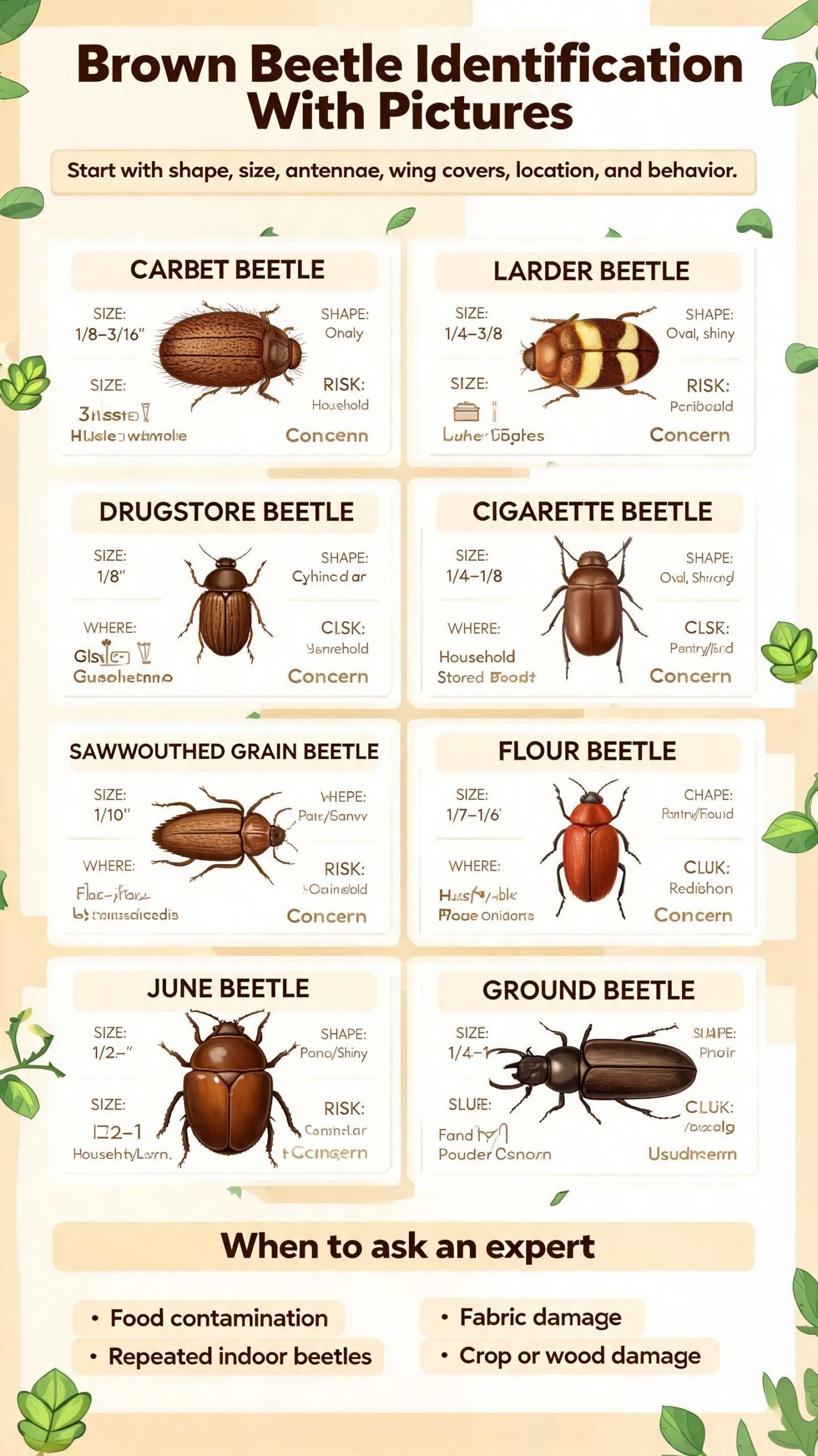
Brown beetles also change in appearance as they age. Some have tiny scales or hairs that rub off. Some have wing covers that look plain from a distance but show stripes, pits, ridges, or mottled patches under magnification. Others are not adult beetles at all but larvae, which may look like small worms, grubs, or hairy caterpillar-like insects.
A good identification usually uses several clues together:
- Size
- Body shape
- Antennae shape
- Wing cover texture
- Markings or bands
- Leg shape
- Whether it flies
- Whether it was found indoors or outdoors
- Whether it was near food, fabric, plants, lights, wood, soil, or water
- Season and time of day
Beetles belong to the order Coleoptera, and one key feature is the hardened front wings, called elytra, which cover and protect the hind wings in most species. This is why many beetles look hard-shelled compared with flies, moths, ants, or true bugs.
Quick Brown Beetle Identification Checklist
Before comparing pictures, write down what you can observe. Even a few details can narrow the search.
Ask these questions:
- Is the beetle tiny, small, medium, or large?
- Is the body round, oval, long, flattened, humpbacked, or bullet-shaped?
- Are the antennae short, clubbed, saw-toothed, threadlike, or very long?
- Are the wing covers smooth, ridged, spotted, striped, hairy, or mottled?
- Was it found in a pantry, closet, bathroom, window, garden, lawn, woodpile, soil, or under a rock?
- Was it crawling, flying, jumping, feeding, or attracted to light?
- Did you find one beetle, many beetles, larvae, shed skins, holes, plant damage, or food contamination?
If you found a beetle indoors, the location matters as much as the picture. A beetle near flour or cereal suggests a different group from a beetle near wool clothing or a windowsill. University of Minnesota Extension notes that pantry pests may appear in dried foods, cupboards, counters, or windows, and small beetles indoors are not always pantry pests unless they are directly associated with food.
Beetle Body Parts to Look At
Body Shape
Body shape is often more useful than color.
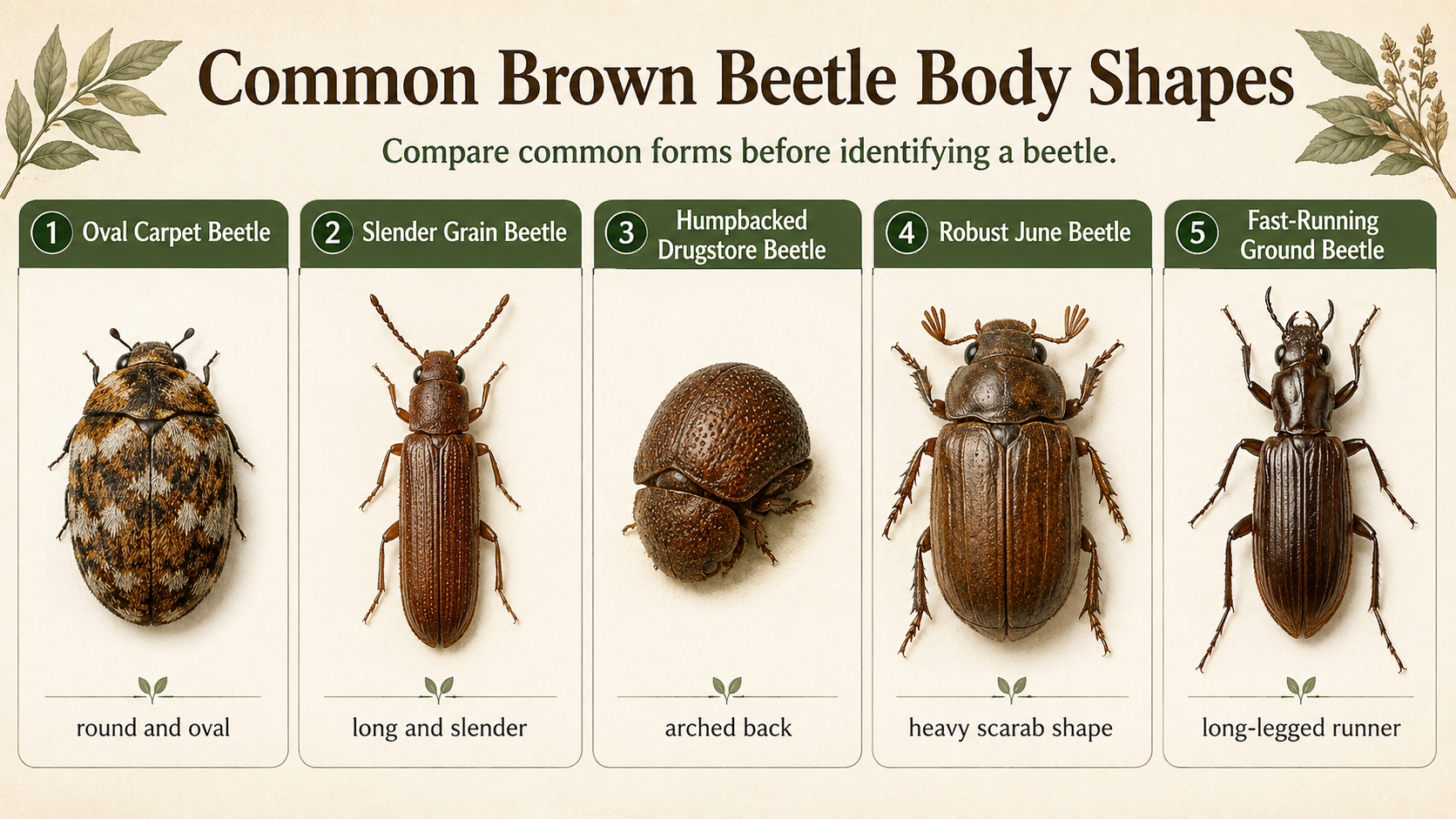
A round or oval beetle may suggest a carpet beetle, pantry beetle, lady beetle, or small scarab. A long, narrow beetle may suggest a click beetle, ground beetle, or some stored-product beetles. A humped beetle with the head tucked downward may suggest a drugstore beetle or cigarette beetle. A snout-nosed beetle is usually a weevil.
Size
Use a ruler, coin, or fingertip for scale when taking a photo. Size can separate several common brown beetles:
- Very tiny: about 1/16 inch
- Small: about 1/8 inch
- Medium: about 1/4 to 1/2 inch
- Large: about 1/2 to 1 inch or more
Many household beetles are small. A large brown beetle flying around porch lights is more likely to be a scarab-type beetle than a pantry beetle.
Antennae
Antennae can be extremely helpful.
Look for:
- Clubbed antennae
- Saw-like antennae
- Long threadlike antennae
- Fan-like antennae
- Elbowed antennae
- Short antennae hidden near the head
Some beetles are easiest to separate by antennae shape, but you may need a close photo.
Wing Covers
The hardened wing covers, or elytra, are the “shell” on the back of an adult beetle. Check whether they are:
- Smooth and shiny
- Dull and hairy
- Deeply ridged
- Striped
- Mottled
- Short, exposing part of the abdomen
- Rounded at the end
- Squared off
Wing covers can also help separate beetles from true bugs. Many true bugs have overlapping wings with a more triangular pattern, while beetles usually have a straight line down the middle where the two hardened wing covers meet.
Legs and Movement
Some brown beetles run quickly. Others move slowly. Some fly readily. Some jump. Some larvae crawl slowly and hide in dark places.
Movement gives context:
- Fast runner under stones: often a ground beetle
- Slow hairy larva in closet or carpet edge: possible carpet beetle larva
- Small beetle flying near windows after coming from pantry items: possible stored-food beetle
- Large clumsy beetle at lights at night: possible June beetle or related scarab
Common Brown Beetles Compared
The table below compares common brown beetle groups a beginner may encounter. Exact species vary by region, so use the table as a narrowing tool rather than a final identification.
| Beetle type | Typical size | Color or markings | Body shape | Common habitat | Often found indoors? | Key identification clue | What readers should know |
|---|---|---|---|---|---|---|---|
| Carpet beetles | 1/16 to 1/8 inch adults | Black, brown, tan, white, yellow, orange, or mottled | Small oval | Homes, windowsills, closets, stored fabrics | Yes | Adults are small and oval; larvae are hairy and tan to brown | Larvae, not adults, damage susceptible animal-based materials |
| Larder beetles | About 1/3 to 3/8 inch | Dark brown with pale band on wing covers | Elongate oval | Stored animal products, pet food, dead insects, homes | Sometimes | Pale band with dark spots across wing covers | May indicate a food source, carcass, or stored-product issue |
| Drugstore beetles | About 1/8 inch | Brown | Oval and humpbacked | Dried plant products, spices, stored foods | Yes | Head bends downward, giving a humped look | Can infest many dried products |
| Cigarette beetles | About 1/8 inch | Brown | Oval and humpbacked | Tobacco, spices, dried foods, dried plant material | Yes | Similar to drugstore beetle; often needs close inspection | Correct identification may require magnification |
| Sawtoothed grain beetles | About 1/10 inch | Brownish-red to dark | Slender and flattened | Cereals, nuts, dried fruit, stored foods | Yes | Saw-like teeth along sides of thorax | Usually associated with stored food |
| Flour beetles | About 3/16 inch | Reddish-brown | Elongate oval | Flour, cereal, bran, nuts, chocolate | Yes | Narrower than many pantry beetles | Often found in milled grain products |
| Spider beetles | About 3/16 inch | Reddish-brown | Rounded body with long legs | Stored products, old organic material | Yes | Spider-like appearance | May be mistaken for spiders or mites |
| June beetles / May beetles | 1/2 to 1 inch | Reddish-brown to dark brown | Robust scarab shape | Lawns, trees, porch lights | Sometimes near doors/windows | Large, clumsy night flier attracted to lights | Larvae are white grubs in soil |
| Japanese beetles | About 1/2 inch | Metallic green with bronze wing covers and white side tufts | Oval scarab shape | Gardens, lawns, ornamental plants | Rare indoors | White hair tufts along sides; skeletonized leaves | Garden pest in areas where established |
| Ground beetles | Variable | Brown, black, metallic, or patterned | Often flattened and fast-running | Soil, logs, stones, leaf litter | Sometimes wander indoors | Runs quickly; often found on ground | Many are beneficial predators |
| Click beetles | Variable | Brown, gray, or black | Long and narrow | Soil, fields, lights, vegetation | Sometimes | Can click and flip when on back | Larvae are wireworms; some feed on roots |
| Weevils | Small to medium | Brown, gray, black, mottled | Often oval with snout | Seeds, grains, plants, stored food | Yes or outdoors | Snout-like head | Some pantry weevils develop inside grains or beans |
For more broad comparisons, see this guide to common types of beetles with pictures.
Small Brown Beetles in the House
Small brown beetles indoors are often noticed on windowsills, floors, kitchen counters, bathroom walls, closets, or near lights. The most common possibilities include carpet beetles, pantry beetles, spider beetles, larder beetles, and small ground beetles that wandered in from outside.
Carpet Beetles
Adult carpet beetles are small, oval beetles. Depending on the species, they may look black, brown, tan, speckled, mottled, or patterned. Adults are often found near windows because they are attracted to light and may be trying to get outside.
The larvae are more important for household damage. Carpet beetle larvae are usually tan to brownish, slow moving, and covered with hairs or bristles. They may leave shed skins behind. University of Kentucky Entomology explains that carpet beetle larvae feed on animal-based materials such as wool, fur, felt, silk, feathers, skins, and leather, while adults feed on pollen and do not damage fabrics.
Look for carpet beetle clues in:
- Wool rugs
- Stored sweaters
- Felt items
- Feather pillows
- Taxidermy
- Pet hair buildup
- Baseboards
- Air vents
- Under furniture
- Closet corners
- Stored boxes
Carpet beetle damage may appear as irregular holes, thin patches, shed larval skins, or feeding damage along hidden edges. Regularly used clothing and routinely vacuumed rugs are less likely to be attacked than stored, undisturbed items.
Larder Beetles
Larder beetles are larger than many pantry beetles. Adults are usually dark brown with a pale yellowish band across the wing covers. The band often has dark spots. Indoors, larder beetles may be linked with pet food, stored animal products, dead insects, animal nests, or other organic material.
If you find several larder beetles, look for a source rather than treating only the beetles you see. The source could be a forgotten food item, dead insects in a wall void, a bird nest, pet food, or animal-based material.
Spider Beetles
Spider beetles are small, rounded beetles with long legs. Some are reddish-brown and can look like tiny spiders or mites from a distance. They may be found in stored food areas, old organic debris, or undisturbed storage spaces.
A spider beetle’s rounded body and long legs are the main clues. If the insect has eight legs, it is not a beetle. Beetles have six legs.
Brown Beetles in the Pantry
If you found small brown beetles in flour, cereal, rice, pasta, spices, dried fruit, pet food, birdseed, or old dried goods, focus on pantry beetles and stored-product beetles.
University of Minnesota Extension lists many dried products that can be infested, including flour, cereal, cornmeal, rice, pasta, crackers, dried beans, popcorn, nuts, spices, powdered milk, dried fruit, birdseed, dry pet food, dried flowers, garden seeds, and similar stored materials. It also notes that pantry pests can enter opened packages and sometimes unopened paper, cardboard, plastic, foil, or cellophane packages.
Drugstore Beetles
Drugstore beetles are small, brown, oval beetles. Their heads bend downward, giving the body a humped appearance. They can fly and may appear around windows after emerging from infested material.
They may feed on many dried plant products, including spices, grain-based foods, dried flowers, tobacco products, and even some paper products.
Cigarette Beetles
Cigarette beetles are also small, brown, oval beetles with a humped look. They can be difficult to separate from drugstore beetles without magnification. Because they infest dried products, the best identification clue may be the source where they are found.
Sawtoothed Grain Beetles
Sawtoothed grain beetles are tiny, slender, flattened beetles. They are brownish-red to almost black. The “sawtoothed” name comes from the small tooth-like projections along each side of the thorax. University of Minnesota Extension describes them as about 1/10 inch long and associated with dried fruit, cereals, nuts, dried meat, macaroni, and seeds.
Flour Beetles
Flour beetles are reddish-brown and elongate oval. They are commonly associated with flour, bran, cereal products, dried fruits, nuts, and chocolate. If you see many small reddish-brown beetles in a bag of flour or cereal, flour beetles are one possibility.
Weevils
Some brown pantry beetles have a snout. These are weevils. Grain weevils may infest whole grains or seeds. Bean weevils may appear in dried beans and peas. Their larvae often develop inside food items, so the first obvious sign may be adult beetles or small round exit holes.
What to Do if Brown Beetles Are in Food
Do not spray insecticide into cupboards or food storage areas. University of Minnesota Extension recommends throwing away contaminated food, cleaning cupboards and surfaces, vacuuming cracks and corners, and storing foods in tightly closed glass, metal, or heavy plastic containers. The same source states that insecticides are not recommended for controlling insects in stored food cupboards because they do not affect insects inside packages and any food that contacts insecticide must be discarded.
Simple steps:
- Find the infested package.
- Check nearby dry foods.
- Discard contaminated products.
- Vacuum shelves, cracks, and corners.
- Empty the vacuum or discard the bag.
- Store replacement foods in sealed containers.
- Watch for adults for a few weeks in case another source was missed.
For more context on beetles found indoors, see beetles around the home.
Brown Beetles in Gardens and Lawns
Not every brown beetle in a garden is harmful. Some feed on plants, some feed on fungi or decaying material, and others hunt smaller insects. Correct identification matters because the wrong response can harm beneficial insects.
June Beetles and May Beetles
Many people call large brown scarab beetles “June bugs” or “June beetles.” They are often reddish-brown, robust, hard-shelled, and clumsy fliers. Adults may gather around porch lights at night.
The adult beetles may chew leaves, but the larvae are the white grubs found in soil. These grubs feed on roots and may be important in lawns or turf when populations are high. If you find a large brown beetle indoors near a door or window during early summer, it may simply have flown in from outside.
Japanese Beetles
Japanese beetles are not plain brown, but beginners often notice their bronze wing covers first. Adults are oval, metallic green, with bronze-colored wings and white tufts of hair along the sides. Utah State University Extension describes adults as about 1/2 inch long and notes that the immature stage is a C-shaped grub that feeds on turfgrass roots.
In gardens, Japanese beetles can skeletonize leaves, leaving veins behind. They may feed in groups on roses, grapes, fruit trees, ornamentals, and many other plants. In areas where Japanese beetles are invasive or regulated, suspected finds may need to be reported to local agricultural authorities.
Ground Beetles
Ground beetles are often brown, black, bronze, or metallic. Many are fast runners found under stones, boards, logs, mulch, and leaf litter. They may wander indoors by accident, especially through gaps under doors or around foundations.
Many ground beetles are predators of smaller invertebrates, so they are often helpful outdoors. If one enters the house, it can usually be captured and released outside.
Click Beetles
Click beetles are usually long, narrow, and somewhat flattened. Many are brown or dark gray. When placed on their back, some can snap their body and flip into the air with a clicking sound. Adults may come to lights. Their larvae, called wireworms, live in soil, and some species feed on plant roots.
Leaf Beetles and Plant-Feeding Beetles
Some brown beetles found on leaves are plant feeders. Look for feeding marks, host plant, body shape, and whether the beetle is alone or part of a group. Many leaf beetles are small and oval, and some have stripes or spots.
If the plant damage is minor, identification may be enough. If a crop, ornamental planting, or valuable garden plant is being damaged, check with a local extension office for region-specific advice.
Brown Beetles Around Lights, Wood, Soil, and Outdoor Spaces
A brown beetle’s location often gives the strongest clue.
Around Lights
Large brown beetles attracted to porch lights are often scarabs such as May beetles or June beetles. Click beetles, ground beetles, and other beetles may also come to lights.
Clues:
- Time of year
- Size
- Whether it flies clumsily
- Whether it appears mostly at night
- Whether several appear at the same light
Around Firewood or Woodpiles
Brown beetles near firewood may include longhorn beetles, bark beetles, powderpost beetles, or other wood-associated beetles. Some are harmless outdoors, while others may be linked to stored wood or structural concerns.
If beetles are emerging from firewood, move the wood outdoors and avoid storing large amounts indoors. If you see holes, powdery frass, or repeated beetle emergence from structural wood, consult a qualified professional.
Under Rocks, Logs, and Mulch
Fast-running brown or black beetles under objects are often ground beetles. These are usually outdoor predators, not household pests.
In Soil or Lawns
White C-shaped grubs in soil may be larvae of scarab beetles, including June beetles, Japanese beetles, or related species. Adult beetles may be brown, bronze, green, or patterned depending on the species.
Similar-Looking Insects That Are Not Beetles
Not every small brown insect is a beetle. Beginners often confuse beetles with several other insects.
True Bugs
True bugs may have shield-shaped bodies, sucking mouthparts, or wings that overlap differently from beetle wing covers. Stink bugs, seed bugs, and plant bugs may be brown and hard-looking, but they are not beetles.
Cockroach Nymphs
Small brown cockroach nymphs can be mistaken for beetles. Cockroach nymphs usually have long antennae, a flattened body, and quick movement. They do not have hardened beetle wing covers as young nymphs.
Bed Bugs
Bed bugs are flat, oval, reddish-brown insects, but they are not beetles. If you suspect bed bugs, do not rely on a general beetle guide. Seek a reliable identification source or pest professional.
Ticks and Mites
Ticks and mites have eight legs as adults. Beetles have six legs. Very small spider beetles can look mite-like, so counting legs is helpful when the photo is clear.
Habitat, Diet, and Life Cycle Clues
A brown beetle’s life stage can completely change its appearance.
Adult beetles often have hardened wing covers, six legs, antennae, and a clear head-thorax-abdomen structure. Larvae may look like grubs, worms, wireworms, or hairy caterpillar-like insects. Pupae may be hidden in soil, food, wood, or stored material.
General patterns:
- Pantry beetle larvae usually stay close to stored food.
- Carpet beetle larvae hide in dark, undisturbed areas and feed on vulnerable materials.
- Scarab larvae are often white C-shaped grubs in soil.
- Ground beetle larvae are usually active predators in soil or leaf litter.
- Wood-boring beetle larvae may live inside wood.
Diet also helps:
- Dried foods suggest pantry beetles.
- Wool, fur, feathers, leather, pet hair, or dead insects suggest carpet beetles or related dermestids.
- Plant leaves suggest leaf beetles, scarabs, or other plant feeders.
- Soil roots suggest grub or wireworm stages.
- Smaller insects suggest predatory beetles.
For general background on beetle feeding habits, see what do beetles eat.
How to Take Better Pictures for Brown Beetle Identification
A good photo can make identification much easier.
Try to capture:
- Top view
- Side view
- Close-up of antennae
- Close-up of wing covers
- A size reference
- The place where it was found
- Any larvae, shed skins, holes, food damage, or plant damage
Use natural light if possible. Avoid crushing the insect before photographing it, because body shape and antennae may be damaged. If the beetle is alive and not a health or food concern, you can place a clear cup over it and slide paper underneath for temporary observation.
When to Seek Professional or Local Expert Help
Most brown beetles are harmless or manageable, but expert help is useful when identification matters.
Contact a local extension office, museum, pest professional, crop advisor, or qualified expert if:
- You find beetles repeatedly in stored food.
- You find larvae and damage in wool, fur, feathers, leather, or museum items.
- You suspect a wood-boring beetle in structural wood.
- A garden or crop is being damaged.
- You suspect an invasive or regulated beetle.
- Someone in the home may be reacting to insect hairs, dust, or contaminated material.
- You need species-level accuracy for school, research, agriculture, collection care, or pest management.
If pesticides are considered, always follow the product label and local regulations. Do not apply household insecticides to food, dishes, bedding, clothing, or surfaces where they are not labeled for use. University of Kentucky Entomology cautions that pesticides may not be legal in all areas and that users should read and follow label directions.
FAQ About Brown Beetle Identification With Pictures
What is the easiest way to identify a brown beetle?
Start with size, body shape, antennae, wing covers, and where you found it. Brown color alone is not enough. A small brown beetle in flour, a hairy brown larva under a rug, and a large brown beetle at a porch light may belong to very different beetle groups.
Why are there small brown beetles in my house?
Small brown beetles may be pantry beetles, carpet beetles, spider beetles, larder beetles, or outdoor beetles that wandered inside. Check where they are concentrated. Beetles near dried food suggest pantry pests. Beetles near windows, closets, wool items, or pet hair may suggest carpet beetles.
Are brown beetles dangerous?
Most brown beetles are not dangerous to people. Some can contaminate stored food, damage susceptible fabrics, harm plants, or become a nuisance indoors. The risk depends on the beetle type and where it is found.
What are the tiny brown beetles in flour or cereal?
Tiny brown beetles in flour, cereal, rice, pasta, nuts, spices, or dried foods may be flour beetles, sawtoothed grain beetles, drugstore beetles, cigarette beetles, or weevils. Discard contaminated products, clean storage areas, and store new dry foods in sealed containers.
What are the small brown beetles near my windows?
Small brown beetles near windows may be carpet beetles or pantry beetles that have emerged indoors and moved toward light. Check nearby closets, rugs, stored fabrics, pantry shelves, pet food, and dried plant materials.
What does a carpet beetle larva look like?
A carpet beetle larva is usually tan to brownish, slow moving, and covered with hairs or bristles. It may leave shed skins behind. Larvae often hide in dark, undisturbed places such as closet corners, rug edges, baseboards, vents, and stored boxes.
What is a large brown beetle flying around porch lights?
A large brown beetle flying clumsily around porch lights may be a June beetle, May beetle, or related scarab. These beetles often appear in late spring or summer and may accidentally enter homes through doors or windows.
Are brown ground beetles harmful?
Many ground beetles are beneficial predators outdoors. They often run quickly and hide under stones, logs, mulch, or leaf litter. If one wanders indoors, it can usually be released outside.
How can I tell a beetle from a cockroach?
Beetles usually have hardened wing covers with a straight line down the back. Cockroaches tend to be flatter, faster, and have very long antennae. Young cockroach nymphs do not have the same hard wing covers as adult beetles.
Should I spray insecticide when I find brown beetles?
Not immediately. First identify the beetle and find the source. Pantry beetles require food disposal and cleaning, not spraying food cupboards. Carpet beetles require locating infested materials, laundering, dry cleaning, vacuuming, or expert help for severe cases. Outdoor beetles may not need treatment at all.
Can pictures alone identify a brown beetle species?
Sometimes, but not always. Pictures can narrow the group, especially when they show size, antennae, wing covers, and habitat. Species-level identification often requires region, close-up details, expert comparison, or examination under magnification.
What should I include when asking someone to identify a brown beetle?
Include a clear top photo, side photo, size estimate, location, date, where it was found, and any damage or larvae nearby. Mention whether it was near food, fabric, plants, wood, soil, lights, or water.
Conclusion
Brown beetle identification with pictures works best when you compare more than color. Look at the beetle’s size, body shape, antennae, wing covers, markings, habitat, behavior, and any nearby clues such as food contamination, fabric damage, plant feeding, soil grubs, or shed skins.
A tiny brown beetle in the pantry may point to stored-food pests. A hairy brown larva in a closet may point to carpet beetles. A large reddish-brown beetle at a porch light may be a June beetle or related scarab. A fast-running brown beetle under a stone may be a beneficial ground beetle.
Use pictures as a starting point, then confirm with context. When identification affects food safety, valuable fabrics, crops, wooden structures, pest control, or scientific accuracy, contact a local expert rather than guessing from color alone.
References and further reading
- University of Minnesota Extension — Pantry pests: Insects found in stored food
- University of Kentucky Entomology — Carpet Beetles
- Utah State University Extension — Japanese Beetle
- University of Minnesota Extension — Insects
- University of Kentucky Department of Entomology — Insect and Pest Information
- Utah State University Extension — Plant Health
- BugGuide — Beetles
- iNaturalist — Beetles