

Beetles can be good, bad, or simply harmless. The honest answer depends on the beetle species, where you found it, what it is feeding on, and whether it is causing real damage.
Many beetles are helpful predators, recyclers, decomposers, or soil workers. Ground beetles often eat other insects, larvae, caterpillars, and grubs. Lady beetles feed on aphids and other soft-bodied pests. Dung beetles and carrion-associated beetles help break down waste and dead organic matter. These beetles are usually beneficial outdoors.
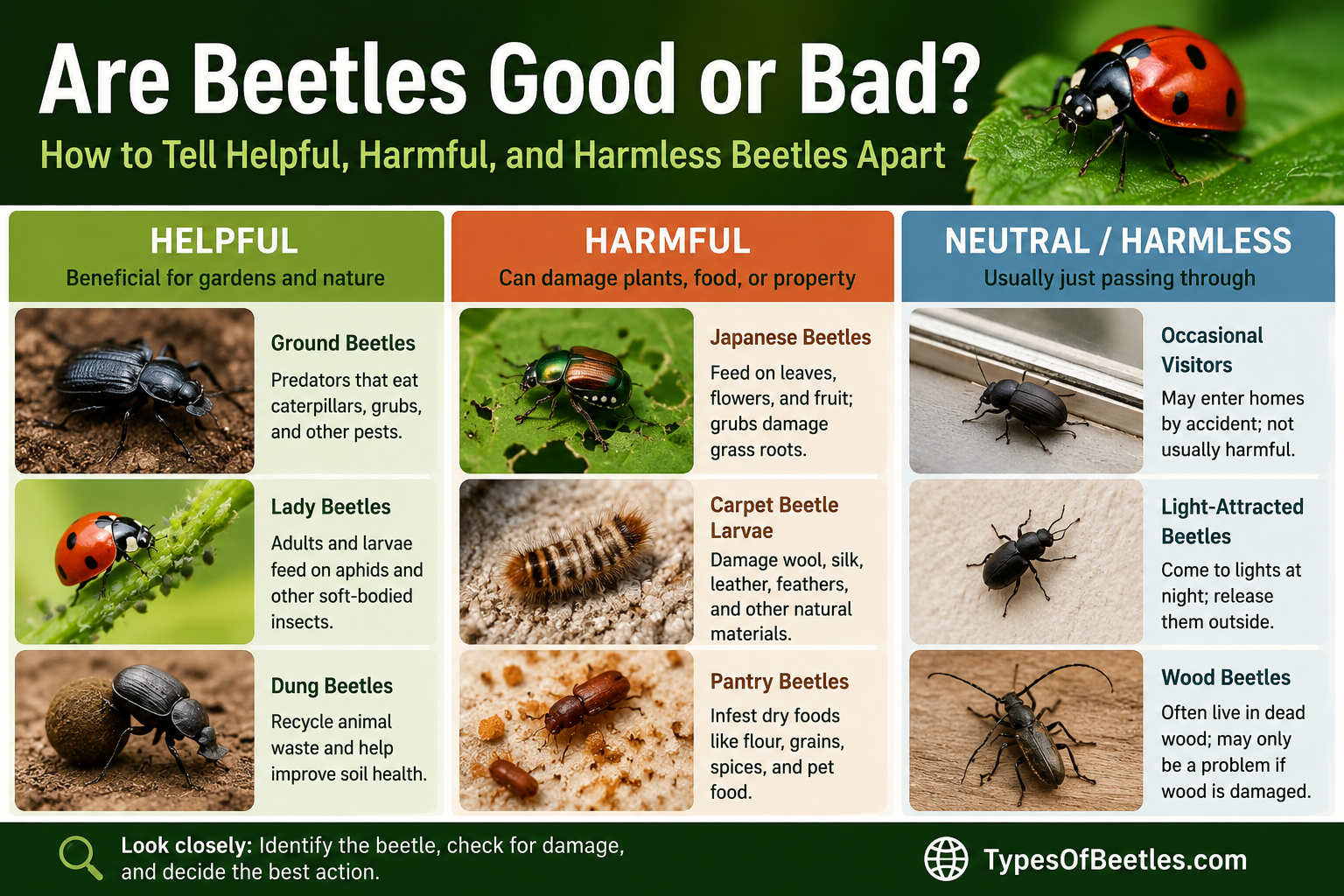
Other beetles can be pests. Japanese beetles can damage leaves, flowers, fruit, and turfgrass roots. Carpet beetle larvae can damage wool, silk, leather, feathers, and other animal-based materials indoors. Some beetles infest stored food, dry goods, seeds, spices, or pet food. These beetles are not “bad” in a moral sense, but they can become a problem when their feeding habits conflict with gardens, homes, crops, or stored items.
The best first step is not to panic. Look at the beetle’s size, color, body shape, antennae, wing covers, markings, behavior, habitat, and food source. If you are unsure what kind of beetle you found, start with a careful beetle identification process before deciding whether the beetle is helpful, harmful, or neutral.
About this guide
This guide is written for beginners, homeowners, gardeners, students, parents, teachers, and nature-curious readers who want a calm answer to a common question: are beetles good or bad?
Beetle identification can vary by region, season, life stage, sex, size, color, markings, photo quality, habitat, and behavior. Many beetles look similar, especially in quick phone photos, when the beetle is immature, or when markings are hidden by lighting or movement.
Use this guide as a practical starting point. It can help you understand what beetles do, why some are beneficial, why some become pests, and what clues to observe before taking action. For species-level identification that affects safety, crop damage, household infestation, pesticide use, or scientific accuracy, consult a local extension office, museum, pest professional, or qualified entomology expert.
Table of contents
- Are beetles good or bad?
- Why some beetles are helpful
- When beetles become harmful
- Harmless or neutral beetles
- Helpful vs harmful beetles comparison table
- How to judge a beetle before taking action
- Beetles in the garden
- Beetles in the home
- Common mistakes
- When to seek professional help
- FAQ
- References and further reading
Are beetles good or bad?
Beetles are not automatically good or bad. They are one of the most diverse groups of insects, and their roles vary widely. Some hunt pests. Some pollinate flowers. Some recycle dung, dead wood, fungi, carrion, or plant matter. Others feed on garden plants, stored foods, fabrics, wood, or roots.
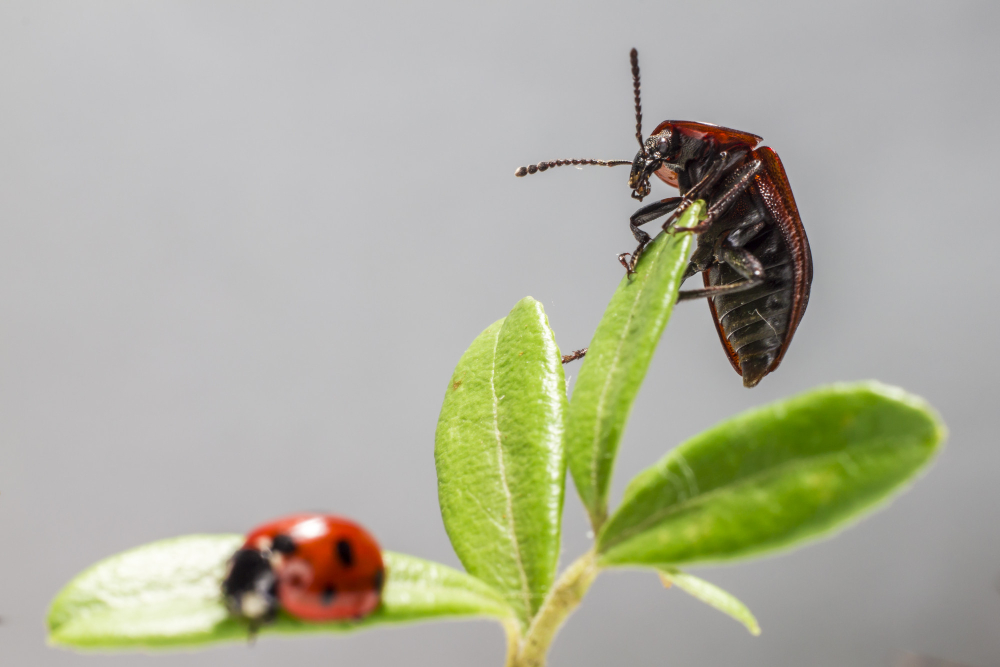
A beetle that is helpful in one place can be unwanted in another. A lady beetle eating aphids on a rose bush is usually helpful. A large number of overwintering lady beetles gathering inside a house can be a nuisance. A ground beetle running across a garden bed is usually beneficial. A pantry beetle emerging from a bag of flour is a household problem.
A better question is:
What is this beetle doing here?
That question leads to a more useful answer than calling all beetles good or bad.
Why some beetles are good
Many beetles are beneficial because they help control pests, recycle nutrients, improve soil processes, or support food webs. Outdoors, beetles are part of a larger ecosystem. Removing every beetle from a yard or garden can reduce natural pest control and disturb the balance between predators, prey, decomposers, and plants.
Ground beetles can help control garden pests
Ground beetles, also called carabid beetles, are often beneficial in gardens and agricultural areas. Many species are fast-running predators that live under leaves, mulch, stones, boards, soil cracks, and garden debris.
They may feed on:
- Caterpillars
- Fly larvae
- Beetle larvae
- Grubs
- Small soil-dwelling insects
- Slugs or other soft-bodied prey, depending on species
- Weed seeds in some cases
University of Wisconsin Extension describes ground beetles as important predators in many garden and agricultural settings. Many species are nocturnal and hide during the day, which means gardeners may not notice how much pest-control work they are doing.
If you see a fast black or dark brown beetle running across soil at night, it may be a ground beetle. These beetles can look intimidating because they move quickly, but many are useful garden allies. For a broader overview of common groups, see this guide to types of beetles.
Lady beetles are often helpful predators
Lady beetles are among the best-known beneficial beetles. Both adults and larvae of many species feed on aphids, scale insects, insect eggs, and other soft-bodied pests.
UC IPM notes that the convergent lady beetle feeds especially on aphids, while the larvae and adults use different methods to consume prey. The larvae often look like tiny black or dark “alligators” with orange markings, so beginners sometimes mistake them for pests.
That mistake matters. Killing lady beetle larvae can remove some of the most useful aphid predators from a garden.
Lady beetles are not all identical. Some species look similar, and some are difficult to identify from photos alone. The important point is that many lady beetles outdoors are beneficial, especially when they are feeding on aphids or other plant pests.
Dung beetles and scavenger beetles recycle nutrients
Some beetles help break down animal waste, dead organisms, fungi, or other organic matter. This may not seem attractive, but it is ecologically important.
Dung beetles bury or process animal dung. Carrion beetles and some dermestid beetles help break down dead animal material. Other beetles live in decaying wood, fungi, leaf litter, or soil. Their work helps return nutrients to the environment.
Without decomposers and recyclers, dead material and waste would accumulate much more slowly. These beetles are part of the cleanup crew of nature.
Some beetles support soil health
Beetles that live in or near the soil can affect soil structure, nutrient cycling, seed movement, and the food web. Ground beetles, dung beetles, rove beetles, and other groups may interact with soil organisms in different ways.
Not every soil beetle is beneficial in every situation. Some root-feeding larvae can damage turf, crops, or ornamental plants. But many beetles found in soil, mulch, leaf litter, and compost areas are part of a healthy outdoor ecosystem.
Beetles are food for other wildlife
Beetles and their larvae are food for birds, reptiles, amphibians, mammals, spiders, predatory insects, and other animals. Even beetles that do not seem directly useful to people may support the wider food web.
This is one reason “good or bad” can be too simple. A beetle that chews a few leaves may also feed birds, support predators, or play another role in the local ecosystem.
When beetles can be bad or harmful
Some beetles become harmful when they damage plants, stored food, fabrics, wood, turf, crops, or household materials. In most cases, the problem is not that the beetle is dangerous to people. The problem is feeding damage, contamination, nuisance activity, or infestation.
Plant-feeding beetles can damage gardens
Some beetles eat leaves, flowers, fruit, stems, roots, or seeds. A few feeding marks on leaves are usually not a crisis. Large populations, repeated feeding, or damage to young plants can be more serious.
Japanese beetles are a common example in many parts of North America. Adult Japanese beetles feed on leaves, flowers, and fruit of many plants, while their grubs feed mainly on grass roots. University of Minnesota Extension notes that adults can feed on more than 300 plant species and that grubs can damage turfgrass by chewing roots.
Typical plant-feeding beetle signs include:
- Skeletonized leaves
- Irregular holes in leaves
- Chewed flower petals
- Damaged fruit
- Wilting seedlings
- Turf that browns and pulls up easily
- Visible grubs in soil
- Clusters of beetles feeding together
Not all leaf damage is caused by beetles. Caterpillars, grasshoppers, sawflies, slugs, disease, weather stress, and nutrient problems can also damage plants. Look for the insect itself, the feeding pattern, and the plant type before deciding what to do.
Carpet beetle larvae can damage fabrics and stored animal materials
Adult carpet beetles often feed outdoors on pollen and nectar, but their larvae can be damaging indoors. Carpet beetle larvae feed on animal-based materials such as wool, silk, leather, feathers, fur, hair, and similar organic materials. UC IPM notes that carpet beetles can occur in homes, warehouses, museums, and places where fabric, yarn, furs, or feathers are present.
Signs of carpet beetles may include:
- Small adult beetles near windows
- Hairy larvae in dark areas
- Shed larval skins
- Irregular holes in woolens or natural fabrics
- Damage to feathers, taxidermy, stored textiles, or natural-fiber items
- Activity near lint, pet hair, dead insects, or old nests
The adult beetles are often not the stage causing the fabric damage. The larvae are usually the main problem. That is why identification should include life stage, not just the adult beetle.
For indoor beetle concerns, this beetles around the home guide can help readers separate occasional visitors from potential household pests.
Pantry beetles can infest stored food
Some beetles infest dry stored foods. Depending on the species, they may be found in flour, grains, cereal, pasta, spices, seeds, dried fruit, pet food, bird seed, or similar products.
Common signs include:
- Tiny beetles in bags or boxes
- Larvae or cast skins in food
- Fine powder at the bottom of packages
- Small holes in packaging
- Beetles crawling in pantry shelves
- Repeated activity near the same stored product
Pantry beetles usually require source control. That means finding the infested item, discarding or treating it safely, cleaning the storage area, and using sealed containers to prevent reinfestation. Insecticide use around food storage areas should be approached cautiously and according to label directions.
Wood-boring beetles can damage wood in certain cases
Some beetle larvae develop inside wood. Many wood-boring beetles attack dead, dying, stressed, or freshly cut wood. Others can damage structural wood, furniture, flooring, or stored lumber under the right conditions.
Signs may include:
- Small round or oval exit holes
- Fine powdery frass
- Weak or damaged wood
- Adult beetles emerging indoors
- Repeated activity from the same wooden item
Wood-boring beetle identification can be difficult. It often depends on the type of wood, moisture level, age of the wood, hole size, frass texture, and whether the beetles are still active. If structural wood may be involved, professional inspection is the safest choice.
Some beetles are nuisance insects indoors
A beetle can be harmless but still unwanted indoors. Some beetles wander into houses by accident. Others gather on buildings to overwinter. Some are attracted to lights at night.
A nuisance beetle may not be feeding on your home, biting, or reproducing indoors. It may simply be trapped inside. In that case, vacuuming, sealing entry points, repairing screens, reducing outdoor light attraction, and releasing occasional beetles outside may be enough.
Helpful, harmful, or neutral beetles: comparison table
| Beetle group or situation | Usually helpful, harmful, or neutral? | Common habitat | Key clue | What readers should know before taking action |
|---|---|---|---|---|
| Ground beetles | Usually helpful outdoors | Soil, mulch, leaf litter, gardens, fields | Fast-running, often dark, usually on the ground | Many are predators. Avoid killing them unless there is a confirmed problem. |
| Lady beetles | Usually helpful outdoors | Plants with aphids or soft-bodied pests | Dome-shaped adults; larvae may look like tiny alligators | Larvae are beneficial too. Do not judge only by appearance. |
| Dung beetles | Helpful outdoors | Pastures, wild areas, places with animal dung | Associated with dung, soil, or burrowing | They recycle nutrients and help break down waste. |
| Japanese beetles | Often harmful to plants and turf | Gardens, lawns, ornamental plants | Metallic green body, copper wing covers, white hair patches | Adult and grub stages cause different kinds of damage. Management depends on life stage. |
| Carpet beetles | Harmful indoors when larvae feed on materials | Closets, carpets, stored textiles, windowsills | Small adults near windows; hairy larvae in dark areas | Larvae cause most fabric damage. Find the food source. |
| Pantry beetles | Harmful in stored foods | Flour, grains, spices, seeds, dry pet food | Tiny beetles in packages or pantry shelves | Source removal and sealed storage are usually more important than spraying. |
| Wood-boring beetles | Potentially harmful | Dead wood, furniture, lumber, structural wood | Exit holes, powdery frass, emerging adults | Professional help may be needed if structural wood is involved. |
| Occasional outdoor beetles indoors | Usually neutral | Near windows, lights, doors, basements | One or a few beetles, no damage found | Often accidental visitors. Remove and monitor. |
How to judge a beetle before taking action
Before deciding whether a beetle is good or bad, observe several clues. Color alone is not enough. Many unrelated beetles are black, brown, green, metallic, striped, or spotted.
1. Where did you find it?
Location is one of the most useful clues.
Ask:
- Was it on a plant?
- Was it in soil or mulch?
- Was it near a window?
- Was it in a pantry?
- Was it on clothing, carpet, feathers, or stored fabric?
- Was it near damaged wood?
- Was it under outdoor lights?
- Was it in a bathroom, basement, garage, or attic?
A beetle found in a garden bed may be beneficial. A similar-sized beetle found in flour or stored pet food may be a pantry pest. A beetle found near a window may have simply flown indoors.
2. What is it eating?
Feeding behavior matters more than appearance.
Helpful beetles may be eating:
- Aphids
- Caterpillars
- Grubs
- Fly larvae
- Other small insects
- Dung
- Dead organic material
Problem beetles may be eating:
- Leaves
- Flowers
- Fruit
- Grass roots
- Stored food
- Wool or silk
- Leather or feathers
- Wood
If you find a beetle near damage, do not assume it caused the damage. Some predatory beetles are attracted to places where other insects are feeding.
3. What life stage is it?
Beetles develop through complete metamorphosis: egg, larva, pupa, and adult. The larva may look very different from the adult. It may also eat different food.
For example:
- Carpet beetle adults often feed on pollen, but larvae damage fabrics.
- Japanese beetle adults feed above ground, while grubs feed on roots.
- Lady beetle adults and larvae can both feed on aphids, but the larvae look very different from the adults.
- Some wood-boring beetles are noticed only after adults emerge from wood, even though the larvae caused the damage earlier.
If you can identify the life stage, your answer becomes more accurate.
4. Is there real damage?
A beetle is not automatically a pest just because it is present.
Look for:
- Repeated damage
- Active feeding
- Multiple beetles
- Larvae
- Shed skins
- Frass
- Infested food
- Damaged fabric
- Plant decline
- Turf root damage
- Structural signs
One beetle on a wall is often not a serious issue. Many beetles, larvae, and visible damage together deserve closer attention.
5. Is the beetle native, introduced, or invasive?
Some beetles are native parts of local ecosystems. Others are introduced and may become invasive in certain regions. Japanese beetles, for example, are invasive in parts of North America and can damage many plant species.
Invasive status varies by country and region. If the beetle may affect crops, regulated plants, or local ecosystems, check with a regional extension office or agriculture department.
Beetles in the garden: should you leave them alone?
Many garden beetles should be left alone unless you have evidence of plant damage. A healthy garden contains herbivores, predators, decomposers, pollinators, and scavengers. The goal is not to remove every insect. The goal is to understand whether a specific beetle is causing harm.
Beetles that are often worth protecting
You may want to protect or tolerate:
- Ground beetles running on soil at night
- Lady beetles feeding on aphids
- Soldier beetles visiting flowers
- Dung beetles in pasture or natural areas
- Carrion or fungus beetles in natural decomposition settings
- Beetles living in leaf litter or mulch without damaging plants
Encouraging beneficial beetles often means reducing unnecessary disturbance. Avoid broad-spectrum insecticide use when possible, keep some mulch or leaf litter in suitable areas, and grow diverse plants that support a wider insect community. University of Wisconsin Extension notes that ground beetle conservation can be helped by reducing disruptive practices and providing refuges such as mulch or hedgerows.
Beetles that may need management
Some garden beetles may need attention when populations are high or plants are vulnerable.
Examples include:
- Japanese beetles on roses, grapes, fruit trees, and ornamentals
- Flea beetles on seedlings and vegetables
- Cucumber beetles on cucurbits
- Colorado potato beetles on potatoes and related crops
- Root-feeding grubs in turfgrass
- Borers in stressed trees or shrubs
Management should be based on the beetle species, plant type, severity of damage, season, and local recommendations. Physical removal, exclusion, crop rotation, plant health care, timing, and targeted treatments may be more useful than broad spraying.
Beetles in the home: should you worry?
A beetle indoors deserves attention, but not panic. Many beetles enter homes accidentally through doors, windows, cut flowers, firewood, secondhand items, stored products, or gaps around the building.
Occasional beetles indoors
If you find one or two beetles:
- Capture or vacuum them.
- Check nearby windows and doors.
- Look for obvious food sources.
- Watch for more activity.
- Avoid spraying unless there is a confirmed need.
Occasional beetles may be attracted to light or warmth. They may not be breeding indoors.
Signs of a real indoor beetle problem
You should investigate more carefully if you notice:
- Beetles repeatedly appearing in the same room
- Larvae, shed skins, or frass
- Damage to wool, silk, leather, fur, feathers, or stored textiles
- Beetles in dry food packages
- Beetles emerging from wood
- Activity in multiple cabinets or closets
- A recurring problem after cleaning
If the beetles are associated with stored food, fabric, or wood, the food source is usually the key.
Beetles around food, fabrics, and stored items
Indoor beetle problems often continue because the source is hidden.
Pantry and stored food areas
Check:
- Flour
- Rice
- Pasta
- Cereal
- Spices
- Dried fruit
- Nuts
- Seeds
- Bird seed
- Dry pet food
- Tea
- Decorative dried plants
- Forgotten food in cabinets
- Crumbs in shelf cracks
Use sealed containers for dry goods, clean shelves thoroughly, and discard heavily infested products. Avoid applying insecticides directly to food storage surfaces unless the product label specifically allows it and the area can be used safely afterward.
Fabric and closet areas
For possible carpet beetles, check:
- Wool sweaters
- Wool rugs
- Silk items
- Leather
- Fur
- Feathers
- Taxidermy
- Stored blankets
- Pet hair under furniture
- Lint around baseboards
- Old nests in attics or wall voids
- Dead insects in window tracks or light fixtures
UC IPM recommends cleaning, removing infested items, washing or dry-cleaning items when appropriate, and reducing access points such as gaps in screens, doors, and vents.
Wood and furniture
For wood-boring beetles, check:
- Exit holes
- Powdery frass
- New dust under wood
- Soft or weakened wood
- Moisture problems
- Beetles repeatedly emerging from the same item
Structural wood issues should be evaluated by a qualified professional. Do not assume all holes in wood are active beetle damage. Old exit holes can remain long after the beetles are gone.
Common mistakes when deciding whether beetles are good or bad
Mistake 1: Judging by color alone
A black beetle is not automatically dangerous. A green beetle is not automatically beneficial. A spotted beetle is not always a lady beetle.
Use color together with shape, size, antennae, wing covers, habitat, and behavior.
For black beetles indoors, this black beetle identification guide can help narrow down common possibilities.
Mistake 2: Killing every beetle in the garden
Many beetles are predators or recyclers. Killing every beetle can remove natural enemies that help control pests.
If the beetle is not damaging plants, not infesting stored items, and not threatening safety, observation may be better than immediate control.
Mistake 3: Assuming the adult caused the damage
The damaging stage may be the larva, not the adult. Carpet beetles are a good example. Adult carpet beetles often appear near windows, but larvae hidden in dark areas cause the fabric damage.
Mistake 4: Treating before identifying
Pesticide use without identification can waste money, harm beneficial insects, and fail to solve the real problem. For example, spraying visible adult beetles in a pantry will not fix the issue if larvae remain inside an overlooked food package.
Mistake 5: Ignoring the source
For indoor beetle problems, the source matters. It may be a bag of bird seed, a wool rug, an old bird nest, a forgotten box of dry goods, pet hair under furniture, or damp wood.
Finding and removing the source often matters more than treating the visible beetles.
When to seek professional help
Most beetle encounters do not require professional help. However, expert support is a good idea when identification affects health, safety, property, crops, or long-term control.
Consider contacting a local extension office, pest management professional, museum specialist, or qualified expert if:
- You suspect structural wood damage.
- Beetles are repeatedly emerging from furniture, flooring, or beams.
- A pantry infestation keeps returning.
- Carpet beetle damage is widespread.
- You see many grubs damaging turf.
- You are managing crop or greenhouse damage.
- You need species-level identification.
- You are unsure whether pesticides are appropriate.
- Someone in the household may be reacting to larvae, hairs, dust, or contaminated materials.
- The beetle may be invasive or regulated in your region.
For general learning, you can also compare broader beetle facts and common identification clues before asking an expert.
FAQ
Are beetles good or bad?
Beetles can be good, bad, or harmless depending on the species and situation. Ground beetles and lady beetles are often helpful outdoors, while carpet beetles, pantry beetles, Japanese beetles, and some wood-boring beetles can become pests.
Are beetles harmful to humans?
Most beetles are not dangerous to humans. Some may pinch, release defensive odors, contaminate stored food, damage household items, or trigger irritation in sensitive people. The bigger concern is usually property, food, fabric, plant, or crop damage rather than direct harm.
Are beetles good for the garden?
Many beetles are good for gardens. Ground beetles, lady beetles, soldier beetles, and other beneficial beetles may prey on pests or support the garden ecosystem. However, plant-feeding beetles can damage leaves, flowers, fruit, roots, or seedlings.
Should I kill beetles in my house?
Not automatically. If it is a single accidental beetle, remove it and monitor. If you find beetles repeatedly, look for the source. Beetles in food, fabric, or wood may need a more careful response.
Why are beetles in my house?
Beetles may enter through doors, windows, vents, cracks, cut flowers, firewood, stored food, secondhand furniture, pet food, bird seed, or old nests. Some are attracted to light or warmth. Others are linked to food, fabric, or wood.
Are black beetles good or bad?
Black beetles can be helpful, harmful, or neutral. Many ground beetles are black and beneficial outdoors. Some black beetles indoors may be carpet beetles, pantry beetles, or occasional invaders. Identification depends on size, shape, habitat, and behavior.
Are beetles bad for plants?
Some beetles are bad for plants, especially when they feed heavily on leaves, flowers, fruit, roots, or stems. Japanese beetles, flea beetles, cucumber beetles, and some borers are examples of beetles that may damage plants. Other beetles protect plants by eating pests.
Are lady beetles good?
Many lady beetles are beneficial outdoors because they feed on aphids and other soft-bodied insects. Their larvae are also predators. Indoors, large numbers of overwintering lady beetles can become a nuisance, but they are not usually damaging household materials.
Are ground beetles good?
Ground beetles are usually beneficial outdoors. Many are predators of insects and larvae in soil, mulch, and garden beds. They may look intimidating because they run quickly, but they often help reduce pest populations.
Are carpet beetles good or bad?
Outdoors, adult carpet beetles are part of the environment and may feed on pollen. Indoors, carpet beetle larvae can be harmful because they damage wool, silk, leather, feathers, fur, and other animal-based materials.
What should I do before removing beetles?
Identify the beetle as closely as possible, look for damage, check the food source, and consider the location. Do not rely on color alone. If the beetle is beneficial or harmless, removal may not be needed outdoors.
When should I call a professional?
Call a professional if beetles are damaging structural wood, repeatedly infesting food or fabrics, affecting crops, causing widespread lawn damage, or if you cannot identify the source. Professional help is also wise before using pesticides in sensitive areas.
Conclusion
So, are beetles good or bad? The best answer is: beetles are good, bad, or neutral depending on what they are doing.
A beetle hunting aphids, caterpillars, grubs, or other pests is often helpful. A beetle recycling dung, dead material, fungi, or leaf litter is part of a healthy ecosystem. A beetle wandering indoors may simply be an accidental visitor.
But a beetle feeding on garden plants, stored food, wool, leather, feathers, turf roots, or structural wood can become a real problem.
Before taking action, observe the beetle carefully. Look at its size, body shape, antennae, wing covers, markings, habitat, behavior, food source, and life stage. When you need more help, compare common types of beetles with pictures or consult a local expert.
The goal is not to fear beetles. The goal is to understand them well enough to know when to protect them, when to leave them alone, and when to manage them responsibly.
References and further reading
- UC IPM — Convergent Lady Beetle — University of California Statewide Integrated Pest Management Program
- UC IPM — Carpet Beetles — University of California Statewide Integrated Pest Management Program
- University of Minnesota Extension — Japanese Beetles in Yards and Gardens — University of Minnesota Extension
- University of Wisconsin Extension — Ground Beetles — Wisconsin Horticulture, Division of Extension
- Cornell Insect Diagnostic Laboratory — Beetles in Stored Foods — Cornell University
- UC IPM — Home and Landscape Pest Management — University of California Statewide Integrated Pest Management Program
- University of Minnesota Extension — Insects — University of Minnesota Extension
- Wisconsin Horticulture — Insects — University of Wisconsin Extension