

Beetle Larvae Identification Guide: How to Recognize Common Grubs and Larval Types
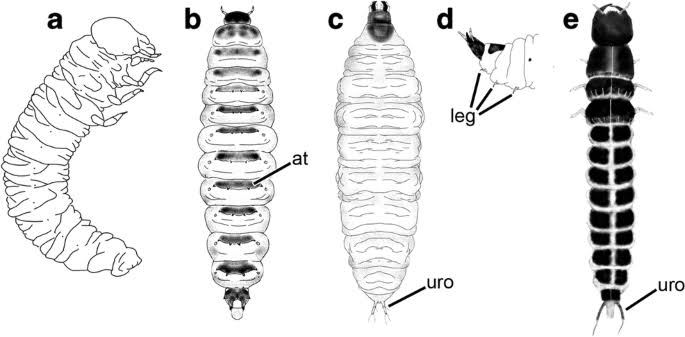
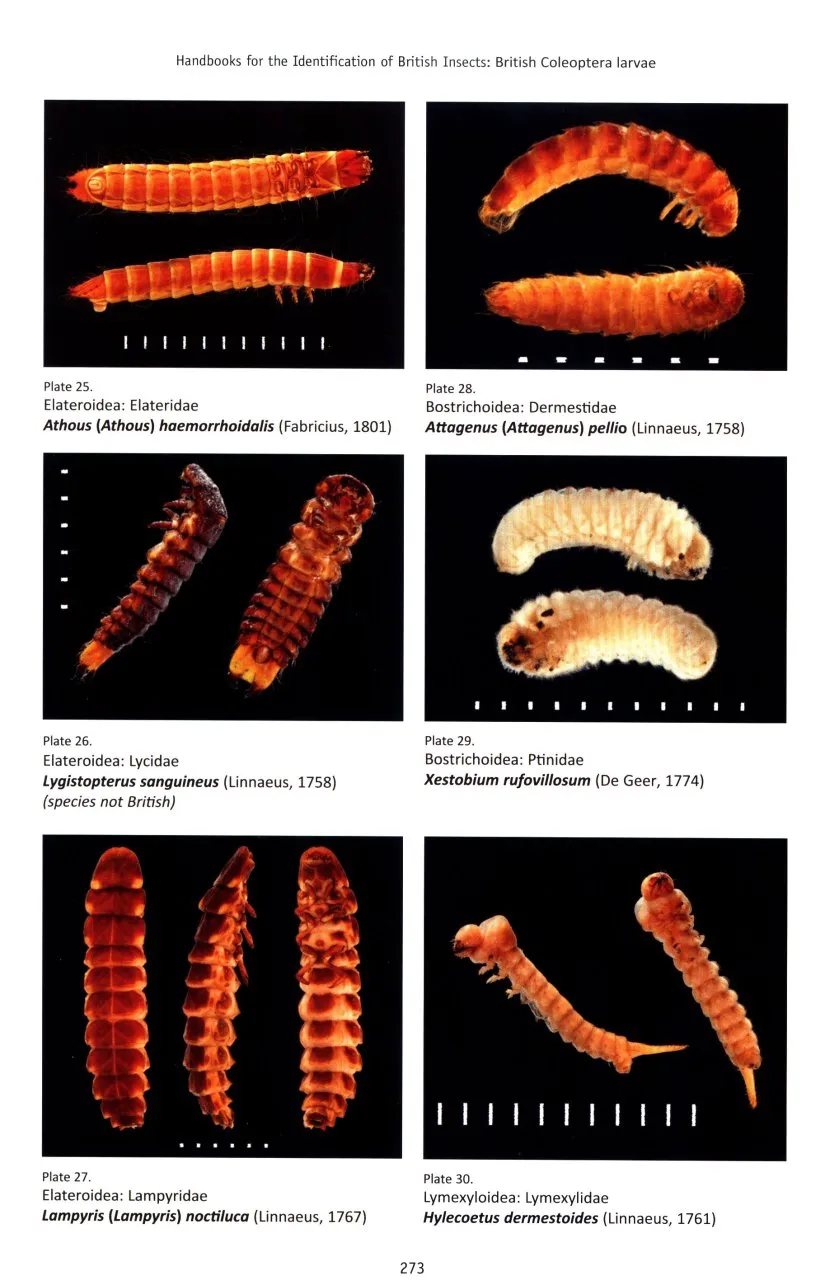
A reliable beetle larvae identification guide begins with more than color. Look at the larva’s overall shape, head capsule, legs, body texture, hairs or spines, movement, food source, and the exact place where it was found. A C-shaped white grub in lawn soil, a hard amber wireworm near plant roots, a hairy carpet beetle larva under a rug, and a pale wood borer inside a branch are all beetle larvae, but they belong to very different groups.
Most beetle larvae can be identified to a broad family or body type with careful observation. Species-level identification is often harder. Closely related larvae may differ only in tiny structures that require magnification, a regional identification key, or an expert examination.
About This Guide
This guide is written for beginners, homeowners, gardeners, students, teachers, parents, and nature observers. It explains the visible clues that help separate common beetle larvae from one another and from caterpillars, fly maggots, sawfly larvae, and other immature insects.
Beetle identification can vary with region, life stage, season, sex, age, size, color, body shape, antennae, markings, habitat, behavior, and photo quality. Larvae are especially challenging because they do not yet have the hardened wing covers, adult antennae, or mature body form commonly used in beetle identification.
Use several clues together. A broad identification such as “scarab beetle grub,” “click beetle larva,” or “carpet beetle larva” is often more responsible than assigning a species name from one unclear photograph.
This page is for general education. When identification affects food safety, structural wood, crop health, a possible invasive species, an allergic reaction, or a large infestation, consult a local extension office, natural history museum, qualified pest professional, agricultural specialist, or entomologist.
Table of Contents
- About This Guide
- Quick Answer: How Do You Identify a Beetle Larva?
- What Does a Beetle Larva Look Like?
- The Most Useful Clues in a Beetle Larvae Identification Guide
- Major Beetle Larval Body Forms
- Common Beetle Larvae Comparison Table
- Step-by-Step Beetle Larvae Identification Guide
- Common Beetle Larvae Found in Soil and Lawns
- Common Beetle Larvae Found Indoors
- Wood-Boring Beetle Larvae
- Beetle Larvae on Garden Plants
- Aquatic Beetle Larvae
- Beetle Larvae Versus Similar-Looking Insects
- Habitat and Behavior Often Matter More Than Color
- What Do Beetle Larvae Eat?
- Beetle Life Cycle and Why Larvae Change Appearance
- Common Beetle Larvae Identification Mistakes
- Are Beetle Larvae Helpful, Harmful, or Neutral?
- What to Do When You Find an Unknown Beetle Larva
- When to Seek Professional or Expert Help
- Frequently Asked Questions About Beetle Larvae Identification
- Conclusion
- References and further reading
- Optional image suggestions
Quick Answer: How Do You Identify a Beetle Larva?
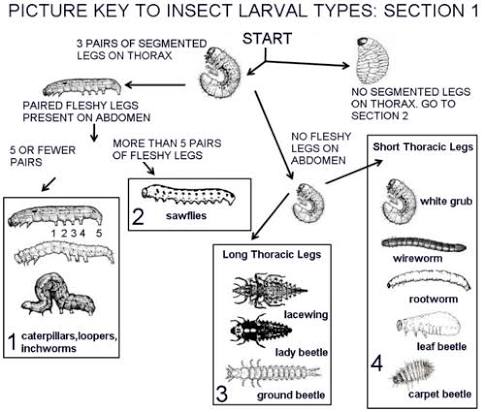
To identify a possible beetle larva, first look for a distinct head capsule and chewing mouthparts. Then check for three pairs of jointed legs on the thorax, the section immediately behind the head. Many beetle larvae have those six true legs and no fleshy abdominal prolegs. However, some concealed beetle larvae, including many weevil and bark beetle larvae, are legless.
Next, compare the body form:
- C-shaped, pale, soft grubs often belong to scarab beetles.
- Long, hard, cylindrical “wireworms” are usually click beetle larvae.
- Fast, flattened, active larvae with strong jaws may be predatory ground beetle or related larvae.
- Hairy, brown, tapered larvae indoors often belong to carpet beetles or other dermestids.
- Pale, segmented larvae inside wood, seeds, stems, or bark may be wood borers, bark beetles, or weevils.
- Dark, spiny, alligator-shaped larvae on plants may be lady beetle larvae.
The specimen’s location is often as important as its body. Record whether it came from soil, turf, compost, a pantry, wool fabric, dead insects, a living plant, decaying wood, structural timber, stored grain, freshwater, or another substrate.
What Does a Beetle Larva Look Like?
There is no single beetle-larva appearance. Beetles are an extremely diverse insect order, and their larvae are adapted to many habitats and diets. Some are predators that run across soil or foliage. Others remain hidden inside roots, wood, seeds, fungi, animal material, stored foods, or underwater habitats.
A typical free-living beetle larva may have:
- A visible, hardened head capsule
- Chewing jaws
- A segmented body
- Three pairs of jointed thoracic legs
- No fleshy abdominal prolegs
- A body that may be soft, hardened, hairy, spiny, flattened, cylindrical, or curved
These features are useful, but exceptions matter. Many weevil larvae are plump, pale, curved, and legless. Bark beetle larvae are also commonly legless and hidden beneath bark. Some wood-boring larvae have very reduced legs that are difficult to see. A damaged specimen may also be missing legs or body parts.
Adult beetles are often recognized by their hardened front wings, called elytra. Larvae do not have functional wing covers. They must be identified using a different set of clues.
The Most Useful Clues in a Beetle Larvae Identification Guide
1. Overall Body Shape
Body shape is one of the fastest ways to sort beetle larvae into a broad category.
Common forms include:
- C-shaped and grub-like
- Long and cylindrical
- Flattened and active
- Tapered and hairy
- Caterpillar-like but without abdominal prolegs
- Plump and legless
- Broad at the front and narrow toward the rear
- Strongly segmented with hardened body plates
Do not force a larva into a category based on one pose. A soft larva may curl when disturbed, and a preserved or dead specimen may look different from a living one.
2. Head Capsule
Many beetle larvae have a visible brown, amber, reddish, or black head capsule. It may be rounded, flattened, broad, or partly withdrawn into the first body segment.
Look for:
- A clear boundary between the head and body
- Paired chewing jaws
- Short antennae near the front of the head
- Darker hardened areas around the mouthparts
Fly maggots often lack an obvious hardened head capsule. This distinction can be helpful, although some tiny larvae require magnification.
3. True Legs
The three thoracic segments are directly behind the head. Many beetle larvae have one pair of jointed true legs on each thoracic segment, for a total of six.
Examine the specimen from the side. True legs are jointed and usually end in a small claw. They are different from the soft, fleshy abdominal prolegs of caterpillars and sawfly larvae.
Important exceptions include:
- Many weevil larvae
- Many bark beetle larvae
- Some larvae that live permanently inside plant tissue
- Very young or tiny larvae whose legs are difficult to see
4. Absence or Presence of Abdominal Prolegs
Most beetle larvae do not have the fleshy abdominal prolegs seen on caterpillars and many sawfly larvae.
This is especially useful when comparing larvae found openly feeding on leaves:
- Beetle larvae generally have true thoracic legs but no abdominal prolegs.
- Caterpillars have true legs and up to five pairs of abdominal prolegs.
- Open-feeding sawfly larvae commonly have six or more pairs of abdominal prolegs.
- Fly larvae do not have jointed thoracic legs.
A clear side photograph is much more useful than a top view for checking this feature.
5. Body Texture
Texture can narrow the possibilities quickly.
Ask whether the body is:
- Soft and creamy
- Smooth and glossy
- Hard and wire-like
- Covered with short hairs
- Densely bristled
- Spiny or armored
- Slimy or coated with debris
- Flattened with hardened plates
Carpet beetle larvae are often noticeably hairy. Wireworms have a firm, polished, segmented appearance. White grubs are generally soft-bodied. Lady beetle larvae often look spiny or rough.
6. Hairs, Bristles, Spines, and Tail Structures
Use a hand lens or close-up photograph to examine the rear of the larva.
Useful features may include:
- Dense body hairs
- Long tufts of hair at the tail end
- Paired hornlike projections
- Rows of short spines
- A pointed or rounded final segment
- A pattern of hairs and spines on the underside of a white grub
In scarab grubs, the arrangement of hairs and spines near the end of the abdomen is called the raster. Specialists use raster patterns, the shape of the anal opening, and other structures to separate similar white grubs. This is a good example of why a family-level identification may be possible while a species-level answer remains uncertain.
7. Color and Markings
Color is useful only when combined with other evidence.
Beetle larvae may be:
- White, cream, or pale yellow
- Tan, amber, or reddish brown
- Dark brown or nearly black
- Gray
- Orange
- Patterned with pale patches
- Dark with orange or yellow markings
Lighting, soil, food residue, age, recent molting, and preservation can change apparent color. Some larvae coat themselves with fecal material or debris, which hides their natural surface.
8. Size
Measure the larva without stretching or straightening it. Include a ruler, coin, or graph paper in photographs.
Size can help rule out some options, but it rarely confirms a species. Larvae pass through several growth stages called instars. A young larva and a mature larva of the same species may differ greatly in length and body proportions.
9. Movement
Behavior provides another clue.
Observe whether the larva:
- Runs quickly
- Crawls slowly
- Curls tightly when disturbed
- Moves with a stiff, wire-like body
- Remains concealed in a tunnel
- Clings to foliage
- Swims or rises to the water surface
- Wanders away from its food source before pupating
Predatory larvae are often active. Concealed feeders may be slow and soft-bodied because they do not need to travel across exposed surfaces.
10. Habitat and Food Source
The most useful question may be: “What was the larva touching or feeding on?”
Record the exact context:
- Among grass roots
- In vegetable beds or agricultural soil
- Under bark
- Inside a branch, board, acorn, nut, seed, or stem
- In flour, cereal, spices, pet food, or dried plant material
- In wool, feathers, fur, lint, or dead insects
- On leaves near aphids
- On damaged foliage
- In compost or decaying wood
- In a pond, stream, or water container
Readers comparing broader adult groups can also use this overview of different types of beetles, but remember that larvae may occupy a completely different habitat from the adults.
Major Beetle Larval Body Forms
Entomologists use body-form terms to describe the general appearance of insect larvae. These terms are useful because unrelated beetle families may develop a similar shape when they live in a similar way.
Scarabaeiform Larvae: C-Shaped White Grubs
Scarabaeiform larvae are thick, soft, and usually curved into a C shape. They commonly have a pale body, a darker head, and three pairs of legs near the head.
This form is associated with scarab beetles, including many June beetles, chafers, Japanese beetles, dung beetles, rhinoceros beetles, and related groups. However, their ecological roles differ. Some feed on living grass roots. Others develop in compost, manure, leaf litter, or decaying wood and may contribute to decomposition.
Key clues:
- Plump, curved body
- Creamy white or pale coloration
- Brown or tan head capsule
- Six visible legs in most common scarab grubs
- Often found in soil or decaying organic matter
- Species identification may require the raster pattern
Do not assume every white grub in compost is damaging plants. The food source and condition of nearby roots matter.
Campodeiform Larvae: Active, Flattened Hunters
Campodeiform larvae are elongated, somewhat flattened, and equipped for active movement. They usually have a clearly visible head, well-developed legs, and forward-pointing jaws.
Many predatory beetle larvae fit this general form, including larvae of ground beetles, tiger beetles, rove beetles, and some lady beetles. They may hunt insect eggs, aphids, caterpillars, small larvae, slugs, or other invertebrates.
Key clues:
- Elongated or alligator-like body
- Strong legs
- Active movement
- Visible jaws
- Often darker and more hardened than a white grub
- Frequently predatory
Some beneficial larvae look fierce. Identification should come before control.
Elateriform Larvae: Wireworms and Similar Hard Larvae
Elateriform larvae are long, narrow, cylindrical, and relatively hard. The best-known examples are wireworms, the larvae of click beetles.
Key clues:
- Slender, tube-shaped body
- Yellowish, tan, amber, orange-brown, or dark coloration
- Hard, smooth, segmented surface
- Small but visible legs near the head
- Distinct head capsule
- Commonly found in soil, decaying wood, or beneath bark
Some wireworms feed on seeds, roots, and underground plant parts. Others are predators or scavengers. Species-level identification can be difficult.
Darkling beetle larvae, often called mealworms, can also appear wire-like. Their body structure, tail end, habitat, and adult association help separate them from click beetle larvae.
Eruciform or Caterpillar-Like Beetle Larvae
Some beetle larvae are soft-bodied and resemble small caterpillars. Leaf beetle larvae are a common example.
The most useful distinction is the abdomen. Beetle larvae may have three pairs of true legs, but they do not have the typical fleshy abdominal prolegs of caterpillars.
Key clues:
- Soft, elongated or rounded body
- Six true legs near the head
- No abdominal prolegs
- Often found feeding openly on leaves
- May be smooth, spiny, slimy, or coated with frass
A side view is essential. From above, a leaf beetle larva can be mistaken for a caterpillar, slug, or sawfly larva.
Vermiform or Apodous Larvae: Legless Concealed Feeders
Vermiform means worm-like. Apodous means legless. Many beetle larvae that live inside food or plant tissue have reduced legs or no legs.
Examples include many:
- Weevils
- Bark beetles
- Seed beetles
- Small wood borers
- Larvae developing inside nuts, stems, roots, or fruit
Key clues:
- Pale, soft body
- Distinct head capsule
- No visible legs
- Usually found inside a protected substrate
- Often curved or slightly tapered
- Associated with a feeding tunnel, seed cavity, gallery, or damaged plant tissue
The substrate is critical. A legless larva removed from an acorn tells a different story from a legless larva beneath tree bark.
Common Beetle Larvae Comparison Table
| Larval group | Typical appearance and size | Legs | Common habitat | Key identification clue | Common role or concern |
|---|---|---|---|---|---|
| Scarab white grubs | Plump, pale, usually C-shaped; size varies from small young grubs to larvae over an inch long | Usually 3 pairs | Soil, turf, compost, manure, decaying wood | Brown head, curved body, raster on underside of rear end | Root feeder, decomposer, or neutral depending on species |
| Click beetle wireworms | Long, narrow, amber to brown, firm and shiny | 3 small pairs | Soil, roots, decaying wood | Hard, cylindrical “wire” body | Some damage seeds and roots; others are predators or scavengers |
| Lady beetle larvae | Dark, elongated, spiny, often with orange or pale markings | 3 pairs | Leaves and stems near aphids or scale insects | Alligator-like body and active hunting | Usually beneficial predator |
| Ground beetle larvae | Elongated, flattened, dark or pale with hardened plates | 3 well-developed pairs | Soil surface, under stones, leaf litter | Strong jaws, quick movement, paired tail structures in some groups | Often predatory and beneficial |
| Carpet beetle larvae | Small, brownish, tapered, densely hairy; often only a few millimeters long | 3 small pairs | Carpets, closets, lint, wool, fur, feathers, dead insects | Hairs, bristles, tail tufts, shed skins | Can damage animal-based materials |
| Larder and hide beetle larvae | Elongated, dark brown, hairy, often larger than carpet beetle larvae | 3 pairs | Dried animal material, pet food, dead insects, nests | Hairy body and paired projections at rear in some species | May indicate an indoor food or animal-material source |
| Wood-boring longhorn beetle larvae | Creamy, elongated, distinctly segmented, often broad near the front | Legs reduced or very small | Inside branches, trunks, logs, firewood | Roundheaded appearance, tunnels and frass | Usually associated with woody material; importance depends on host |
| Flatheaded borer larvae | Pale, flattened, with an enlarged area behind the head | Legs reduced | Beneath bark or in wood | Broad, flattened front end | May affect stressed or living woody plants |
| Weevil grubs | Pale, plump, curved, usually legless | None visible | Seeds, nuts, stems, roots, fruit, soil | Legless body with distinct head capsule | Plant, seed, or stored-product feeder depending on species |
| Bark beetle larvae | Tiny, pale, legless grubs | None | Galleries beneath bark | Found in patterned tunnels with frass | Often associated with stressed, dying, or recently dead trees |
| Leaf beetle larvae | Soft-bodied, variable in color, sometimes spiny or coated with debris | 3 pairs | On leaves or near plant roots | No abdominal prolegs | Plant feeder; impact varies with species and abundance |
| Aquatic beetle larvae | Elongated, often streamlined, with strong jaws in predatory groups | Usually 3 pairs | Ponds, streams, marshes, containers | Aquatic habitat, visible legs, predatory jaws in diving beetles | Important aquatic predator or scavenger |
Sizes overlap strongly. Use the table to choose a broad group, not to make a guaranteed species identification.
Step-by-Step Beetle Larvae Identification Guide
Step 1: Photograph the Larva Before Moving It
Take several views:
- Directly from above
- From the side
- Close-up of the head
- Close-up of the final abdominal segments
- The larva beside a ruler
- The larva in its original habitat
Also photograph the surrounding material, damage, tunnel, food, plant, wood, fabric, or soil. That contextual image may be more informative than an isolated macro photograph.
Step 2: Record the Exact Location
Write down details immediately.
Examples:
- Under a wool rug beside a baseboard
- Inside a sealed bag of dry pet food
- Two inches below thinning lawn grass
- Beneath loose bark on a recently fallen tree
- Inside an acorn
- On a rose stem among aphids
- In a rotting log
- In a rain barrel
- Inside hardwood flooring near fresh powder
“Found in the house” is too broad. A pantry shelf and a windowsill suggest different possibilities.
Step 3: Look for a Head Capsule
A distinct head with chewing jaws supports a beetle, caterpillar, sawfly, or other mandibulate larva rather than a typical fly maggot.
Use a hand lens if necessary. Do not squeeze or pull the specimen to expose the head.
Step 4: Count Jointed True Legs
Look immediately behind the head.
- Three pairs may support beetle, caterpillar, or sawfly larvae.
- No jointed legs may suggest a fly larva or a legless beetle larva.
- Many pairs of legs indicate a centipede or millipede rather than an insect larva.
Then check the abdomen for fleshy prolegs.
Step 5: Check Body Form and Surface
Decide which description fits best:
- Soft C-shaped grub
- Hard cylindrical wireworm
- Hairy tapered larva
- Flattened active predator
- Pale legless grub
- Caterpillar-like leaf feeder without prolegs
- Broad-fronted wood borer
- Aquatic larva with strong jaws
Step 6: Examine the Rear End
The terminal segments can contain important characters. Take a sharp close-up of the top and underside if this can be done without harming the specimen.
For a white grub, the raster may be necessary for a narrower identification. For dermestid larvae, tail tufts or paired projections may help. For predatory beetle larvae, the presence and shape of terminal structures can be useful.
Step 7: Connect the Larva With Its Food or Damage
Look for evidence such as:
- Chewed roots
- Skeletonized leaves
- Holes in dry food packaging
- Shed skins in lint or fabric
- Fine powder or coarse frass below wood
- Galleries beneath bark
- Hollowed seeds or nuts
- Aphid colonies near a predatory larva
- Dead insects or animal material nearby
Feeding signs should be interpreted carefully. A larva found near damage is not automatically the cause.
Step 8: Consider Region and Season
Some beetles have restricted ranges. Others are widespread but appear only during certain seasons or at certain stages.
Record:
- Country, state, province, or region
- Date
- Indoor or outdoor setting
- Recent weather
- Host plant or tree species if known
- Whether adults were seen nearby
Regional occurrence can eliminate unlikely species, but online range maps may lag behind new records or introductions.
Step 9: Compare With Several Reliable Sources
Use university extension pages, museum collections, government agriculture resources, regional insect keys, and well-documented natural history references.
Do not depend on one image-search result. Online photographs may be mislabeled, show an adult rather than a larva, or represent a species that does not occur in your region.
Step 10: Stop at the Most Defensible Identification
A careful answer may be:
- Beetle larva
- Scarab beetle grub
- Probable click beetle larva
- Dermestid larva, likely a carpet beetle relative
- Possible weevil grub
- Wood-boring beetle larva
- Predatory beetle larva
That level may be enough to guide the next step. Explore beetle species only after the broader family or group fits the evidence.
Common Beetle Larvae Found in Soil and Lawns
White Grubs
White grubs are among the most familiar beetle larvae. They commonly belong to scarab beetles.
A typical white grub is:
- Cream-colored
- C-shaped when resting
- Soft-bodied
- Equipped with a brown head capsule
- Usually equipped with three pairs of legs
- Found among roots, organic matter, compost, or decaying wood
Some scarab larvae feed on grass roots and can contribute to turf damage when abundant. Others feed mainly on decaying material. The surrounding habitat is therefore essential.
Possible signs of a root-feeding grub problem include irregular thinning turf, roots that have been heavily pruned, sod that lifts more easily than healthy turf, and animals digging for larvae. Those signs can have other causes, so sample several areas before drawing a conclusion.
Wireworms
Wireworms are click beetle larvae. They are usually more slender and much harder than white grubs.
Look for:
- A narrow cylindrical body
- Amber, yellow-brown, orange-brown, or dark coloration
- A distinct head
- Short legs near the head
- A firm surface
- Slow but purposeful movement
Some species feed on germinating seeds, roots, or underground stems. Others are predatory or feed on decaying material. Identification to species is often difficult.
Weevil and Billbug Grubs
Many weevil larvae are pale, curved, and legless. They may develop in roots, stems, crowns, nuts, seeds, or fruit.
A weevil grub can resemble a small scarab grub, but the absence of legs is an important clue. The location inside a plant or seed may be even more useful.
Common Beetle Larvae Found Indoors
Carpet Beetle Larvae
Carpet beetle larvae are small, brownish, and covered with hairs or bristles. Some are tapered, with longer hairs at the rear. Shed larval skins may remain after the insect has moved away.
They may be found around:
- Wool rugs
- Felt
- Fur
- Feathers
- Leather
- Stored natural-history specimens
- Pet hair and lint
- Dead insects in window tracks or wall voids
- Animal nests
- Closets and rarely disturbed storage areas
Adult carpet beetles often feed on pollen outdoors. The larvae, not the adults, are responsible for damage to susceptible animal-based materials.
A single adult near a window does not by itself prove an indoor infestation. Larvae, shed skins, repeated adults, or damage near a food source provide stronger evidence.
Larder, Hide, and Other Dermestid Larvae
Other dermestid larvae may feed on dried animal products, dead insects, dried pet food, feathers, hides, or animal remains. Larder beetle larvae are usually larger and darker than the larvae of the smallest carpet beetles. Some have a pair of noticeable projections at the rear.
Finding them may point to a concealed source such as:
- Old pet food
- A rodent or bird nest
- Dead insects in an attic or wall space
- A dead animal
- Stored animal products
- Taxidermy or natural-history material
Pantry and Stored-Product Beetle Larvae
Several beetles develop in dry stored foods. Depending on the species, the larvae may be small, pale, curved, hairy, or caterpillar-like.
Check:
- Flour and grain
- Cereal
- Pasta
- Spices
- Dried fruit
- Nuts and seeds
- Tea
- Dry pet food
- Birdseed
- Dried decorative plant material
Inspect unopened packages as well as opened food. Some larvae can enter through small seams or originate in a product before purchase.
Discard heavily infested food according to local guidance, clean shelves and cracks, and identify the source before considering insecticide use. Do not apply household pesticides directly to food or food-contact surfaces unless a product label specifically permits that use.
For a broader indoor context, see beetles found around the home.
Wood-Boring Beetle Larvae
Wood-boring beetles include several families with very different habits. Their larvae may feed beneath bark, in sapwood, in heartwood, in dead branches, in seasoned lumber, or in stressed living trees.
Roundheaded Borers
Longhorn beetle larvae are commonly called roundheaded borers. They are often creamy white, elongated, cylindrical in cross-section, and clearly segmented. The front portion may appear broader than the rear.
They are usually found inside woody material rather than crawling openly.
Flatheaded Borers
Jewel beetle larvae are commonly called flatheaded borers. The body behind the head is often broadened and flattened, producing a distinctive “hammerhead” or broad-shouldered appearance.
Many species develop in weakened, stressed, dying, or recently dead trees, although important exceptions exist.
Powderpost and Other Structural Wood Beetles
In buildings or furniture, the visible signs may be more useful than the larva:
- Round exit holes
- Fresh powder or frass
- Tunnels inside wood
- Repeated adult emergence
- New material accumulating beneath the wood
Old exit holes do not necessarily mean an infestation is active. Fresh frass, newly appearing holes, living larvae or adults, and changes over time are more informative.
Do not identify a structural wood problem from hole size alone. Beetles, wasps, termites, carpenter bees, and other organisms can leave damage that looks similar. A qualified inspection is appropriate when activity may involve structural components or valuable furniture.
Beetle Larvae on Garden Plants
Lady Beetle Larvae
Lady beetle larvae often look nothing like adult lady beetles. They are elongated, dark, and alligator-like, with small spines or rough projections. Many species have orange, yellow, white, or pale markings.
They are often found near:
- Aphids
- Scale insects
- Mealybugs
- Mite colonies
- Other soft-bodied prey
Many lady beetle larvae are beneficial predators. Avoid spraying an unfamiliar spiny larva until you know whether it is feeding on the plant or hunting the organisms that are feeding on the plant.
Leaf Beetle Larvae
Leaf beetle larvae vary widely. Some are smooth and pale. Others are dark, spiny, slug-like, or covered with their own waste.
Look for:
- Three pairs of true legs
- No abdominal prolegs
- Feeding damage on leaves
- Adult leaf beetles or egg clusters nearby
- A close association with a particular host plant
Some feed openly on the leaf surface. Others mine leaves, bore into stems, or feed on roots.
Ground Beetle and Rove Beetle Larvae
These predatory larvae are more often found at soil level, under mulch, beneath stones, or in leaf litter than on exposed foliage. They are generally elongated, active, and equipped with visible jaws.
They may help suppress other invertebrates. Their presence alone is not a reason for treatment.
Aquatic Beetle Larvae
Many beetles spend their larval stage in freshwater. Predaceous diving beetle larvae, water scavenger beetle larvae, and other aquatic groups can occur in ponds, streams, marshes, pools, water troughs, rain barrels, or temporary containers.
Aquatic beetle larvae may have:
- A streamlined body
- Six jointed legs
- Strong jaws
- Tail structures or breathing adaptations
- Active swimming behavior
Predaceous diving beetle larvae are powerful hunters of other small aquatic animals. Large larvae can pinch when handled, so use a container or soft net rather than bare fingers.
Do not assume every aquatic larva is a mosquito. Mosquito larvae are fly larvae and lack the six jointed thoracic legs typical of many aquatic beetle larvae.
Beetle Larvae Versus Similar-Looking Insects
Beetle Larva or Caterpillar?
Check the abdomen.
A caterpillar usually has:
- Three pairs of true legs
- Up to five pairs of fleshy abdominal prolegs
- A soft body
- Often silk, webbing, or leaf shelters
An openly feeding beetle larva generally has:
- Three pairs of true legs
- No abdominal prolegs
- No caterpillar-style crochets on prolegs
- A body that may be soft, spiny, slimy, or hardened
Some beetle larvae live concealed and are legless, so habitat remains important.
Beetle Larva or Sawfly Larva?
Sawfly larvae often resemble caterpillars. Open-feeding sawflies typically have six or more pairs of abdominal prolegs. Beetle larvae do not.
Count carefully from a side view. A curled larva or poor photograph can hide the appendages.
Beetle Larva or Fly Maggot?
Typical fly maggots:
- Lack jointed thoracic legs
- Often lack a clearly visible hardened head capsule
- May taper toward one end
- Move using body contractions
- Commonly occur in wet organic matter, carrion, fruit, fungi, drains, or other moist substrates
Legless beetle larvae can still have a distinct head capsule and chewing jaws. Their protected habitat inside a seed, root, stem, or bark gallery may help.
Lady Beetle Larva or Lacewing Larva?
Both can be active, alligator-shaped predators on plants.
Lacewing larvae often have:
- Very prominent curved, sickle-like jaws
- A more tapered body
- Debris carried on the back in some species
Lady beetle larvae often have:
- A stouter, more obviously segmented body
- Rows of short spines
- Orange or pale markings in many species
Close-up photographs of the head are helpful.
Carpet Beetle Larva or Clothes Moth Larva?
Carpet beetle larvae are usually bristly or hairy and may leave hairy shed skins.
Clothes moth larvae are caterpillars. Depending on the species, they may produce:
- Silk webbing
- Feeding tubes
- Portable cases
- Silken material mixed with fibers and debris
Both can occur around animal-based fabrics, so inspect the damaged item and surrounding material rather than relying on one larva.
Beetle Larva or Centipede or Millipede?
Beetle larvae have no more than three pairs of true legs.
Centipedes and millipedes have many body segments with many pairs of legs. Even very small individuals usually show more than six legs.
Habitat and Behavior Often Matter More Than Color
A pale larva can belong to a scarab, weevil, bark beetle, longhorn beetle, pantry beetle, or another group. The discovery site often reduces the possibilities faster than color.
Use habitat questions:
- Was it exposed or concealed?
- Was it in dry or wet material?
- Was the material living, dead, or processed?
- Was it associated with roots, leaves, bark, wood, seeds, food, fabric, animal material, or water?
- Was there one larva or a concentrated group?
- Were adults present?
- Did it appear to be feeding, hunting, or wandering?
Larvae may leave their food source when ready to pupate. A carpet beetle larva may wander away from a closet. A pantry beetle larva may crawl onto a wall. A wood-boring larva is less likely to be seen until infested material is split open.
What Do Beetle Larvae Eat?
Beetle larvae have exceptionally varied diets.
Depending on the family or species, they may eat:
- Plant roots
- Leaves
- Seeds and nuts
- Wood or inner bark
- Fungi
- Decaying plant material
- Dung
- Carrion
- Dead insects
- Wool, feathers, fur, and other animal-based materials
- Stored grain or processed dry foods
- Other insects and invertebrates
- Small aquatic animals
The diet of a larva may differ from the adult diet. Adult carpet beetles may feed on pollen while their larvae feed on animal-based material. A predatory larva may continue as a predator as an adult, or the adult may use a different food source.
For a broader comparison of diets, see what beetles eat.
Beetle Life Cycle and Why Larvae Change Appearance
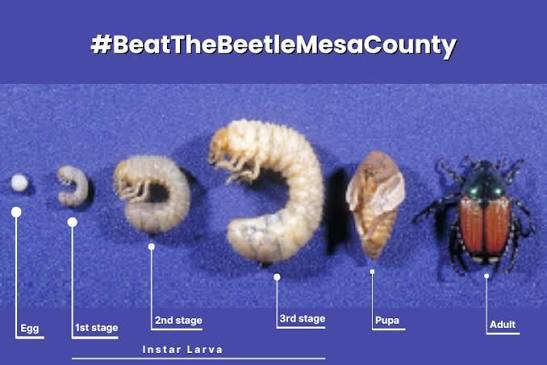
Beetles undergo complete metamorphosis:
- Egg
- Larva
- Pupa
- Adult
The larva’s main roles are feeding and growth. As it grows, it molts and passes through a series of instars. The number and length of these stages vary greatly among species and depend on temperature, food, moisture, season, and other environmental conditions.
A newly hatched larva may look proportionally different from a mature one. Color can also change after molting. The final larval stage may stop feeding and wander in search of a pupation site.
The pupa is a separate stage. It may be pale and soft at first, with adult structures such as legs, antennae, and wing pads visible against the body. A pupa should not be confused with a grub.
Common Beetle Larvae Identification Mistakes
Relying on Color Alone
“White grub,” “brown larva,” and “black larva” are descriptions, not identifications. Many unrelated groups share those colors.
Assuming Every C-Shaped Larva Is a Japanese Beetle
Many scarab larvae look alike. Positive identification may require the raster and regional knowledge.
Calling Every Hairy Indoor Larva a Carpet Beetle
Carpet beetles are common, but larder beetles, hide beetles, clothes moth larvae, and other organisms may occur in similar places.
Ignoring the Food Source
The material containing the larva is often the strongest clue. Keep a sample or clear photograph of the substrate.
Using Adult Features on a Larva
Larvae do not have adult elytra, adult antenna shapes, horns, snouts, or mature coloration. Do not match a larva directly to an adult photograph without life-stage evidence.
Treating a Beneficial Predator as a Plant Pest
Lady beetle, ground beetle, rove beetle, and soldier beetle larvae may be hunting pests rather than damaging the plant.
Trusting One Online Photograph
Images can be mislabeled, geographically irrelevant, or too low-resolution to show diagnostic characters.
Expecting Species-Level Certainty From a Blurry Image
A responsible identification may stop at family or larval type. This is especially true for tiny grubs, wood borers, wireworms, and immature white grubs.
Are Beetle Larvae Helpful, Harmful, or Neutral?
The answer depends on species, location, abundance, and what the larva is eating.
Often Helpful
Examples include many:
- Lady beetle larvae
- Ground beetle larvae
- Rove beetle larvae
- Soldier beetle larvae
- Aquatic predatory beetle larvae
- Decomposer larvae in dead wood or organic matter
Potentially Damaging in the Right Setting
Examples include some:
- White grubs feeding on turf roots
- Wireworms feeding on seeds or roots
- Leaf beetle larvae feeding heavily on plants
- Carpet beetle larvae damaging wool or feathers
- Stored-product beetle larvae in food
- Wood-boring larvae in structural or valuable wood
- Bark or wood borers affecting stressed trees
- Weevil larvae inside roots, stems, nuts, or stored products
Often Neutral in Context
A larva in a rotting log, compost pile, animal dung, or dead branch may be performing a normal ecological role. Removing all beetle larvae from a garden can eliminate decomposers and predators along with plant feeders.
The broader common types of beetles with pictures guide can help connect mature beetle groups with their ecological roles.
What to Do When You Find an Unknown Beetle Larva
- Avoid crushing or discarding it immediately.
- Take clear photographs with a size reference.
- Record the exact habitat and date.
- Inspect the surrounding material for food, damage, shed skins, frass, tunnels, or adults.
- Place the specimen in a secure ventilated container if identification is important.
- Keep pantry, fabric, plant, wood, and aquatic specimens separate.
- Do not apply a pesticide until the organism and source are understood.
- Contact a qualified local resource when the consequences of a wrong identification are significant.
Avoid handling unknown hairy or spiny larvae with bare skin. Some insect hairs or associated debris can irritate sensitive skin. Seek medical advice for significant or persistent symptoms rather than relying on an insect photograph for diagnosis.
When to Seek Professional or Expert Help
Ask for expert assistance when:
- Larvae are repeatedly found in stored food
- Fabrics, museum specimens, taxidermy, or valuable natural materials are being damaged
- Fresh powder, exit holes, or larvae appear in structural wood
- A living tree shows extensive boring, dieback, oozing, or fresh frass
- A crop, lawn, greenhouse, or nursery has economically important damage
- The specimen may be a regulated or invasive species
- Identification is needed for a school, survey, collection, or scientific record
- A household member has a significant skin, respiratory, or allergic reaction
- Pesticide treatment is being considered
- Photographs do not show enough detail for a defensible identification
Useful contacts include county or regional extension offices, state agriculture departments, natural history museums, university entomology departments, certified arborists, and licensed pest-management professionals.
Frequently Asked Questions About Beetle Larvae Identification
How can I tell whether a larva is a beetle?
Look for a distinct head capsule, chewing jaws, a segmented body, and—among many free-living species—three pairs of jointed legs near the head with no fleshy abdominal prolegs. Then compare the body form and habitat. Some weevil, bark beetle, and concealed borer larvae are legless, so no single feature applies to every beetle.
Do all beetle larvae look like white grubs?
No. Beetle larvae may be C-shaped, wire-like, flattened, alligator-shaped, hairy, caterpillar-like, aquatic, or legless. White grubs are mainly associated with scarab beetles and some other grub-like groups.
How many legs does a beetle larva have?
Many beetle larvae have six jointed true legs, arranged as three pairs on the thorax. Some concealed beetle larvae have reduced legs or no visible legs. Beetle larvae generally do not have the fleshy abdominal prolegs found on caterpillars and sawfly larvae.
Are beetle larvae caterpillars?
No. Caterpillars are the larvae of butterflies and moths. Beetle larvae belong to the order Coleoptera. Caterpillars typically have abdominal prolegs, while beetle larvae do not.
How do I identify a white grub?
Check the C-shaped body, head capsule, legs, size, habitat, and raster pattern on the underside of the final abdominal segment. Because several scarab species produce similar white grubs, a hand lens, regional key, or expert may be needed.
What are the small hairy beetle larvae in my house?
They may be carpet beetles or another dermestid beetle. Inspect wool, feathers, fur, lint, pet hair, dead insects, dried pet food, animal nests, and stored natural materials. Shed skins and repeated larvae near a food source strengthen the identification.
What do beetle larvae in wood look like?
Many are pale, soft, and segmented. Longhorn beetle larvae are often cylindrical and broad near the front, while flatheaded borers have a widened, flattened area behind the head. Bark beetle larvae are tiny, pale, and legless beneath bark. Tunnels, frass, host wood, and exit-hole shape are important supporting clues.
Are wireworms beetle larvae?
Yes. Wireworms are the larvae of click beetles. They are usually elongated, hard-bodied, cylindrical, and yellowish to brown. Some feed on roots and seeds, while others are predators or scavengers.
Are all beetle larvae harmful to plants?
No. Many are predators, decomposers, scavengers, or inhabitants of dead wood. Some feed on living roots, leaves, seeds, stems, or bark, but the impact depends on species and abundance.
Can a photograph identify a beetle larva to species?
Sometimes, but often not. A clear image may support identification to a family or broad group. Species-level identification may require microscopic structures, the host plant, location, season, adult association, or a physical specimen.
Why are beetle larvae appearing away from the damaged material?
Mature larvae may wander before pupating. Indoor larvae can also follow cracks, edges, light, or sheltered spaces. Search nearby rooms and hidden areas for the original food source rather than assuming the place where the larva was seen is where it developed.
Should I use pesticide when I find beetle larvae?
Not until the larva and source are identified. Cleaning, food disposal, laundering, exclusion, moisture correction, removal of infested material, or plant-care changes may be more appropriate. Pesticides can be unnecessary or ineffective when the breeding source remains.
Conclusion
The most dependable beetle larvae identification guide combines body structure with context. Start with the head capsule, true legs, abdominal prolegs, body shape, texture, hairs, spines, size, and movement. Then give equal weight to habitat, food, damage, region, and season.
A C-shaped grub, a wireworm, a hairy carpet beetle larva, an alligator-shaped lady beetle larva, and a pale wood borer represent different beetle lifestyles. Color alone cannot separate them, and species-level certainty is not always possible from a photograph.
A careful broad identification is still useful. It can tell you whether the larva is likely to be a predator, decomposer, plant feeder, stored-product insect, fabric feeder, or wood-associated beetle—and whether observation, simple source removal, or expert help is the most sensible next step.
References and further reading
- Order Coleoptera — General Entomology, North Carolina State University
- Distinguishing Caterpillar-Like Larvae — University of California Statewide Integrated Pest Management Program
- Japanese Beetles in Yards and Gardens — University of Minnesota Extension
- White Grubs in Home Lawns — Penn State Extension
- Wireworms and Corn — University of Minnesota Extension
- Carpet Beetles — University of Kentucky Department of Entomology
- Dermestid Beetles (Carpet Beetles) — Colorado State University Extension
- Wood-Boring Beetles in Homes — University of California Statewide Integrated Pest Management Program
- Longhorned Beetles, or Roundheaded Wood Borers — University of California Statewide Integrated Pest Management Program
- Lady Beetles — University of Minnesota Extension
Optional image suggestions
1. Major beetle larval body forms
- Suggested image subject: A clean scientific comparison showing a scarab grub, wireworm, lady beetle larva, carpet beetle larva, leaf beetle larva, and legless weevil grub at comparable scale
- Where it could appear: Immediately after the introduction
- Suggested alt text: Common beetle larvae body forms including white grub, wireworm, lady beetle larva, carpet beetle larva, and weevil grub
- Available image: Beetle larvae identification guide image
2. Beetle larva anatomy
- Suggested image subject: Side-view diagram labeling the head capsule, mandibles, thorax, three pairs of true legs, abdominal segments, and terminal structures
- Where it could appear: In “The Most Useful Clues” section
- Suggested alt text: Beetle larva anatomy showing head capsule, chewing jaws, thoracic legs, abdomen, and tail structures
- Available image: Beetle larvae identification anatomy image
3. Indoor hairy larvae comparison
- Suggested image subject: Carpet beetle larva, larder beetle larva, shed skin, and clothes moth larva shown with labels and a millimeter scale
- Where it could appear: In “Common Beetle Larvae Found Indoors”
- Suggested alt text: Hairy carpet beetle and larder beetle larvae compared with a clothes moth larva
- Available image: Hairy beetle larvae comparison image
4. Soil larvae comparison
- Suggested image subject: White grub, wireworm, and legless weevil grub photographed on moist soil beside a ruler
- Where it could appear: In “Common Beetle Larvae Found in Soil and Lawns”
- Suggested alt text: White grub, wireworm, and weevil grub compared for beetle larvae identification
- Available image: Beetle larvae guide soil image
5. Wood-borer evidence
- Suggested image subject: A split branch showing a pale wood-boring larva, feeding gallery, frass, and an adult exit hole
- Where it could appear: In “Wood-Boring Beetle Larvae”
- Suggested alt text: Wood-boring beetle larva inside a branch with gallery, frass, and exit hole
4 thoughts on “Beetle Larva Identification Guide”