

Beetle Facts · TypesOfBeetles.com
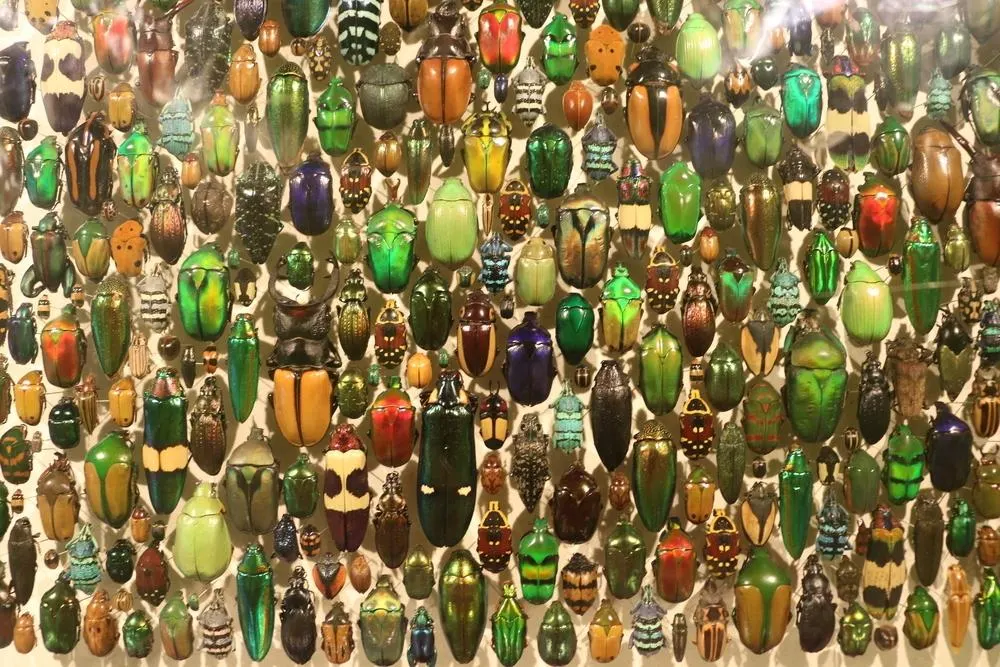
About 400,000 beetle species have been scientifically described, making beetles (order Coleoptera) the largest insect order by the number of named species. The real total is much higher. One widely cited scientific review estimated that approximately 1.5 million beetle species may exist worldwide, including species that have not yet been formally identified and named.
Those figures describe two different things: what taxonomists have documented and what researchers estimate is living on Earth. Neither is a permanent, exact count.
How Many Beetle Species Have Scientists Described?
A described species is one that scientists have formally recognized, named, and documented through taxonomic research. Counting species is not the same as counting individual beetles, or even specimens held in museum collections.
The Smithsonian Environmental Research Center uses a figure of roughly 400,000 described beetle species. A scientific paper published in 2026 likewise refers to more than 400,000 described species. Some specialist publications use higher figures: for example, a 2025 paper in the Zoological Journal of the Linnean Society cites more than 440,000 living beetle species.
Why the variation? Global species inventories are assembled from many publications and databases. They differ in the dates covered, taxonomic treatment, and completeness of the records. Scientists also revise names when evidence shows that two names refer to the same species or that an apparent single species contains more than one.
For a simple, memorable answer, around 400,000 described species is useful. It should not be presented as a precise, continuously updated world census.
How Many Beetle Species Might Actually Exist?
A 2018 review by entomologist Nigel E. Stork, published in the Annual Review of Entomology, compared different approaches to estimating species richness. Its synthesis suggested approximately 1.5 million beetle species worldwide.
Other researchers arrive at different totals. In a 2025 interview, Harvard entomologist Brian D. Farrell explained that estimates are often around two million. This uncertainty is expected: a model cannot directly count beetles that have not been discovered.
| What is being counted? | Approximate number | What the number means |
|---|---|---|
| Described beetle species | Around 400,000 or more | Species formally known and named by science; counts vary by source |
| Estimated beetle species worldwide | About 1.5 million in a major review | A research-based estimate including undescribed species |
| Species potentially still undescribed | More than one million under that estimate | An inference, not a confirmed count of undiscovered species |
If the 1.5-million estimate is close, comparing it with roughly 400,000 described species suggests that about 1.1 million species remain to be described. That subtraction is an illustration of the knowledge gap, not an independent estimate.
Why Are There So Many Different Beetles?
Beetles are not just one familiar kind of insect. A lady beetle hunting aphids, a ground beetle running across a woodland path, and a weevil feeding on a seed are all members of Coleoptera, but they live very different lives.
Several traits help explain this diversity:
- Protective wing covers. Most adult beetles have hardened front wings called elytra. These shield the hind wings and much of the abdomen, helping beetles move through soil, leaf litter, bark, and narrow spaces.
- Different food sources. Across the order, beetles feed on plants, other insects, fungi, decaying wood, dung, and many other materials. Particular groups often specialize in certain foods or host plants.
- Many habitats. Beetles inhabit forests, grasslands, deserts, freshwater, gardens, rotting logs, and the spaces between leaves and soil. Different environments create opportunities for different species.
- Different larval and adult lifestyles. Beetles undergo complete metamorphosis. Their larvae and adults can use different food sources or parts of a habitat, although that is not true of every species.
No single adaptation explains the huge number of beetle species. Evolutionary researchers study the combined roles of feeding specialization, plant associations, protective body structures, and long-term diversification.
For examples of how feeding habits differ, see our guide to what beetles eat.
Which Beetle Groups Have the Most Species?
Much of beetle diversity is concentrated in several large groups. The following figures are approximate and are taken from different published sources, so they should not be treated as a single synchronized census.
| Beetle group | Scientific group | Approximate described species |
|---|---|---|
| Rove beetles | Family Staphylinidae | 70,000 |
| Weevils | Superfamily Curculionoidea | 62,000 |
| Ground beetles | Family Carabidae | 40,000 |
| Leaf beetles | Family Chrysomelidae | 40,000 |
| Lady beetles (ladybugs) | Family Coccinellidae | 6,000 |
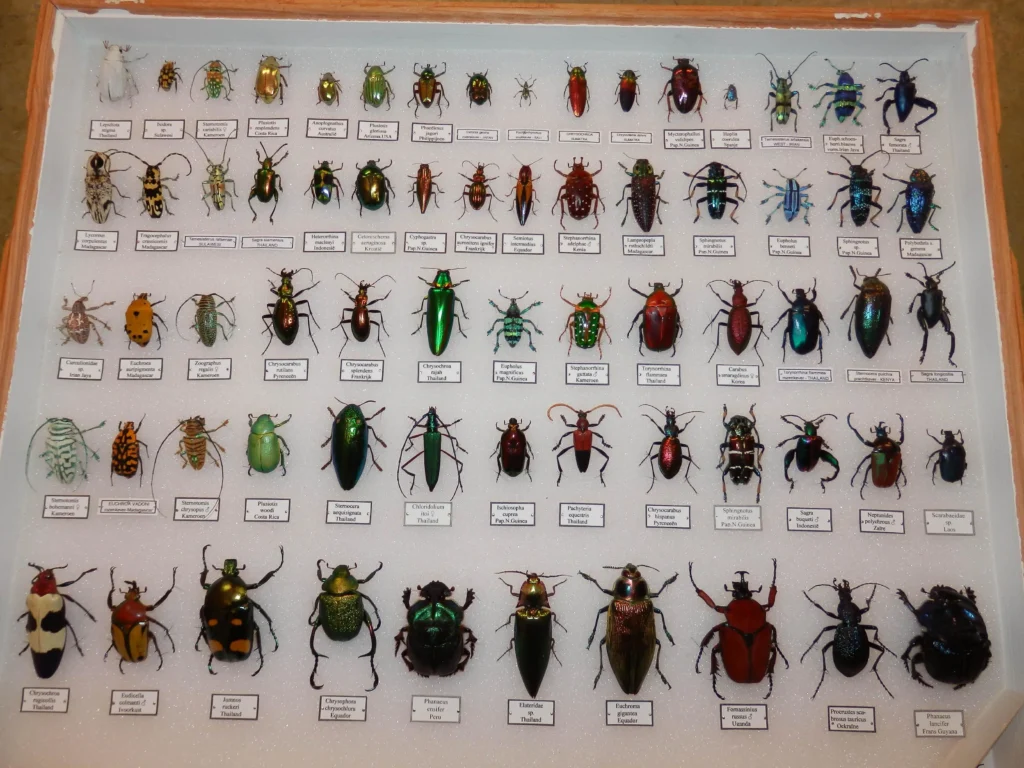
These names also show why the everyday term beetle covers so much variety. Many weevils have a distinctive snout. Ground beetles are often active hunters, while many leaf beetles feed on plants. Lady beetles include familiar spotted predators, but not every species is red or spotted.
Taxonomic note: The weevil figure refers to a superfamily, while the other entries are families. Those ranks are not directly equivalent, and the numbers are only representative examples, not a ranking of equal taxonomic categories.
You can compare visible differences among these groups in our common types of beetles with pictures guide.
Why Are So Many Beetle Species Still Unknown?
Some species are difficult to find because they are tiny, live high in tropical forest canopies, spend much of their lives inside wood, or occupy other habitats that are hard to sample. Others look so similar that distinguishing them takes careful examination and, sometimes, genetic evidence.
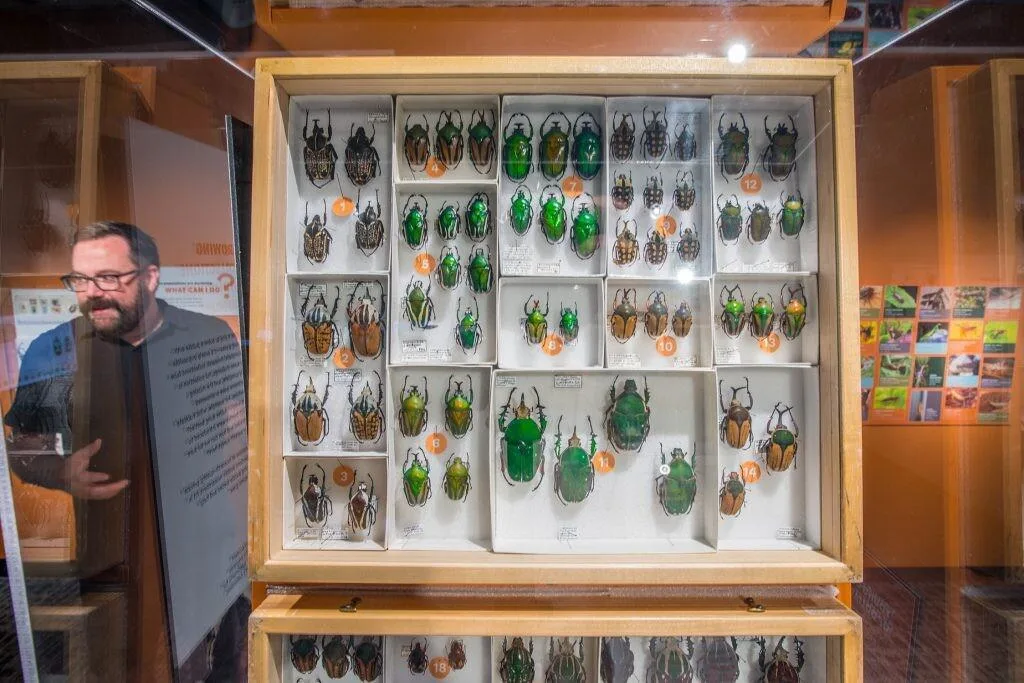
Discovery also involves more than collecting a specimen. Taxonomists must compare it with previously named species, inspect diagnostic features, consult museum specimens and literature, and publish a defensible description. A beetle may already be sitting in a museum drawer before anyone recognizes that it belongs to an undescribed species.
The work continues today. In May 2026, London’s Natural History Museum described how genetic studies are helping researchers uncover the diversity of tropical ground beetles. The museum notes that around 40,000 ground beetle species have already been named, yet substantial gaps remain.
Are Beetles the Largest Group of Insects?
Yes—by the number of scientifically described species, Coleoptera is generally recognized as the largest insect order. Beetles are often said to account for roughly 40% of named insect species, although the exact proportion changes with the source and date of the species counts.
This does not mean that 40% of individual insects alive at any one time are beetles. A species count measures how many kinds there are, not how many individuals exist.
Nor does it mean every insect with a hard-looking body is a beetle. Beetles have a particular wing structure and body organization; many other insects can look superficially similar.
Will We Ever Know the Exact Number?
Probably not as a permanently fixed figure. New species continue to be described, taxonomic classifications are revised, and some populations disappear before they can be studied. Even with better DNA tools and more digitized museum collections, estimates of all beetle species on Earth will retain uncertainty.
The useful distinction is simple: hundreds of thousands of beetle species are already named, and the actual diversity may be several times greater. That is why a familiar beetle in a garden belongs to one of the most varied animal groups scientists have ever studied.
To explore that variety, browse our Types of Beetles section or visit Beetle Facts for other questions about their biology.
Sources and Further Reading
- Smithsonian Environmental Research Center — Beetle Census: approximately 400,000 described beetle species.
- Stork (2018), Annual Review of Entomology: comparative estimate of approximately 1.5 million beetle species.
- Fukatsu et al. (2026), Frontiers in Microbiology: contemporary reference to more than 400,000 described beetle species.
- 2025 research on beetle elytra and diversification, Zoological Journal of the Linnean Society: a specialist publication citing more than 440,000 living beetle species.
- Harvard Magazine — Interview with Brian D. Farrell (2025): known species figures and uncertainty in total species estimates.
- Natural History Museum — The World’s Missing Beetles (2026): ongoing research into undescribed beetles.
- Royal Entomological Society — Coleoptera: wing covers, larval diversity, and beetle ecology.
- Chinese Academy of Sciences — Weevil Phylogeny (2023): approximately 62,000 described weevils across Curculionoidea.
- USDA Agricultural Research Service — Lady Beetles: approximately 6,000 lady beetle species.
- Natural History Museum of Denmark — Newly Described Rove Beetles (2026): approximately 70,000 named rove beetles.
- Knowable Magazine — Why Are There So Many Beetle Species? (2024): roughly 40,000 leaf beetle species and diversity research.