

Quick Answer: Asian Lady Beetles in Your House
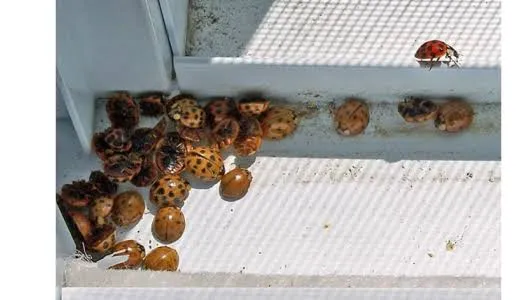
Finding Asian lady beetles in your house (Harmonia axyridis) is a seasonal overwintering issue, not a sign of a dirty home or an indoor breeding infestation. Adults gather on warm, sunlit exterior walls in autumn and slip inside through tiny cracks to shelter from winter cold.
- Do they cause structural damage? No. They do not eat wood, fabric, or pantry food, and they do not reproduce indoors.
- Main nuisances: Large indoor clusters near windows and ceilings, occasional light pinching on bare skin, yellow defensive fluid that stains surfaces, and rare allergic reactions.
- Best fix: Gently vacuum or sweep them up without crushing them, skip indoor insecticide sprays, and seal exterior entry gaps before next fall.
Every autumn and on sunny late-winter afternoons, homeowners across North America and Europe suddenly spot dozens—or sometimes hundreds—of orange or yellowish spotted beetles crawling along windowsills, upper walls, and light fixtures. Most of the time, those indoor visitors are multicolored Asian lady beetles (Harmonia axyridis), a member of the lady beetle family (Coccinellidae) originally native to eastern Asia.
Outdoors, they are voracious predators of aphids and other soft-bodied plant pests. Indoors, however, they quickly become a frustrating household nuisance. Understanding how to identify them accurately, why they target certain homes, and how to remove them cleanly without staining paint or curtains makes dealing with them far easier.
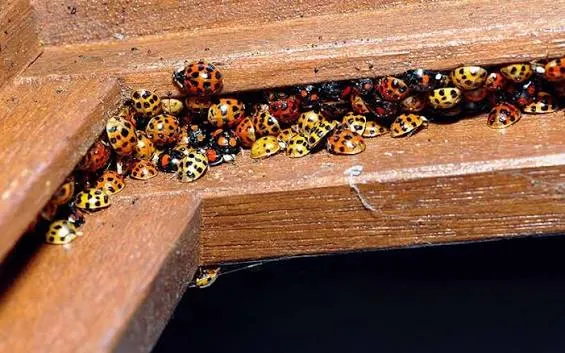
How to Identify Asian Lady Beetles in Your House
Before deciding what to do, confirm that the beetles indoors really are multicolored Asian lady beetles rather than native lady beetles or another indoor species. If you are sorting through unfamiliar indoor sightings, our guide to small beetles in the house can help rule out carpet beetles and pantry pests.
True to their name, multicolored Asian lady beetles are notoriously variable in color. Adults measure roughly 5 to 8 mm (about 1/4 inch) long and have a rounded, strongly domed body. Their wing covers (elytra) can be pale yellow, mustard, bright orange, red-orange, or occasionally dark with pale spots—and they may have up to 19 black spots, faint spots, or no spots at all. As explained in our guide to beetle identification by color, relying on spot count alone is a common mistake.
The Most Reliable Identification Clue: The “M” or “W” Pronotum Mark
Look closely at the pronotum—the pale, shield-like plate directly behind the beetle’s head. On most multicolored Asian lady beetles, a distinct black pattern sits on a white or cream background, forming a shape that looks like a capital “M” when viewed from the front or a “W” when viewed from behind. On some individuals, this mark breaks into four dark spots or thickens into a dark trapezoid, so check several beetles if you see a group.
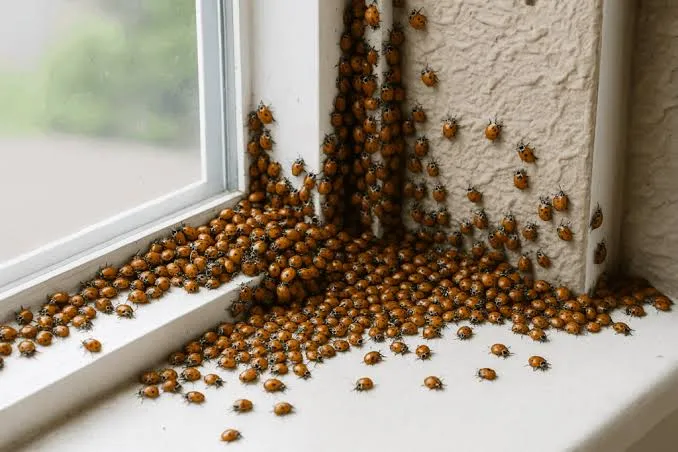
Asian Lady Beetle vs. Native Ladybug: Key Differences
| Feature | Multicolored Asian Lady Beetle (Harmonia axyridis) | Common Native Lady Beetles (e.g., Hippodamia convergens) |
|---|---|---|
| Pronotum marking | Usually pale/white with a dark “M” or “W” shape (sometimes 4 spots or a dark block). | Typically black with white side margins or two converging white dashes, without the classic “M”. |
| Body color | Highly variable: tan, yellow-orange, orange, red-orange, or occasionally black with red spots. | Usually deeper red or reddish-orange, with less extreme color variation within a single species. |
| Indoor behavior | Strong tendency to aggregate in large numbers on and inside buildings in fall and winter. | Rarely invade heated homes in large groups; most overwinter outdoors in leaf litter or under bark. |
| Biting / pinching | Occasionally gives a light defensive nip when resting on bare skin. | Very rarely bites humans. |
| Defensive odor & staining | Readily releases yellowish hemolymph (“reflex bleeding”) with a sharp, musty odor that can stain fabrics and paint. | Also capable of reflex bleeding, but far less likely to cause indoor staining because they seldom cluster indoors. |
Why Are Asian Lady Beetles in Your House?
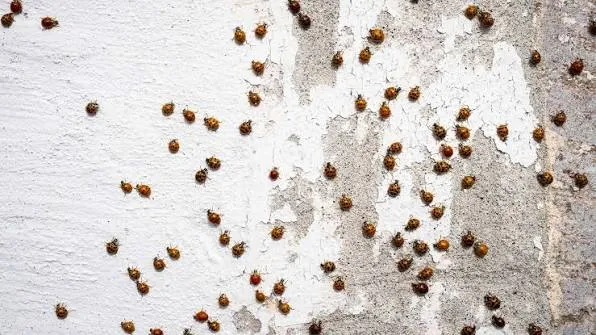
Asian lady beetles do not invade homes looking for food, garbage, or indoor plants. They enter houses because of an instinctive overwintering behavior. In their native Asian range, adults fly to exposed rocky cliffs and light-colored rock faces in autumn to find protected crevices where they can survive winter temperatures.
In residential landscapes, houses mimic those natural cliff faces. Because lady beetles are capable fliers (see how beetle wings and flight work), adults disperse from nearby woods, crop fields, and gardens on warm, sunny autumn afternoons—especially after the first cool nights—and land on buildings that offer strong visual contrast.
Why Certain Homes Get Hit Harder Than Others
- Sunlit south- and west-facing walls: Warm, sun-drenched exteriors attract landing beetles first.
- Light-colored siding or contrasting trim: White, beige, light gray, or sharply contrasted dark-and-light exteriors stand out visually to migrating beetles.
- Nearby trees, fields, or soybeans: Homes bordering wooded lots, orchards, or agricultural fields often experience heavier autumn flights after aphid populations decline.
- Aggregation pheromones: Once early arrivals settle into a wall void, attic, or window frame, they release chemical cues that draw additional beetles to the same sheltered spots—sometimes year after year.
Are Asian Lady Beetles Dangerous to People, Pets, or Homes?
For most households, Asian lady beetles are an annoying seasonal nuisance rather than a serious health hazard. As covered in our calm guide on whether beetles are dangerous, they do not carry human diseases, do not sting, and will not damage your house structure. Still, they do have three well-documented traits worth knowing about:
- Light defensive nips: Asian lady beetles have chewing mouthparts. If one lands on your neck or arm and feels pressed or searches for moisture, it may give a brief pinch. It can feel surprising, but it does not inject venom and rarely breaks the skin.
- Yellow staining fluid (reflex bleeding): When startled, squeezed, or crushed, the beetle secretes yellowish hemolymph from its leg joints. This fluid has a bitter, musty odor and can leave stubborn yellow stains on light-colored walls, woodwork, curtains, and upholstery.
- Allergic reactions in sensitive individuals: University extension entomologists note that heavy indoor accumulations—and dried beetle remains inside wall voids—can trigger allergic symptoms in a small percentage of people, including itchy eyes, nasal congestion, hives, or asthma flare-ups.
- Pet caution: If a dog or cat chews on a cluster of Asian lady beetles, the bitter defensive secretions can irritate the mouth or upset the stomach. Keep pets away from indoor aggregations and contact a veterinarian if a pet shows persistent drooling or oral discomfort.
How to Get Rid of Asian Lady Beetles in the House Safely
The golden rule of indoor removal is simple: do not squash them. Crushing beetles against drywall or windowsills almost guarantees yellow stains and releases odor that lingers.
1. Vacuum Them Up (With the Stocking Trick)
A vacuum cleaner is the fastest way to clear clusters from ceilings, curtains, and window tracks. To prevent beetles from odorizing your vacuum canister or bag, slip a knee-high nylon stocking or thin cloth over the end of the vacuum hose, push it slightly inside the nozzle, and secure it with a rubber band. When you finish vacuuming, remove the stocking, tie it shut, and either release the beetles outdoors far from the house or dispose of them in an outdoor trash bin.
Allergy note: Penn State Extension cautions that vacuum exhaust can circulate beetle allergens and defensive odors into the air. If someone in your home has known lady beetle allergies, use a HEPA-filtered vacuum or gently sweep the beetles into a container instead.
2. Gently Sweep or Drop Into Soapy Water
For small numbers on windowsills or counters, gently coax them onto a piece of stiff paper or into a dustpan with a soft-bristled brush. If you prefer not to release them outside, drop them into a cup of warm water mixed with a few drops of dish soap; the soap breaks surface tension so they cannot climb out.
3. Why University Extensions Advise Against Indoor Sprays
Spraying over-the-counter insecticides inside living spaces rarely solves an Asian lady beetle problem. Indoor sprays cannot reach beetles hidden deep inside wall voids and attics, and killing beetles inside walls creates a secondary problem: piles of dead insects can attract scavenger pests like carpet beetles and larder beetles later in the year.
How to Prevent Asian Lady Beetles From Entering Next Fall
Because these beetles do not breed indoors, long-term control comes down to exclusion—blocking their entry points before cool autumn weather triggers their flight to buildings (typically by late September or early October in northern climates).
According to Ohio State University Extension and University of Illinois Extension, Asian lady beetles can squeeze through gaps as small as 1/8 inch. Use this exterior inspection checklist in late summer or early fall:
- Caulk exterior cracks: Seal gaps around window frames, door trim, siding joints, fascia boards, and utility penetrations (pipes, cables, dryer vents) with quality silicone or silicone-latex caulk.
- Upgrade door sweeps and weatherstripping: Check exterior doors at night with indoor lights off while someone shines a flashlight outside—any visible sliver of light is wide enough for a beetle. Replace worn vinyl garage door seals with flexible rubber seals.
- Repair window and door screens: Patch tears and ensure screen frames sit flush in their tracks.
- Screen attic and soffit vents: Install fine insect screening (20-mesh maximum) behind attic vents, ridge vents, gable vents, and exhaust fans that open into the attic.
- Seal interior attic-to-room pathways: Check around recessed can lights, attic hatches, and ceiling trim where overwintering beetles drop from the attic into heated rooms.
If your home faces overwhelming swarms every autumn despite thorough sealing, a licensed pest control professional can apply a timed exterior perimeter treatment to sun-exposed walls just before peak migration—never indoors, and carefully avoiding blooming plants to protect pollinators.
Frequently Asked Questions
Do Asian lady beetles lay eggs or reproduce inside houses?
No. Overwintering adults enter buildings purely for shelter. They do not mate or lay eggs indoors; females wait until spring to emerge outdoors and lay clusters of bright yellow oval eggs on the undersides of leaves near aphids.
Why do Asian lady beetles keep coming back to the same house every year?
Two factors drive repeat visits: your home’s physical profile (sunlit south/west exposure, light siding, nearby trees or fields) and persistent aggregation cues left behind in sheltered crevices from previous winters. Sealing entry gaps is the only reliable way to break the cycle.
Will Asian lady beetles die on their own inside my house?
Yes, most beetles that wander into heated living spaces eventually dehydrate and die because indoor air is too dry and there is no prey. However, beetles tucked inside cooler wall voids or unheated attics can survive the winter and emerge again on warm spring days.
How do I remove yellow Asian lady beetle stains from walls or fabric?
Blot gently rather than rubbing. On washable fabrics, treat promptly with cold water and a mild enzyme laundry stain remover before washing. On painted walls, dab lightly with a damp microfiber cloth and a drop of mild dish soap, testing an inconspicuous spot first.
Could the spotted beetles in my house be something other than lady beetles?
Yes. Varied carpet beetles are also small, oval, and patterned, and adults often gather near windowsills—but they are much smaller (about 2–3 mm) with mottled white, brown, and yellow scales rather than smooth, shiny wing covers. Browse our common types of beetles with pictures to compare body shapes and markings.
- Ohio State University Extension (CFAES Knowledge Hub) — Multicolored Asian Lady Beetle (Identification, life cycle, and 1/8-inch exclusion guidelines).
- Penn State Extension — Multicolored Asian Lady Beetle (Harmonia axyridis) (Taxonomy, color variation, vacuuming, and allergen precautions).
- University of Illinois Extension — Preventing and Managing Multicolored Asian Lady Beetles (Overwintering behavior, indoor non-reproduction, and exclusion).
- Cornell University Biological Control — Harmonia axyridis (Biology, reflex bleeding, and non-chemical indoor removal).
- Purdue University Extension Entomology (E-214) — Asian Lady Beetle (Integrated exclusion and physical removal recommendations).